ADVERTISEMENT

PCG commits to secure newly discovered gas field at Malampaya

Published Jan 20, 2026 02:51 pm
(Courtesy of President Ferdinand Marcos Jr. / Facebook)
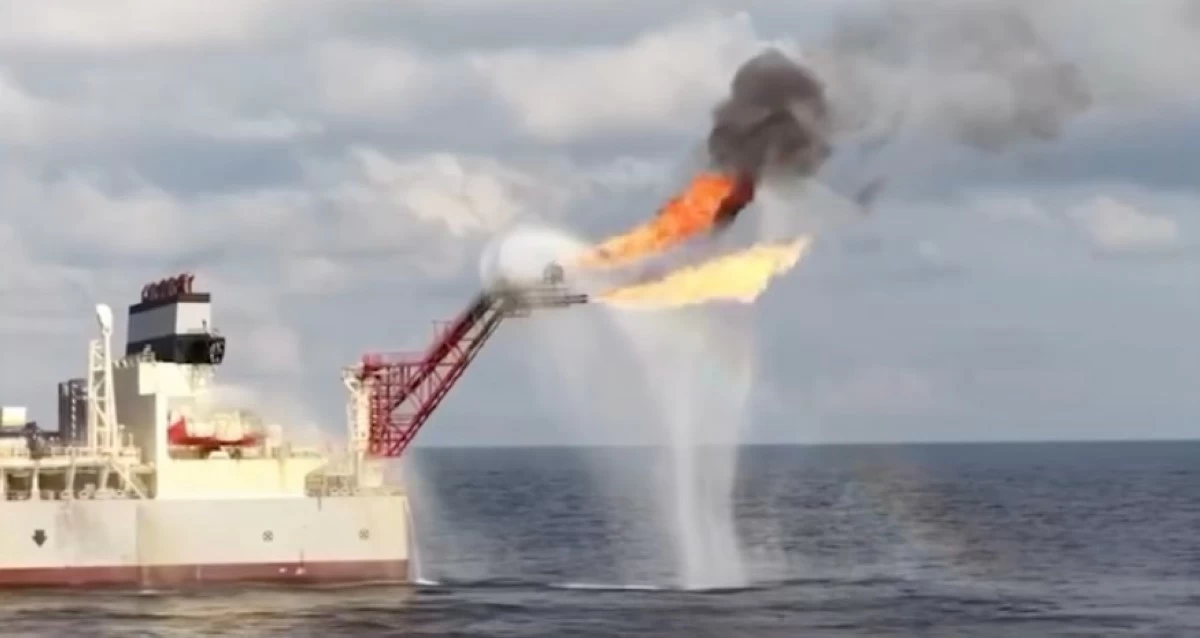
The Philippine Coast Guard (PCG) assured the public of the swift and strategic deployment of its assets at the Malampaya gas field in Palawan following the discovery of a new source of natural gas in the area.
PCG Commandant Adm. Ronnie Gil Gavan ordered the deployment of 97-meter and 44-meter vessels, as well as patrol aircraft at the Malampaya East 1 reservoir where President Ferdinand Marcos Jr. said a major natural gas field was discovered.
“One of the top priorities of the Philippine Coast Guard under Admiral Gavan is the strategic deployment of 97- and 44-meter vessels and aircraft in significant areas of the country, especially in Malampaya East 1 where a new source of natural gas was discovered,” PCG spokesperson for West Philippine Sea Commodore Jay Tarriela said.
The PCG said such deployment is aimed at strengthening maritime security and protecting critical energy infrastructure as part of its mandate to ensure maritime security and protect vital energy facilities.
The PCG noted that it also aims to support national interest in areas critical to the country’s energy security.
“Because of this new discovery, we will be more adaptive and responsive when it comes to deploying our personnel. We will be more proactive and strategically deploy our assets,” Tarriela added.
The discovery of the gas reservoir at Malampaya East 1 marked the first major find in more than ten years. The reservoir lies around five kilometers east of the existing Malampaya field and is estimated to contain about 98 billion cubic feet of gas.
The government said the new reserve could produce nearly 14 billion kilowatt-hours of electricity each year which is enough to power about 5.7 million homes annually.
Initial well tests recorded gas flow of 60 million cubic feet per day, showing production potential similar to the original Malampaya wells.
Marcos had said that the discovery is expected to boost the country’s domestic gas supply and improve long-term energy security. He added that condensate was also found during drilling, which could help stabilize the national power supply.
Malampaya East 1 serves as the first accomplishment under the Malampaya Phase 4 Drilling Campaign, which also covers the Camago and Bagong Pag-asa wells.
The development was carried out by the SC 38 Consortium led by Prime Energy Resources Development B.V., in partnership with UC38, PNOC Exploration Corporation, and Prime Oil and Gas Inc.

Related Tags

PCG Malampaya gas field
ADVERTISEMENT
.most-popular .layout-ratio{ padding-bottom: 79.13%; } @media (min-width: 768px) and (max-width: 1024px) { .widget-title { font-size: 15px !important; } }

{{ articles_filter_1561_widget.title }}

.most-popular .layout-ratio{ padding-bottom: 79.13%; } @media (min-width: 768px) and (max-width: 1024px) { .widget-title { font-size: 15px !important; } }

{{ articles_filter_1562_widget.title }}

.most-popular .layout-ratio{ padding-bottom: 79.13%; } @media (min-width: 768px) and (max-width: 1024px) { .widget-title { font-size: 15px !important; } }

{{ articles_filter_1563_widget.title }}

{{ articles_filter_1564_widget.title }}

.mb-article-details { position: relative; } .mb-article-details .article-body-preview, .mb-article-details .article-body-summary{ font-size: 17px; line-height: 30px; font-family: "Libre Caslon Text", serif; color: #000; } .mb-article-details .article-body-preview iframe , .mb-article-details .article-body-summary iframe{ width: 100%; margin: auto; } .read-more-background { background: linear-gradient(180deg, color(display-p3 1.000 1.000 1.000 / 0) 13.75%, color(display-p3 1.000 1.000 1.000 / 0.8) 30.79%, color(display-p3 1.000 1.000 1.000) 72.5%); position: absolute; height: 200px; width: 100%; bottom: 0; display: flex; justify-content: center; align-items: center; padding: 0; } .read-more-background a{ color: #000; } .read-more-btn { padding: 17px 45px; font-family: Inter; font-weight: 700; font-size: 18px; line-height: 16px; text-align: center; vertical-align: middle; border: 1px solid black; background-color: white; } .hidden { display: none; }
function initializeAllSwipers() { // Get all hidden inputs with cms_article_id document.querySelectorAll('[id^="cms_article_id_"]').forEach(function (input) { const cmsArticleId = input.value; const articleSelector = '#article-' + cmsArticleId + ' .body_images'; const swiperElement = document.querySelector(articleSelector); if (swiperElement && !swiperElement.classList.contains('swiper-initialized')) { new Swiper(articleSelector, { loop: true, pagination: false, navigation: { nextEl: '#article-' + cmsArticleId + ' .swiper-button-next', prevEl: '#article-' + cmsArticleId + ' .swiper-button-prev', }, }); } }); } setTimeout(initializeAllSwipers, 3000); const intersectionObserver = new IntersectionObserver( (entries) => { entries.forEach((entry) => { if (entry.isIntersecting) { const newUrl = entry.target.getAttribute("data-url"); if (newUrl) { history.pushState(null, null, newUrl); let article = entry.target; // Extract metadata const author = article.querySelector('.author-section').textContent.replace('By', '').trim(); const section = article.querySelector('.section-info ').textContent.replace(' ', ' '); const title = article.querySelector('.article-title h1').textContent; // Parse URL for Chartbeat path format const parsedUrl = new URL(newUrl, window.location.origin); const cleanUrl = parsedUrl.host + parsedUrl.pathname; // Update Chartbeat configuration if (typeof window._sf_async_config !== 'undefined') { window._sf_async_config.path = cleanUrl; window._sf_async_config.sections = section; window._sf_async_config.authors = author; } // Track virtual page view with Chartbeat if (typeof pSUPERFLY !== 'undefined' && typeof pSUPERFLY.virtualPage === 'function') { try { pSUPERFLY.virtualPage({ path: cleanUrl, title: title, sections: section, authors: author }); } catch (error) { console.error('ping error', error); } } // Optional: Update document title if (title && title !== document.title) { document.title = title; } } } }); }, { threshold: 0.1 } ); function showArticleBody(button) { const article = button.closest("article"); const summary = article.querySelector(".article-body-summary"); const body = article.querySelector(".article-body-preview"); const readMoreSection = article.querySelector(".read-more-background"); // Hide summary and read-more section summary.style.display = "none"; readMoreSection.style.display = "none"; // Show the full article body body.classList.remove("hidden"); } document.addEventListener("DOMContentLoaded", () => { let loadCount = 0; // Track how many times articles are loaded const offset = [1, 2, 3, 4, 5, 6, 7, 8, 9, 10]; // Offset values const currentUrl = window.location.pathname.substring(1); let isLoading = false; // Prevent multiple calls if (!currentUrl) { console.log("Current URL is invalid."); return; } const sentinel = document.getElementById("load-more-sentinel"); if (!sentinel) { console.log("Sentinel element not found."); return; } function isSentinelVisible() { const rect = sentinel.getBoundingClientRect(); return ( rect.top < window.innerHeight && rect.bottom >= 0 ); } function onScroll() { if (isLoading) return; if (isSentinelVisible()) { if (loadCount >= offset.length) { console.log("Maximum load attempts reached."); window.removeEventListener("scroll", onScroll); return; } isLoading = true; const currentOffset = offset[loadCount]; window.loadMoreItems().then(() => { let article = document.querySelector('#widget_1690 > div:nth-last-of-type(2) article'); intersectionObserver.observe(article) loadCount++; }).catch(error => { console.error("Error loading more items:", error); }).finally(() => { isLoading = false; }); } } window.addEventListener("scroll", onScroll); });

Sign up by email to receive news.