






Manila Bulletin
 Philippines
National
Mayon Volcano continues pyroclastic flows, rockfalls; thin ashfall reported in parts of Albay
Philippines
National
Mayon Volcano continues pyroclastic flows, rockfalls; thin ashfall reported in parts of Albay
Philippines
National
Mayon Volcano continues pyroclastic flows, rockfalls; thin ashfall reported in parts of Albay
Mayon Volcano continues pyroclastic flows, rockfalls; thin ashfall reported in parts of Albay
Published Jan 20, 2026 08:19 am
|
Updated Jan 20, 2026 01:42 pm


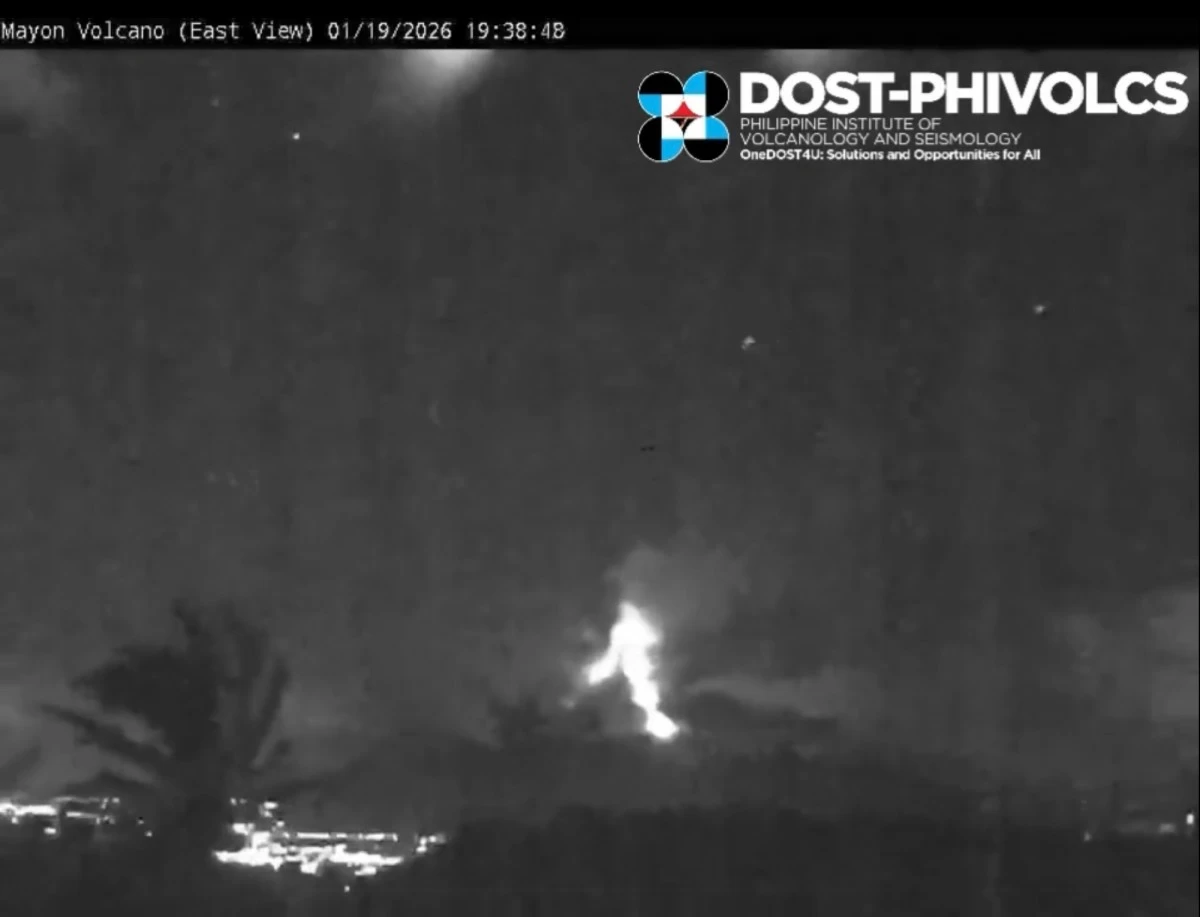
Mayon Volcano emits glowing pyroclastic flows on January 19, 2026, as thin ash lightly covers parts of Albay. (Phivolcs Facebook/Screenshot)
The Philippine Institute of Volcanology and Seismology (Phivolcs) said Mayon Volcano continued to release incandescent pyroclastic density currents, locally known as “uson,” and rockfalls onto the Miisi, Bonga, and Basud gullies, with thin ashfall observed in Legazpi City and Daraga in Albay on Monday evening, Jan. 19.
Based on its 24-hour monitoring, from 12 a.m. on Jan. 19 to 12 a.m. on Jan. 20, Phivolcs recorded 340 rockfall events, 45 pyroclastic density currents, and 13 volcanic earthquakes, while sulfur dioxide emissions reached 3,061 tons.
Mayon remains under Alert Level 3 as its persistent activity signals that hazardous eruptions could occur.
Phivolcs reminded residents that entry into the six-kilometer permanent danger zone remains strictly prohibited, and that venturing into the extended danger zone should be done only with heightened vigilance.
The agency also warned that ashfall, even if light, can pose health risks and affect visibility on roads.
Aircraft are barred from flying near the volcano due to hazards posed by volcanic ash and debris.
Phivolcs further reminded local government units and the public that while Alert Level 3 is in effect, Mayon’s volcanic hazards include rockfalls, landslides or avalanches, ballistic fragments, lava flows and lava fountaining, pyroclastic density currents, moderate-sized explosions, and lahars during periods of heavy or prolonged rainfall.