ADVERTISEMENT

Gov't cracks down on GOCCs' budget dependence

Published Jan 20, 2026 06:30 pm  |  Updated Jan 20, 2026 02:14 pm
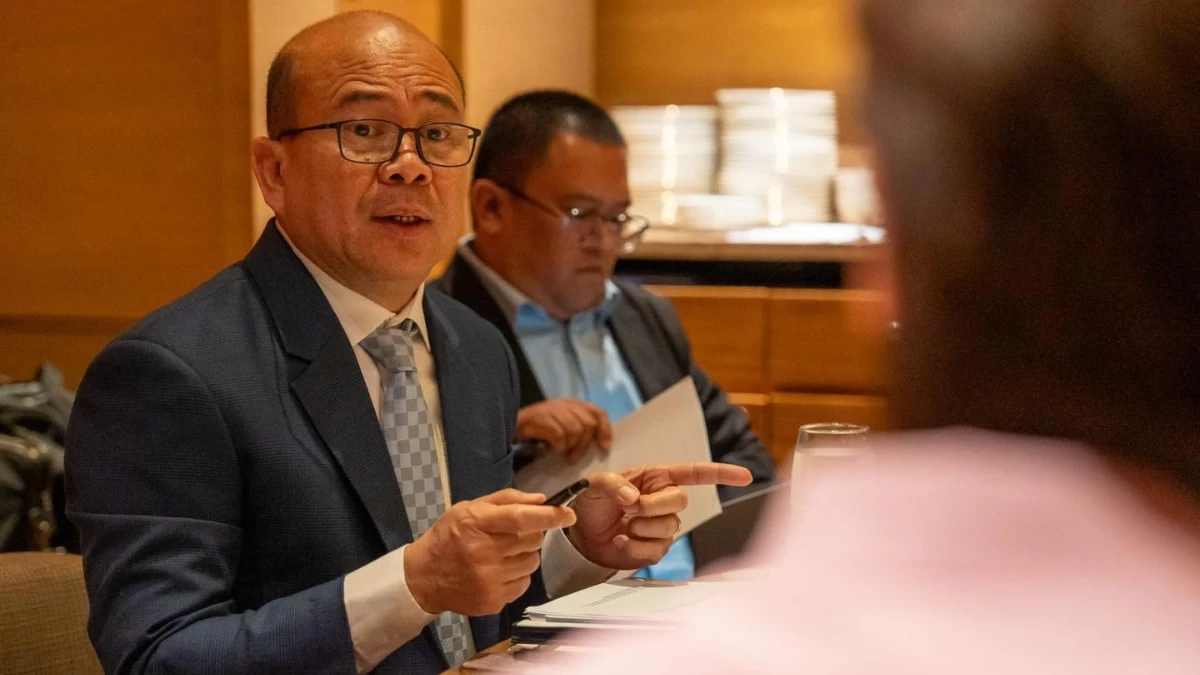
Acting Budget Secretary Rolando U. Toledo

The Marcos Jr. administration is tightening its watch over government-owned and/or -controlled corporations (GOCCs) as part of efforts to bolster fiscal discipline and curb long-term dependence on national budget support.

Department of Budget and Management (DBM) Acting Secretary Rolando U. Toledo announced in Corporate Budget Memorandum No. 48, issued on Monday, Jan. 19, that GOCCs that have remained heavily reliant on national government (NG) budgetary subsidies—defined as having 60 percent or more of NG subsidy in their funding mix for 10 consecutive years—will be automatically flagged and subject to mandatory institutional review.

According to the corporate budget call for fiscal year (FY) 2027, such reviews—aimed at determining whether a GOCC should continue operating in its current corporate form or be restructured, merged, rationalized, or converted into a national government agency (NGA)—will be conducted by the Governance Commission for GOCCs (GCG) for those under Republic Act (RA) No. 10149, or the GOCC Governance Act of 2011, or by the DBM for those outside its coverage.

Flagged GOCCs and government financial institutions (GFIs) must complete a self-assessment and may submit a written justification to the DBM and the Department of Finance (DOF) if seeking exemption from review, demonstrating the “continued necessity” of the corporate structure and time-bound, measurable actions toward financial sustainability or reduced subsidy reliance.

The NG may provide financial backing to GOCCs and GFIs through subsidies for operations, subsidies for programs and projects, equity, shares from special laws, and other forms of budgetary support such as tax subsidies, net lending, or conversion of advances into subsidy or equity—the latter of which requires DOF endorsement or approval—underscoring the government’s more rigorous approach to fiscal support.

Last year’s corporate budget call under Corporate Budget Memorandum 47 issued by former DBM chief Amenah F. Pangandaman took a comparatively softer stance: it stated that GOCCs heavily dependent on NG subsidies for 10 years “shall be endorsed to the GCG, in consultation with the DBM and the DOF, for possible study on the conversion of these GOCCs into NGAs,” but did not prescribe automatic institutional review or the stricter accountability framework now outlined in this year’s memo.

The annual corporate budget memoranda jumpstart GOCC and GFI preparations for their proposals under the next FY’s national budget.

To recall, out of the ₱92.5-billion unprogrammed appropriations (UAs) vetoed by President Ferdinand R. Marcos Jr. from the ₱6.793-trillion 2026 national budget, ₱6.895 billion represented budgetary support to GOCCs. Since UAs are not covered by regular budget financing, these can only be funded by excess or new tax and non-tax revenues, as well as foreign loans for specific projects and programs.

Under the 2026 General Appropriations Act (GAA), the government set aside a total of ₱264.82 billion in budgetary support to government corporations, of which ₱262.199 billion covers GOCCs’ maintenance and other operating expenses (MOOE). Capital outlays worth ₱2.621 billion account for the rest of NG support for GOCCs this year.

Last year, GOCCs’ budget was much lower at ₱127.428 billion, as the NG did not provide funds for state-run Philippine Health Insurance Corp. (PhilHealth). For 2026, the NG reinstated financial support for PhilHealth by providing ₱129.782 billion in subsidy, the biggest among all GOCCs.

The 2026 budget also allocated ₱63.247 billion in subsidies for the National Irrigation Administration (NIA), ₱11.292 billion for the National Food Authority (NFA), and ₱10.134 billion for the National Electrification Administration (NEA), making them the top recipients of NG support for GOCCs this year.

ADVERTISEMENT
.most-popular .layout-ratio{ padding-bottom: 79.13%; } @media (min-width: 768px) and (max-width: 1024px) { .widget-title { font-size: 15px !important; } }

{{ articles_filter_1561_widget.title }}

.most-popular .layout-ratio{ padding-bottom: 79.13%; } @media (min-width: 768px) and (max-width: 1024px) { .widget-title { font-size: 15px !important; } }

{{ articles_filter_1562_widget.title }}

.most-popular .layout-ratio{ padding-bottom: 79.13%; } @media (min-width: 768px) and (max-width: 1024px) { .widget-title { font-size: 15px !important; } }

{{ articles_filter_1563_widget.title }}

{{ articles_filter_1564_widget.title }}

.mb-article-details { position: relative; } .mb-article-details .article-body-preview, .mb-article-details .article-body-summary{ font-size: 17px; line-height: 30px; font-family: "Libre Caslon Text", serif; color: #000; } .mb-article-details .article-body-preview iframe , .mb-article-details .article-body-summary iframe{ width: 100%; margin: auto; } .read-more-background { background: linear-gradient(180deg, color(display-p3 1.000 1.000 1.000 / 0) 13.75%, color(display-p3 1.000 1.000 1.000 / 0.8) 30.79%, color(display-p3 1.000 1.000 1.000) 72.5%); position: absolute; height: 200px; width: 100%; bottom: 0; display: flex; justify-content: center; align-items: center; padding: 0; } .read-more-background a{ color: #000; } .read-more-btn { padding: 17px 45px; font-family: Inter; font-weight: 700; font-size: 18px; line-height: 16px; text-align: center; vertical-align: middle; border: 1px solid black; background-color: white; } .hidden { display: none; }
function initializeAllSwipers() { // Get all hidden inputs with cms_article_id document.querySelectorAll('[id^="cms_article_id_"]').forEach(function (input) { const cmsArticleId = input.value; const articleSelector = '#article-' + cmsArticleId + ' .body_images'; const swiperElement = document.querySelector(articleSelector); if (swiperElement && !swiperElement.classList.contains('swiper-initialized')) { new Swiper(articleSelector, { loop: true, pagination: false, navigation: { nextEl: '#article-' + cmsArticleId + ' .swiper-button-next', prevEl: '#article-' + cmsArticleId + ' .swiper-button-prev', }, }); } }); } setTimeout(initializeAllSwipers, 3000); const intersectionObserver = new IntersectionObserver( (entries) => { entries.forEach((entry) => { if (entry.isIntersecting) { const newUrl = entry.target.getAttribute("data-url"); if (newUrl) { history.pushState(null, null, newUrl); let article = entry.target; // Extract metadata const author = article.querySelector('.author-section').textContent.replace('By', '').trim(); const section = article.querySelector('.section-info ').textContent.replace(' ', ' '); const title = article.querySelector('.article-title h1').textContent; // Parse URL for Chartbeat path format const parsedUrl = new URL(newUrl, window.location.origin); const cleanUrl = parsedUrl.host + parsedUrl.pathname; // Update Chartbeat configuration if (typeof window._sf_async_config !== 'undefined') { window._sf_async_config.path = cleanUrl; window._sf_async_config.sections = section; window._sf_async_config.authors = author; } // Track virtual page view with Chartbeat if (typeof pSUPERFLY !== 'undefined' && typeof pSUPERFLY.virtualPage === 'function') { try { pSUPERFLY.virtualPage({ path: cleanUrl, title: title, sections: section, authors: author }); } catch (error) { console.error('ping error', error); } } // Optional: Update document title if (title && title !== document.title) { document.title = title; } } } }); }, { threshold: 0.1 } ); function showArticleBody(button) { const article = button.closest("article"); const summary = article.querySelector(".article-body-summary"); const body = article.querySelector(".article-body-preview"); const readMoreSection = article.querySelector(".read-more-background"); // Hide summary and read-more section summary.style.display = "none"; readMoreSection.style.display = "none"; // Show the full article body body.classList.remove("hidden"); } document.addEventListener("DOMContentLoaded", () => { let loadCount = 0; // Track how many times articles are loaded const offset = [1, 2, 3, 4, 5, 6, 7, 8, 9, 10]; // Offset values const currentUrl = window.location.pathname.substring(1); let isLoading = false; // Prevent multiple calls if (!currentUrl) { console.log("Current URL is invalid."); return; } const sentinel = document.getElementById("load-more-sentinel"); if (!sentinel) { console.log("Sentinel element not found."); return; } function isSentinelVisible() { const rect = sentinel.getBoundingClientRect(); return ( rect.top < window.innerHeight && rect.bottom >= 0 ); } function onScroll() { if (isLoading) return; if (isSentinelVisible()) { if (loadCount >= offset.length) { console.log("Maximum load attempts reached."); window.removeEventListener("scroll", onScroll); return; } isLoading = true; const currentOffset = offset[loadCount]; window.loadMoreItems().then(() => { let article = document.querySelector('#widget_1690 > div:nth-last-of-type(2) article'); intersectionObserver.observe(article) loadCount++; }).catch(error => { console.error("Error loading more items:", error); }).finally(() => { isLoading = false; }); } } window.addEventListener("scroll", onScroll); });

Sign up by email to receive news.