






Manila Bulletin
 Philippines
National
Ejercito quizzes ex-DPWH exec over claim of projects for sale in House
Philippines
National
Ejercito quizzes ex-DPWH exec over claim of projects for sale in House
Philippines
National
Ejercito quizzes ex-DPWH exec over claim of projects for sale in House
Ejercito quizzes ex-DPWH exec over claim of projects for sale in House
By Dhel Nazario
Published Jan 20, 2026 12:24 pm


Senator Joseph Victor "JV" Ejercito quizzed former Department of Public Works and Highways (DPWH) Undersecretary Roberto Bernardo over the earlier claim of Navotas Rep. Toby Tiangco that infrastructure projects were being sold in the House of Representatives.
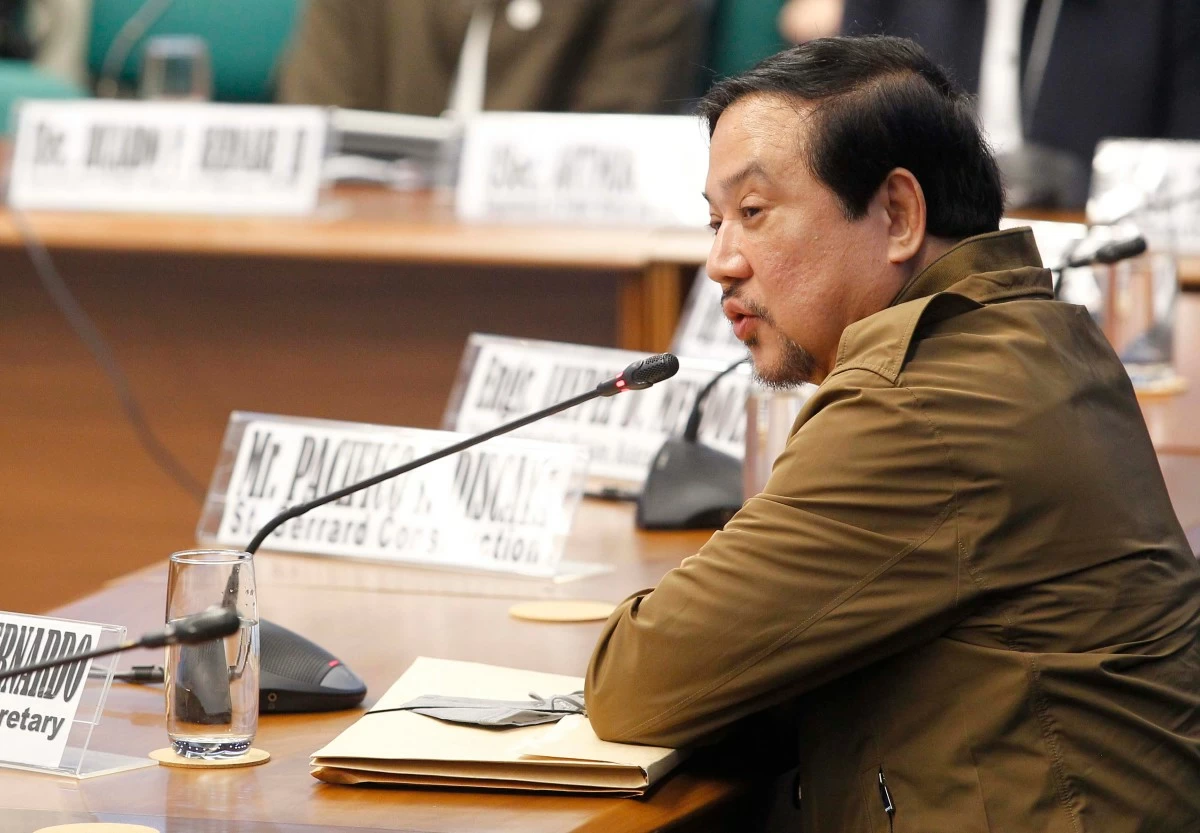
Former Department of Public Works and Highways (DPWH) Undersecretary Roberto Bernardo (Mark Balmores)
During the Senate Blue Ribbon Committee hearing on anomalous flood control projects on Monday, Jan. 19, Ejercito asked Bernardo to explain Tiangco’s allegation that there was a scheme in the Lower House involving the selling of projects.
Ejercito said that the Senate has not received any information about a scheme involving the peddling or selling of government projects, questioning who exactly is involved in the alleged buy-and-sell operations and whether these individuals are so-called “cong-tractors.”
“Sinabi ni Cong. Toby Tiangco na mayroon scheme sa Lower House tungkol sa bentahan ng projects na puwede. Sa iyong pagkakaalam, maaari niyo paliwanag sa amin kung paano ito nangyayari? (Congressman Toby Tiangco said that there is a scheme in the Lower House involving the selling of projects. Based on your knowledge, can you explain to us how this happens?)” Ejercito asked.
Speaking to Bernardo, who has been admitted to the witness protection program, the senator asked the committee to be briefed on how the alleged scheme operates, and whether such practices occur in the Senate or are confined to the House of Representatives.
“Kasi dito sa Senado, wala naman kaming nabalitaan na modus na naglalako o nagbebenta ng proyekto. Sino ba ang mga nagba-buy and sell na ito. Ito ba'y mga tinatawag na cong-tractors. So anyway, kayo po'y admitted na sa witness protection program, baka maaari niyo ilahad sa atin dito sa komiteng ito kung paano ang scheme na ito doon sa paglalako at bentahan ng proyekto. Nangyayari ba yan sa Senado o doon na sa kabilang bahay?” he added.
In response, Bernardo confirmed the existence of the scheme in the House of Representatives and how it works based on his knowledge and experience.
“Ang pagkakaalam ko po, kapag mayroon pong ganito, the proponent asks of course the help of the regional directors and district engineers about projects to be released in their own districts or regions. So after that, meron pong pinaka-proponent at itatawag doon, 'pag tinawag doon at sasabihin na ito ang nag-release ng proyekto (To my understanding, when something like this happens, the proponent of the project of course seeks the help of the regional directors and district engineers regarding the projects to be released in their respective districts or regions. After that, there is a principal proponent who is identified, and when it is mentioned or called out, it is said that this is the one who caused the release of the project),” Bernardo explained.
“So with that, doon nagsisimula iyon. Kung sino ang nag-release, we respect the authority of the ones who released the project na sinasabi po namin, sila ang nag-release ng proyekto, sila ang may karapatan sa proyekto (So with that, that’s where it starts. Whoever releases the project—we respect the authority of those who released it. As we say, they are the ones who released the project, and they have the rights over the project),” he added.
Bernardo did not mention any specific individuals but maintained that such arrangements were part of the system he was familiar with.
“So ganoon ang scheme noon. Kumbaga, pagka merong DE na kinausap or regional director, of course I won't mention names sa ganitong pamamaraan, but pag kinausap sila meron pong mga lalapit na proponent diyan at considering na pagka-malayo po ang mga proponent halimbawa at may napagbigyan na contractor na malayo, at mayroon sa locality na gustong kumuha ng proyekto, kinakausap ang DE or director na sila na ang gagawa doon (So that’s how the scheme worked back then. Basically, when a DE or regional director was consulted—of course, I won’t mention names in this process—there would be proponents who approach them. Considering situations where the proponent is from a distant area and a contractor from far away has already been approved, but there is someone local who wants the project, they would talk to the district engineer or director to have the local party take over the project),” he said.