ADVERTISEMENT

Navy's newest patrol ship, named after ruler of Manila, arrives on PH shores

Published Jan 19, 2026 01:49 pm
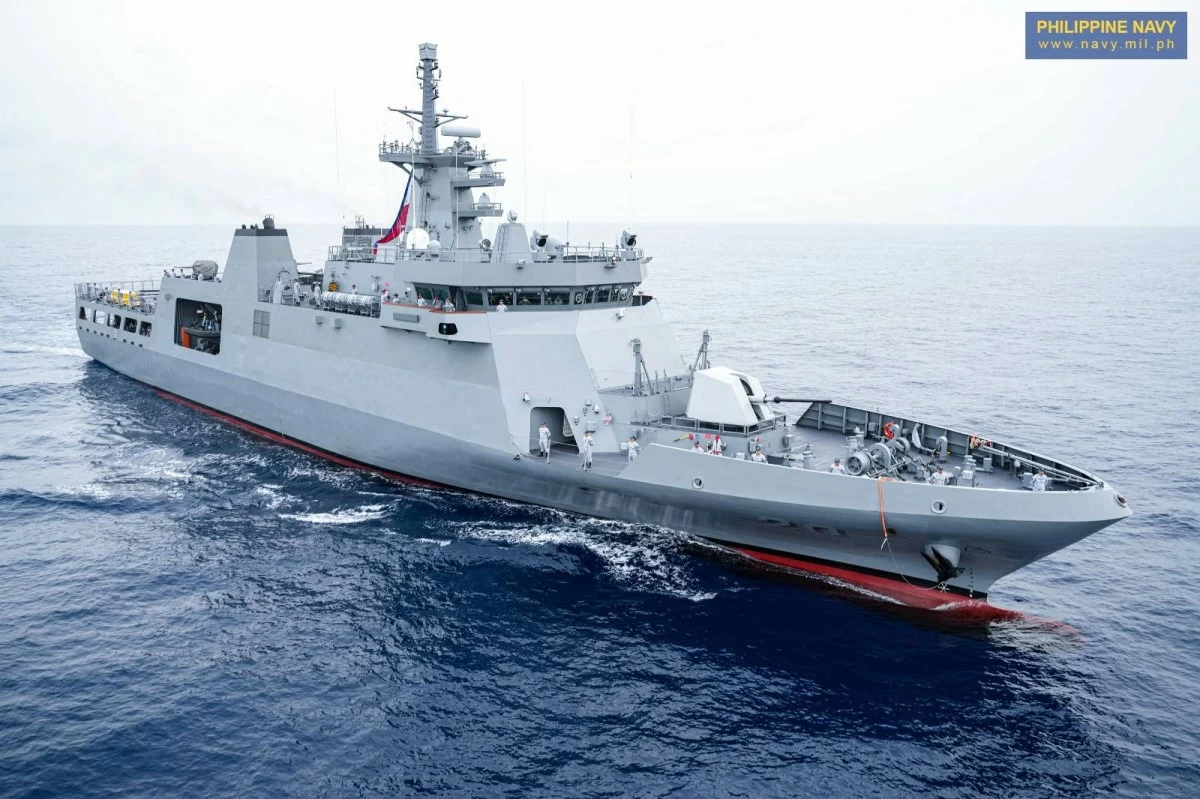
The future BRP Rajah Sulaymaniyah (PS20) is the Philippine Navy's newest offshore patrol vessel. (Photo: PN)
The Philippine Navy’s (PN) newest offshore patrol vessel, the future BRP Rajah Sulayman (PS20), has arrived in the country from South Korea to add another major asset to the military’s expanding modern fleet.
The vessel was met in waters off Zambales by missile-capable frigate BRP Jose Rizal (FF150) last Jan. 17 as part of standard naval protocols upon entering Philippine waters. It departed Ulsan, South Korea last Jan. 13.
“After completing coordination and meeting procedures at sea, the future BRP Rajah Sulayman will begin post-delivery activities and technical checks,” Commander Marie Angelica Sisican, director of Naval Public Affairs Office, said on Monday, Jan. 19.
The PN said that the ship is scheduled to undergo acceptance and pre-commissioning procedures which will be completed before its formal entry into active service.
The PN noted that the arrival of BRP Rajah Sulayman underscores its push to strengthen maritime defense and law enforcement as part of its duty to build a modern, multi-domain, and self-reliant naval force.
The ship was named after Rajah Sulayman, a Muslim ruler of Manila in the late 16th century. He is remembered for standing against Spanish expeditions led by Miguel López de Legazpi and Martín de Goiti in 1570 and 1571, and for fighting to protect his people and homeland from foreign control.
BRP Rajah Sulayman serves as the lead ship of the PN’s Rajah Sulayman-class offshore patrol vessels constructed by HD Hyundai Heavy Industries (HHI) in South Korea. The ship is derived from Hyundai’s HDP-2200+ design and forms part of the Offshore Patrol Vessel Acquisition Program of the PN.
It was officially launched on June 11, 2025 at the HHI’s shipyard in Ulsan, South Korea.
The PN said it has a full-load displacement estimated at 2,400 to 2,450 tonnes, and measures about 94 meters long, with a beam of roughly 14 meters and a draft of around 3.7 meters.
The ship has a maximum speed of approximately 22 knots and an operational range of about 5,500 nautical miles, with an endurance of up to 30 days. It is manned by a crew of around 72 personnel.

Related Tags

Philippine Navy BRP Rajah Sulayman offshore patrol vessel OPV
ADVERTISEMENT
.most-popular .layout-ratio{ padding-bottom: 79.13%; } @media (min-width: 768px) and (max-width: 1024px) { .widget-title { font-size: 15px !important; } }

{{ articles_filter_1561_widget.title }}

.most-popular .layout-ratio{ padding-bottom: 79.13%; } @media (min-width: 768px) and (max-width: 1024px) { .widget-title { font-size: 15px !important; } }

{{ articles_filter_1562_widget.title }}

.most-popular .layout-ratio{ padding-bottom: 79.13%; } @media (min-width: 768px) and (max-width: 1024px) { .widget-title { font-size: 15px !important; } }

{{ articles_filter_1563_widget.title }}

{{ articles_filter_1564_widget.title }}

.mb-article-details { position: relative; } .mb-article-details .article-body-preview, .mb-article-details .article-body-summary{ font-size: 17px; line-height: 30px; font-family: "Libre Caslon Text", serif; color: #000; } .mb-article-details .article-body-preview iframe , .mb-article-details .article-body-summary iframe{ width: 100%; margin: auto; } .read-more-background { background: linear-gradient(180deg, color(display-p3 1.000 1.000 1.000 / 0) 13.75%, color(display-p3 1.000 1.000 1.000 / 0.8) 30.79%, color(display-p3 1.000 1.000 1.000) 72.5%); position: absolute; height: 200px; width: 100%; bottom: 0; display: flex; justify-content: center; align-items: center; padding: 0; } .read-more-background a{ color: #000; } .read-more-btn { padding: 17px 45px; font-family: Inter; font-weight: 700; font-size: 18px; line-height: 16px; text-align: center; vertical-align: middle; border: 1px solid black; background-color: white; } .hidden { display: none; }
function initializeAllSwipers() { // Get all hidden inputs with cms_article_id document.querySelectorAll('[id^="cms_article_id_"]').forEach(function (input) { const cmsArticleId = input.value; const articleSelector = '#article-' + cmsArticleId + ' .body_images'; const swiperElement = document.querySelector(articleSelector); if (swiperElement && !swiperElement.classList.contains('swiper-initialized')) { new Swiper(articleSelector, { loop: true, pagination: false, navigation: { nextEl: '#article-' + cmsArticleId + ' .swiper-button-next', prevEl: '#article-' + cmsArticleId + ' .swiper-button-prev', }, }); } }); } setTimeout(initializeAllSwipers, 3000); const intersectionObserver = new IntersectionObserver( (entries) => { entries.forEach((entry) => { if (entry.isIntersecting) { const newUrl = entry.target.getAttribute("data-url"); if (newUrl) { history.pushState(null, null, newUrl); let article = entry.target; // Extract metadata const author = article.querySelector('.author-section').textContent.replace('By', '').trim(); const section = article.querySelector('.section-info ').textContent.replace(' ', ' '); const title = article.querySelector('.article-title h1').textContent; // Parse URL for Chartbeat path format const parsedUrl = new URL(newUrl, window.location.origin); const cleanUrl = parsedUrl.host + parsedUrl.pathname; // Update Chartbeat configuration if (typeof window._sf_async_config !== 'undefined') { window._sf_async_config.path = cleanUrl; window._sf_async_config.sections = section; window._sf_async_config.authors = author; } // Track virtual page view with Chartbeat if (typeof pSUPERFLY !== 'undefined' && typeof pSUPERFLY.virtualPage === 'function') { try { pSUPERFLY.virtualPage({ path: cleanUrl, title: title, sections: section, authors: author }); } catch (error) { console.error('ping error', error); } } // Optional: Update document title if (title && title !== document.title) { document.title = title; } } } }); }, { threshold: 0.1 } ); function showArticleBody(button) { const article = button.closest("article"); const summary = article.querySelector(".article-body-summary"); const body = article.querySelector(".article-body-preview"); const readMoreSection = article.querySelector(".read-more-background"); // Hide summary and read-more section summary.style.display = "none"; readMoreSection.style.display = "none"; // Show the full article body body.classList.remove("hidden"); } document.addEventListener("DOMContentLoaded", () => { let loadCount = 0; // Track how many times articles are loaded const offset = [1, 2, 3, 4, 5, 6, 7, 8, 9, 10]; // Offset values const currentUrl = window.location.pathname.substring(1); let isLoading = false; // Prevent multiple calls if (!currentUrl) { console.log("Current URL is invalid."); return; } const sentinel = document.getElementById("load-more-sentinel"); if (!sentinel) { console.log("Sentinel element not found."); return; } function isSentinelVisible() { const rect = sentinel.getBoundingClientRect(); return ( rect.top < window.innerHeight && rect.bottom >= 0 ); } function onScroll() { if (isLoading) return; if (isSentinelVisible()) { if (loadCount >= offset.length) { console.log("Maximum load attempts reached."); window.removeEventListener("scroll", onScroll); return; } isLoading = true; const currentOffset = offset[loadCount]; window.loadMoreItems().then(() => { let article = document.querySelector('#widget_1690 > div:nth-last-of-type(2) article'); intersectionObserver.observe(article) loadCount++; }).catch(error => { console.error("Error loading more items:", error); }).finally(() => { isLoading = false; }); } } window.addEventListener("scroll", onScroll); });

Sign up by email to receive news.