ADVERTISEMENT

Marcos hails first major gas discovery in over a decade

Published Jan 19, 2026 06:31 am  |  Updated Jan 19, 2026 02:39 pm
Photos: President Marcos/Facebook
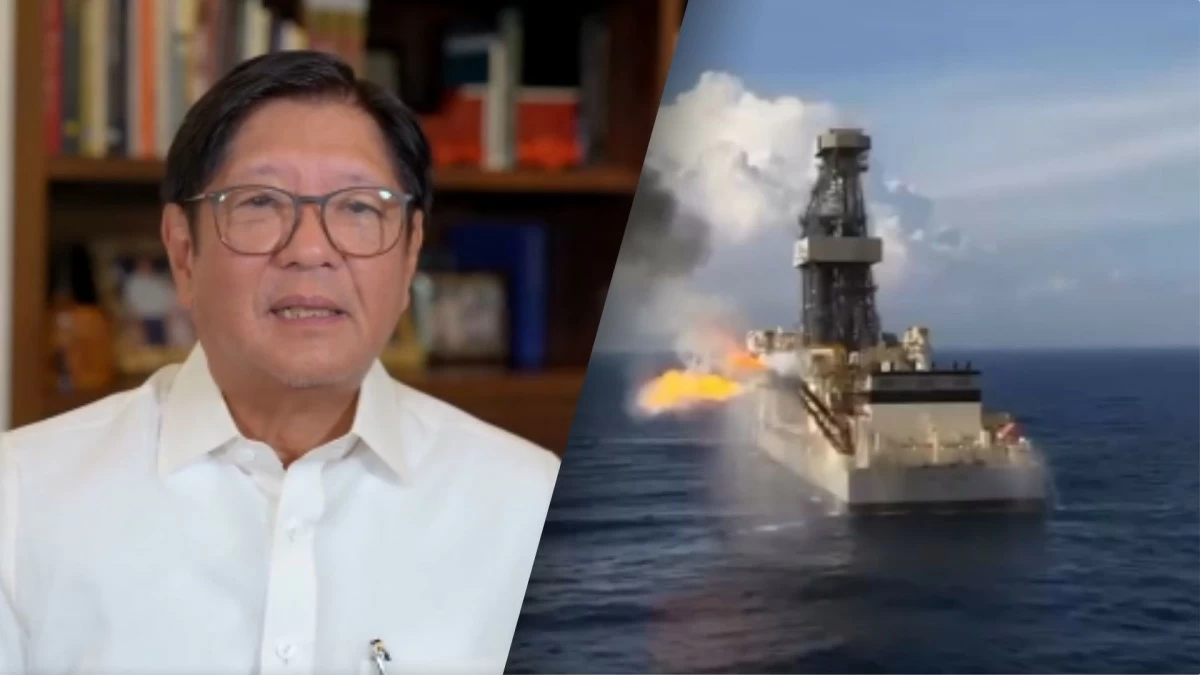
President Marcos announced on Monday, Jan. 19, the discovery of a new natural gas reservoir east of the Malampaya field, marking the country’s first significant gas find in more than ten years and strengthening domestic energy security.
In a video report posted on his social media accounts, Marcos said the reservoir, known as Malampaya East 1 (MAE-1), is located about five kilometers east of the existing Malampaya gas field.
The President said MAE-1 is estimated to contain around 98 billion cubic feet of gas in place, equivalent to nearly 14 billion kilowatt-hours of electricity in a year.
“The Philippines has struck natural gas at Malampaya East-1, our first major discovery in more than a decade, giving fresh momentum to our efforts to secure a stable and reliable energy supply for the country,” he wrote on Facebook.
“Ibig sabihin, makakapag-supply ito ng kuryente sa mahigit 5.7 milyon na milyong kabahayan, 9,500 na gusali, o halos 200,000 paaralan sa loob ng isang taon (This means it can supply electricity to more than 5.7 million households, 9,500 buildings, or nearly 200,000 schools for one year),” he said in the video.
He added that the discovery will help sustain Malampaya’s contribution and reinforce the country’s domestic gas supply for years to come.

High-yield well

Initial testing showed the MAE-1 well flowed at around 60 million cubic feet of gas per day, indicating high productivity comparable to the original Malampaya wells, according to the President.
He added that the discovery also includes condensate, a high-value liquid fuel that can further support efforts to stabilize the country’s power supply.
President Marcos said the drilling was led by Filipinos and completed without any accidents or environmental incidents.
Next steps in Malampaya expansion
Marcos said MAE-1 is the first milestone under the Malampaya Phase 4 drilling campaign, which also includes the Camago and Bagong Pag-asa wells.
He said the next steps involve the completion and testing of Camago-3, followed by the drilling of the Pag-asa Exploration well to pursue additional gas resources.

Public-private partnership

The President credited the achievement to the Service Contract (SC) 38 Consortium led by Prime Energy, in partnership with UC 38, Philippine National Oil Company (PNOC) Exploration Corporation, and Prime Oil and Gas Incorporated.
“Patunay ito na sa responsableng pangangalaga sa kalikasan at matibay na pagtutulungan ng gobyerno at pribadong sektor, makakamit natin ang mas maasahang supply ng enerhiya para sa bawat Pilipino (This proves that through responsible environmental stewardship and strong government–private sector cooperation, we can achieve a more reliable energy supply for every Filipino),” he said.
In a statement, Prime Energy, operator of SC No. 38, hailed the discovery of a new natural gas field at Malampaya East-1 as a breakthrough for Philippine energy independence.
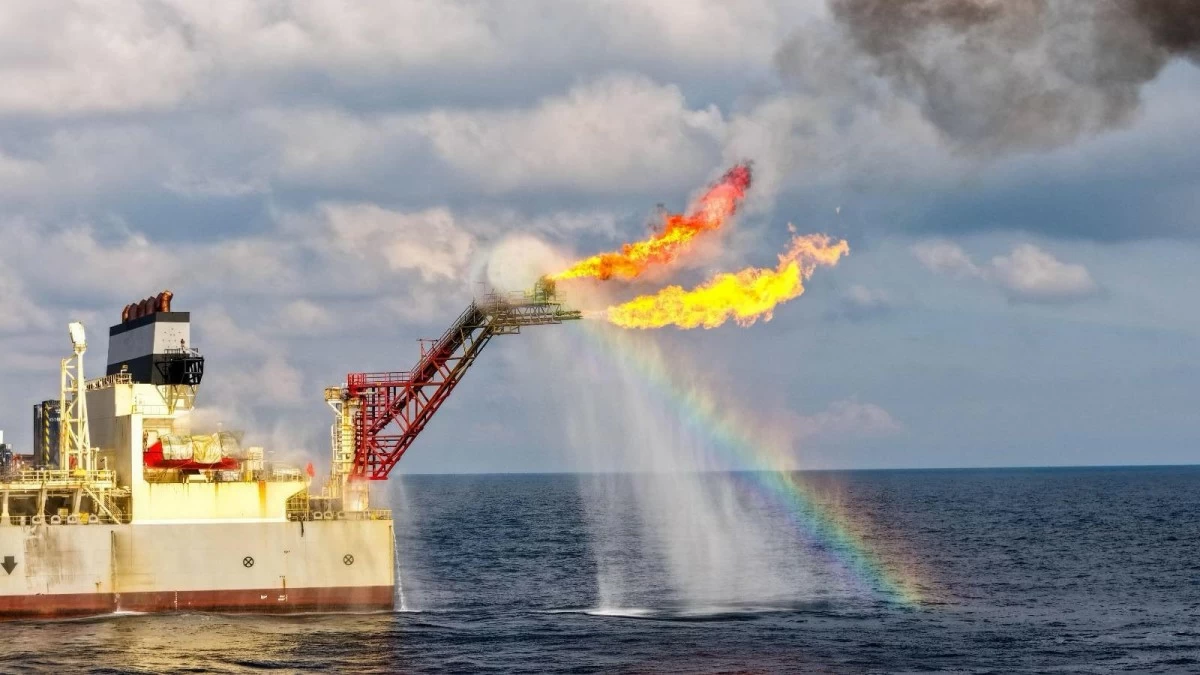
Photo shows the flaring operation off the coast of Palawan following the discovery of a new natural gas field at Malampaya East-1. (Prime Energy)
“This gas discovery is a victory for the Filipino people,” the company said.
“When we assumed operatorship, we committed to the President and the nation to breathe new life into Malampaya and revitalize the indigenous natural gas sector. Today, we are delivering on that commitment,” it added.
Prime Energy thanked President Marcos for his leadership, particularly for approving the extension of SC 38 and for the enactment of the Philippine Natural Gas Industry Development Act, which, it said, “provides the stability and confidence needed to pursue continued exploration of additional gas resources.”
Malampaya Phase 4 has been certified as a Project of National Significance. Since its inception, the Malampaya project has generated more than $13.9 billion in revenues for the Philippine government, while significantly reducing dependence on imported fuels.

Related Tags

President Marcos Bongbong Marcos Malampaya Malampaya gas field
ADVERTISEMENT
.most-popular .layout-ratio{ padding-bottom: 79.13%; } @media (min-width: 768px) and (max-width: 1024px) { .widget-title { font-size: 15px !important; } }

{{ articles_filter_1561_widget.title }}

.most-popular .layout-ratio{ padding-bottom: 79.13%; } @media (min-width: 768px) and (max-width: 1024px) { .widget-title { font-size: 15px !important; } }

{{ articles_filter_1562_widget.title }}

.most-popular .layout-ratio{ padding-bottom: 79.13%; } @media (min-width: 768px) and (max-width: 1024px) { .widget-title { font-size: 15px !important; } }

{{ articles_filter_1563_widget.title }}

{{ articles_filter_1564_widget.title }}

.mb-article-details { position: relative; } .mb-article-details .article-body-preview, .mb-article-details .article-body-summary{ font-size: 17px; line-height: 30px; font-family: "Libre Caslon Text", serif; color: #000; } .mb-article-details .article-body-preview iframe , .mb-article-details .article-body-summary iframe{ width: 100%; margin: auto; } .read-more-background { background: linear-gradient(180deg, color(display-p3 1.000 1.000 1.000 / 0) 13.75%, color(display-p3 1.000 1.000 1.000 / 0.8) 30.79%, color(display-p3 1.000 1.000 1.000) 72.5%); position: absolute; height: 200px; width: 100%; bottom: 0; display: flex; justify-content: center; align-items: center; padding: 0; } .read-more-background a{ color: #000; } .read-more-btn { padding: 17px 45px; font-family: Inter; font-weight: 700; font-size: 18px; line-height: 16px; text-align: center; vertical-align: middle; border: 1px solid black; background-color: white; } .hidden { display: none; }
function initializeAllSwipers() { // Get all hidden inputs with cms_article_id document.querySelectorAll('[id^="cms_article_id_"]').forEach(function (input) { const cmsArticleId = input.value; const articleSelector = '#article-' + cmsArticleId + ' .body_images'; const swiperElement = document.querySelector(articleSelector); if (swiperElement && !swiperElement.classList.contains('swiper-initialized')) { new Swiper(articleSelector, { loop: true, pagination: false, navigation: { nextEl: '#article-' + cmsArticleId + ' .swiper-button-next', prevEl: '#article-' + cmsArticleId + ' .swiper-button-prev', }, }); } }); } setTimeout(initializeAllSwipers, 3000); const intersectionObserver = new IntersectionObserver( (entries) => { entries.forEach((entry) => { if (entry.isIntersecting) { const newUrl = entry.target.getAttribute("data-url"); if (newUrl) { history.pushState(null, null, newUrl); let article = entry.target; // Extract metadata const author = article.querySelector('.author-section').textContent.replace('By', '').trim(); const section = article.querySelector('.section-info ').textContent.replace(' ', ' '); const title = article.querySelector('.article-title h1').textContent; // Parse URL for Chartbeat path format const parsedUrl = new URL(newUrl, window.location.origin); const cleanUrl = parsedUrl.host + parsedUrl.pathname; // Update Chartbeat configuration if (typeof window._sf_async_config !== 'undefined') { window._sf_async_config.path = cleanUrl; window._sf_async_config.sections = section; window._sf_async_config.authors = author; } // Track virtual page view with Chartbeat if (typeof pSUPERFLY !== 'undefined' && typeof pSUPERFLY.virtualPage === 'function') { try { pSUPERFLY.virtualPage({ path: cleanUrl, title: title, sections: section, authors: author }); } catch (error) { console.error('ping error', error); } } // Optional: Update document title if (title && title !== document.title) { document.title = title; } } } }); }, { threshold: 0.1 } ); function showArticleBody(button) { const article = button.closest("article"); const summary = article.querySelector(".article-body-summary"); const body = article.querySelector(".article-body-preview"); const readMoreSection = article.querySelector(".read-more-background"); // Hide summary and read-more section summary.style.display = "none"; readMoreSection.style.display = "none"; // Show the full article body body.classList.remove("hidden"); } document.addEventListener("DOMContentLoaded", () => { let loadCount = 0; // Track how many times articles are loaded const offset = [1, 2, 3, 4, 5, 6, 7, 8, 9, 10]; // Offset values const currentUrl = window.location.pathname.substring(1); let isLoading = false; // Prevent multiple calls if (!currentUrl) { console.log("Current URL is invalid."); return; } const sentinel = document.getElementById("load-more-sentinel"); if (!sentinel) { console.log("Sentinel element not found."); return; } function isSentinelVisible() { const rect = sentinel.getBoundingClientRect(); return ( rect.top < window.innerHeight && rect.bottom >= 0 ); } function onScroll() { if (isLoading) return; if (isSentinelVisible()) { if (loadCount >= offset.length) { console.log("Maximum load attempts reached."); window.removeEventListener("scroll", onScroll); return; } isLoading = true; const currentOffset = offset[loadCount]; window.loadMoreItems().then(() => { let article = document.querySelector('#widget_1690 > div:nth-last-of-type(2) article'); intersectionObserver.observe(article) loadCount++; }).catch(error => { console.error("Error loading more items:", error); }).finally(() => { isLoading = false; }); } } window.addEventListener("scroll", onScroll); });

Sign up by email to receive news.