






Manila Bulletin
 Business
The Economy
Historically low jobless rates fail to lift millions from working poverty
Business
The Economy
Historically low jobless rates fail to lift millions from working poverty
Business
The Economy
Historically low jobless rates fail to lift millions from working poverty
Historically low jobless rates fail to lift millions from working poverty
Published Jan 19, 2026 12:38 pm
|
Updated Jan 19, 2026 02:10 pm


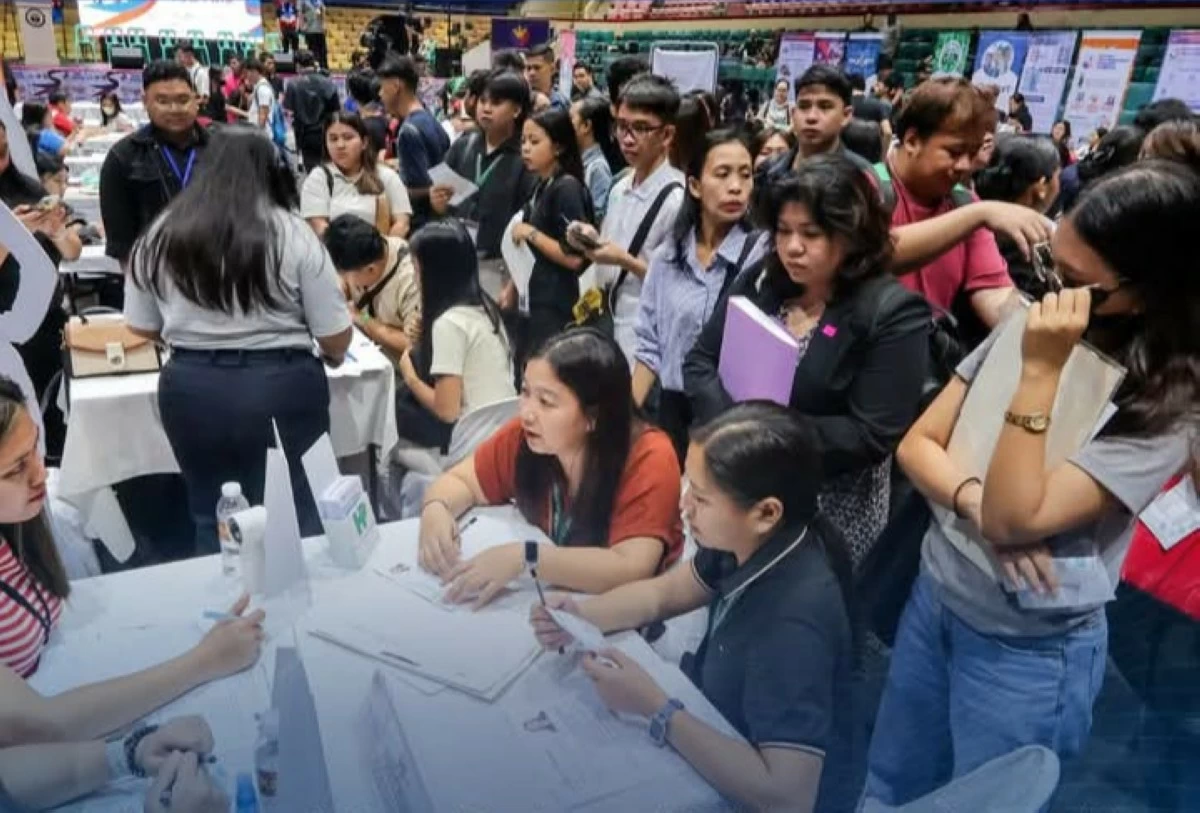
The Department of Labor and Employment (DOLE) sustains nationwide employment facilitation and youth employability programs to support Filipino workers. (DOLE photo)
Global unemployment will hold at historically low levels through 2026, yet a swelling tide of informal labor and “working poverty” threatens to undermine gains in the post-pandemic era, according to the International Labour Organization (ILO).
In its Employment and Social Trends 2026 report released Wednesday, Jan. 14, the ILO projected the global jobless rate will settle at 4.9 percent this year, roughly 186 million people.
The stagnation is expected to persist into 2027, with the unemployment rate remaining virtually unchanged from levels seen in 2024 and 2025. While that figure suggested a stable headline environment, the agency warned of a “jobs gap” of 408 million people who want employment but lack access to it.
The ILO’s findings noted the deepening divide in the quality of work. More than 2.1 billion workers, or 57.7 percent of the global workforce, are expected to be trapped in informal employment this year.
These roles typically lack social protections, steady contracts, or livable wages. ILO Director-General Gilbert F. Houngbo noted that approximately 284 million workers continue to live in extreme poverty, subsisting on less than the equivalent of about 170 pesos a day.
Mr. Houngbo expressed concern that the number of informal workers is rising specifically in low-income nations, signaling a lack of progress in the regions that require the most intervention.
He also pointed to persistent gender gaps and a slow transition toward higher-quality sectors as primary drivers of global inequality.
“Worryingly, the number of working poor and informal workers is rising in low-income countries, highlighting a lack of progress where it is needed most. Gender gaps also remain widespread throughout the world of work, with limited advances in only a few areas, such as the reduction in contributing family work,” he said.
The report arrived as the Philippines navigates its own volatile recovery. Recent data from the Philippine Statistics Authority showed the domestic unemployment rate eased to 4.4 percent in November from five percent in October. This brought the number of jobless Filipinos down to 2.25 million, though the figure remains significantly higher than the 1.66 million recorded during the same period a year earlier.
While the local market showed resilience, the PSA noted that a succession of powerful typhoons in late 2025 hampered growth in the vital services sector.
Beyond climate risks, the ILO identified trade uncertainty, soaring sovereign debt, and the rapid integration of artificial intelligence as major headwinds.
While aging populations in wealthier nations may naturally cushion unemployment rates by tightening labor supply, young workers face a more precarious entry into the workforce.
The report warned that firms are increasingly cutting entry-level hiring as AI automates tasks typically assigned to junior staff.
Global labor productivity is forecast to grow two percent in 2026, matching the decade-long trend prior to 2020. However, weak productivity in developing economies is preventing wages from catching up with those in industrialized nations.
Houngbo warned that relying on broader economic growth is no longer a sufficient strategy for improving labor conditions, urging governments to address debt crises that threaten to erode social safety nets.