ADVERTISEMENT

Albay public safety office closely monitoring Mayon

Says new moon could trigger volcanic activities

Published Jan 19, 2026 12:18 pm
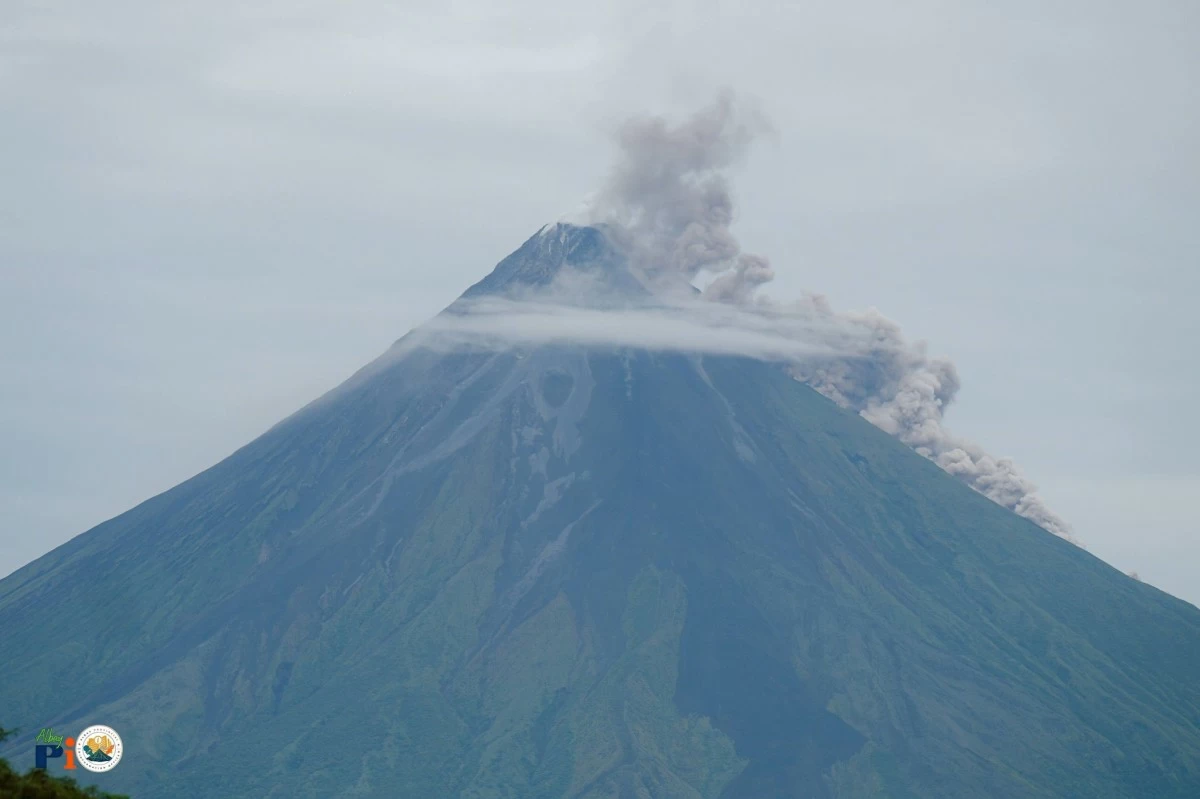
MAYON Volcano (Albay PIO FB)
LEGAZPI CITY, Albay – The Albay Public Safety and Emergency Management Office (APSEMO) continues to closely monitor the activity of Mayon Volcano amid the current new moon, citing scientific studies that suggest lunar and solar gravitational forces can act as possible triggers for volcanic activity under certain conditions.
APSEMO chief Roderick Mendoza said the agency is maintaining heightened vigilance due to the potential effects of the combined gravitational pull of the Moon and the Sun, a phenomenon that occurs during the new moon phase.
Mendoza emphasized, however, that this factor is considered a trigger rather than a primary cause of an eruption.
“The possibility is not high. It can only happen if the volcano is already primed to erupt. It’s true. Mayon could sometimes be lunatic, but only under the right conditions,” Mendoza said, noting that scientific research shows tidal forces only come into play when a volcano is already in a critical or eruptive stage.
The scientific process behind this phenomenon is known as tidal triggering, driven by solid Earth tides, the subtle deformation of the Earth’s crust caused by the gravitational pull of the Moon and Sun.
Similar to how lunar gravity creates ocean tides, it can also stretch or compress the Earth’s crust by several centimeters, exerting additional stress on magma chambers beneath active volcanoes.
During new and full Moon phases, known as syzygy, the Sun, Moon, and Earth align, producing spring tides that maximize gravitational stress.
Studies suggest that volcanoes with highly pressurized magma chambers are slightly more likely – by about 10 to 20 percent – to begin eruptive activity during these periods compared to times of lower tidal stress, such as quarter moon phases.
Mendoza cited the research of renowned volcanologist Dr. Chris Newhall, who is widely recognized for his work on the Volcanic Explosivity Index and for leading scientific efforts during the 1991 Mount Pinatubo eruption.
Newhall’s studies on Philippine volcanoes, including Mayon, indicate that tidal forces do not cause eruptions outright but can act as a “final nudge” when internal volcanic pressure is already near its breaking point.
According to Newhall’s framework, the stress induced by Earth tides is extremely small, estimated at about one-thousandth of a bar.
However, if magma pressure is already at 99.9 percent of the threshold needed to fracture surrounding rock, even this minor stress change can trigger an eruption.
Historical data on Mayon Volcano show that eruptive pulses or the onset of new eruptive phases have often coincided with the fortnightly tidal cycle of new and full moons.
Similar patterns have also been observed in other volcanoes worldwide, such as Fuego Volcano in Guatemala.
Despite these correlations, scientists caution against assuming causality.
Newhall’s research stresses that if a volcano is not already showing signs of unrest – such as increased seismicity or gas emissions – the new moon will have no effect.
Currently, Mayon Volcano remains under Alert Level 3 due to elevated volcanic activity.
Mendoza assured the public that APSEMO is not taking the situation lightly, even if the probability of a tidal-triggered eruption remains low.
“If such an eruption were to occur, it could actually shorten the stay of affected residents in evacuation centers. In past eruptions, evacuees stayed for four to five months. If an eruption happens and subsides more quickly, residents may be able to return home sooner,” he said.
APSEMO reiterated its call for residents within the Permanent Danger Zone to remain cautious and to follow official advisories as authorities continue round-the-clock monitoring of Mayon’s condition.

Related Tags

Mayon Volcano New Moon Albay APSEMO
ADVERTISEMENT
.most-popular .layout-ratio{ padding-bottom: 79.13%; } @media (min-width: 768px) and (max-width: 1024px) { .widget-title { font-size: 15px !important; } }

{{ articles_filter_1561_widget.title }}

.most-popular .layout-ratio{ padding-bottom: 79.13%; } @media (min-width: 768px) and (max-width: 1024px) { .widget-title { font-size: 15px !important; } }

{{ articles_filter_1562_widget.title }}

.most-popular .layout-ratio{ padding-bottom: 79.13%; } @media (min-width: 768px) and (max-width: 1024px) { .widget-title { font-size: 15px !important; } }

{{ articles_filter_1563_widget.title }}

{{ articles_filter_1564_widget.title }}

.mb-article-details { position: relative; } .mb-article-details .article-body-preview, .mb-article-details .article-body-summary{ font-size: 17px; line-height: 30px; font-family: "Libre Caslon Text", serif; color: #000; } .mb-article-details .article-body-preview iframe , .mb-article-details .article-body-summary iframe{ width: 100%; margin: auto; } .read-more-background { background: linear-gradient(180deg, color(display-p3 1.000 1.000 1.000 / 0) 13.75%, color(display-p3 1.000 1.000 1.000 / 0.8) 30.79%, color(display-p3 1.000 1.000 1.000) 72.5%); position: absolute; height: 200px; width: 100%; bottom: 0; display: flex; justify-content: center; align-items: center; padding: 0; } .read-more-background a{ color: #000; } .read-more-btn { padding: 17px 45px; font-family: Inter; font-weight: 700; font-size: 18px; line-height: 16px; text-align: center; vertical-align: middle; border: 1px solid black; background-color: white; } .hidden { display: none; }
function initializeAllSwipers() { // Get all hidden inputs with cms_article_id document.querySelectorAll('[id^="cms_article_id_"]').forEach(function (input) { const cmsArticleId = input.value; const articleSelector = '#article-' + cmsArticleId + ' .body_images'; const swiperElement = document.querySelector(articleSelector); if (swiperElement && !swiperElement.classList.contains('swiper-initialized')) { new Swiper(articleSelector, { loop: true, pagination: false, navigation: { nextEl: '#article-' + cmsArticleId + ' .swiper-button-next', prevEl: '#article-' + cmsArticleId + ' .swiper-button-prev', }, }); } }); } setTimeout(initializeAllSwipers, 3000); const intersectionObserver = new IntersectionObserver( (entries) => { entries.forEach((entry) => { if (entry.isIntersecting) { const newUrl = entry.target.getAttribute("data-url"); if (newUrl) { history.pushState(null, null, newUrl); let article = entry.target; // Extract metadata const author = article.querySelector('.author-section').textContent.replace('By', '').trim(); const section = article.querySelector('.section-info ').textContent.replace(' ', ' '); const title = article.querySelector('.article-title h1').textContent; // Parse URL for Chartbeat path format const parsedUrl = new URL(newUrl, window.location.origin); const cleanUrl = parsedUrl.host + parsedUrl.pathname; // Update Chartbeat configuration if (typeof window._sf_async_config !== 'undefined') { window._sf_async_config.path = cleanUrl; window._sf_async_config.sections = section; window._sf_async_config.authors = author; } // Track virtual page view with Chartbeat if (typeof pSUPERFLY !== 'undefined' && typeof pSUPERFLY.virtualPage === 'function') { try { pSUPERFLY.virtualPage({ path: cleanUrl, title: title, sections: section, authors: author }); } catch (error) { console.error('ping error', error); } } // Optional: Update document title if (title && title !== document.title) { document.title = title; } } } }); }, { threshold: 0.1 } ); function showArticleBody(button) { const article = button.closest("article"); const summary = article.querySelector(".article-body-summary"); const body = article.querySelector(".article-body-preview"); const readMoreSection = article.querySelector(".read-more-background"); // Hide summary and read-more section summary.style.display = "none"; readMoreSection.style.display = "none"; // Show the full article body body.classList.remove("hidden"); } document.addEventListener("DOMContentLoaded", () => { let loadCount = 0; // Track how many times articles are loaded const offset = [1, 2, 3, 4, 5, 6, 7, 8, 9, 10]; // Offset values const currentUrl = window.location.pathname.substring(1); let isLoading = false; // Prevent multiple calls if (!currentUrl) { console.log("Current URL is invalid."); return; } const sentinel = document.getElementById("load-more-sentinel"); if (!sentinel) { console.log("Sentinel element not found."); return; } function isSentinelVisible() { const rect = sentinel.getBoundingClientRect(); return ( rect.top < window.innerHeight && rect.bottom >= 0 ); } function onScroll() { if (isLoading) return; if (isSentinelVisible()) { if (loadCount >= offset.length) { console.log("Maximum load attempts reached."); window.removeEventListener("scroll", onScroll); return; } isLoading = true; const currentOffset = offset[loadCount]; window.loadMoreItems().then(() => { let article = document.querySelector('#widget_1690 > div:nth-last-of-type(2) article'); intersectionObserver.observe(article) loadCount++; }).catch(error => { console.error("Error loading more items:", error); }).finally(() => { isLoading = false; }); } } window.addEventListener("scroll", onScroll); });

Sign up by email to receive news.