






Manila Bulletin
 Philippines
National
42% of measles cases recorded in Mindanao prompt DOH to roll out Phase 1 of 'Ligtas Tigdas
Philippines
National
42% of measles cases recorded in Mindanao prompt DOH to roll out Phase 1 of 'Ligtas Tigdas
Philippines
National
42% of measles cases recorded in Mindanao prompt DOH to roll out Phase 1 of 'Ligtas Tigdas
42% of measles cases recorded in Mindanao prompt DOH to roll out Phase 1 of 'Ligtas Tigdas
By Jel Santos
Published Jan 19, 2026 06:23 pm


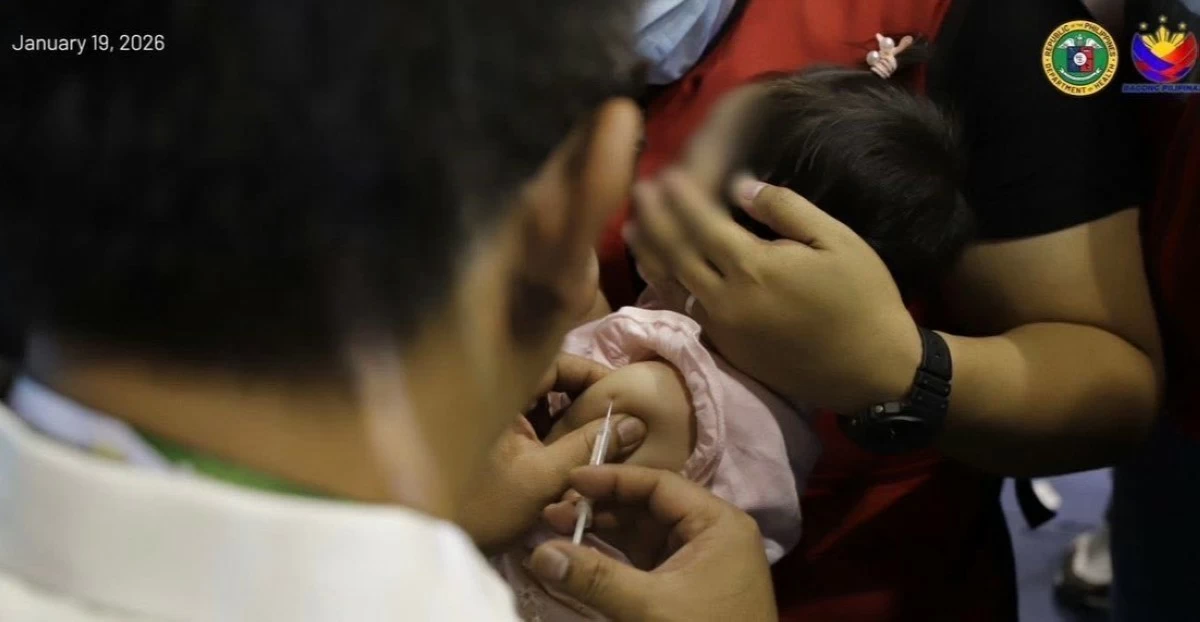
(DOH PHOTO)
Mindanao accounted for 2,172 measles cases, or 42 percent of the national total, from Jan. 1, 2025 to Jan. 3, 2026, prompting the Department of Health (DOH) to launch Phase 1 of the “Ligtas Tigdas” or Measles-Rubella Vaccine Supplemental Immunization Activity (MR-SIA) in the region on Monday, Jan. 19.
The vaccination campaign aims to reach 2.8 million children aged five years old and below (6–59 months) in Mindanao, amid a continued rise in measles and rubella infections nationwide, the agency said.
“Dahil sa mataas na kaso, sinimulan ng DOH ang Phase 1 ng Ligtas Tigdas o Measles-Rubella Vaccine Supplemental Immunization Activity (MR-SIA) sa mga rehiyon nito, na target mabakunahan ang 2.8 na milyong bata edad lima (6–59 months) pababa (Due to the high number of cases, the DOH has started Phase 1 of the Ligtas Tigdas or Measles-Rubella Vaccine Supplemental Immunization Activity [MR-SIA] in its regions, targeting 2.8 million children aged five years old and below [6–59 months]),” the DOH said in an advisory.
The health department urged parents and guardians to bring their children to the nearest vaccination site, regardless of prior vaccination status, to prevent hospitalization and death due to measles and rubella.
While adverse reactions are rare, the DOH said healthcare workers are prepared to respond to possible side effects following immunization.
“Bagaman madalang, nakahanda rin ang mga healthcare worker sakaling may makaranas ng side effects dahil sa bakuna (Although rare, healthcare workers are also prepared in case anyone experiences side effects due to the vaccine),” it said.
Cases up 32%
Earlier, the DOH reported that measles and rubella cases nationwide climbed by 32 percent over the past year, with 5,159 cases recorded from Jan. 1, 2025 to Jan. 3, 2026, compared with 3,901 cases in 2024.
DOH spokesperson Assistant Secretary Albert Domingo said 73 percent of the recorded cases involved unvaccinated individuals, underscoring the need to strengthen routine and supplemental immunization coverage.
Health authorities reiterated that vaccination remains the most effective protection against measles and rubella, which can lead to severe complications, especially among young children.