

ADVERTISEMENT

Lesson learned: House bent on making impeachment process 'Supreme Court-proof'

Published Jan 18, 2026 05:38 pm

At A Glance

  • The House of Representatives intends to make its process for impeachment "Supreme Court (SC)-proof" after learning a hard lesson during the previous 19th Congress when the high court declared the impeachment complaint against Vice President Sara Duterte as unconstitutional.
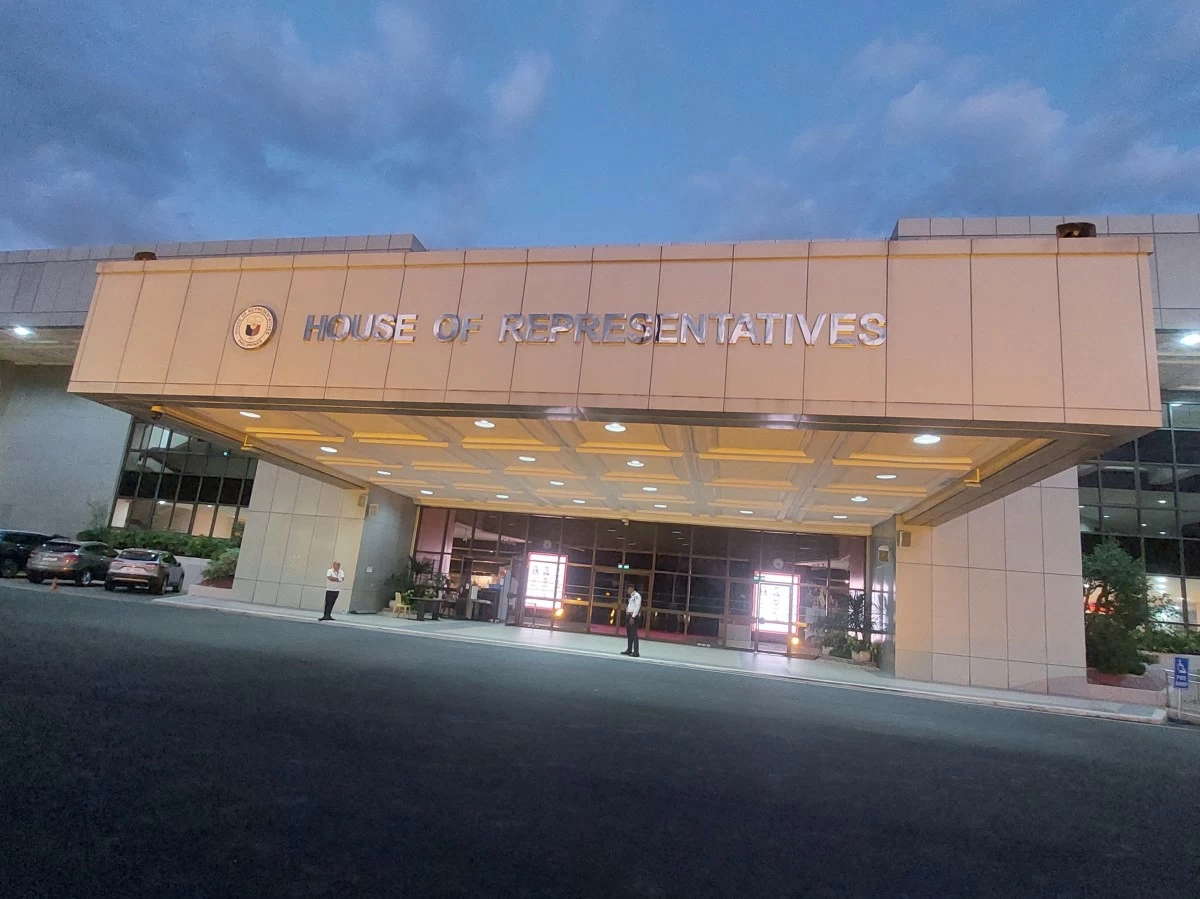
The House of Representatives (Ellson Quismorio/ MANILA BULLETIN)

The House of Representatives intends to make its process for impeachment "Supreme Court (SC)-proof" after learning a hard lesson during the previous 19th Congress when the high court declared the impeachment complaint against Vice President Sara Duterte as unconstitutional.
Tingog Party-list Rep. Jude Acidre and Lanao del Sur 1st district Rep. Zia Alonto Adiong had this to say in a news forum over the weekend amid rumors that a new complaint would be lodged against the lady official next month.
“Without conceding the pending motion for reconsideration (MR), we will have to come up with rules that are ‘Supreme Court-proof’ and in a way cognizant with what the indications presented in the latest ruling on the third mode,’ Acidre said.
Acidre was referring to the House's MR on the SC ruling in July. 2025 that struck down the 33-page impeachment complaint that the lower chamber submitted directly to the Senate.
It can be recalled that the senators failed to hold a trial on the impeached Vice President Duterte, despite the complaint's submission months earlier on Feb. 5, 2025.
The House leadership is moving to adopt new impeachment rules for the current 20th Congress that align with the SC’s latest jurisprudence, with House leaders saying the goal is to ensure any future case filed against Vice President Duterte or others is procedurally airtight and built on clear guidelines.
“Once we approve the rules, because we haven’t approved the rules for impeachment yet for the 20th Congress, that would be more or less cognizant of the direction set already by the [SC] and its latest jurisprudence.
"But nonetheless, that is not to preempt what the final resolution would be on the pending motion for reconsideration,” Acidre reiterated.
“And I’m sure when things are procedural and there’s greater clarity on the part of the House and more clear guidelines from the [SC] jurisprudence, I don’t think it’s going to affect the final result, which is to make sure that we have a strong impeachment complaint should an impeachment be filed in the House,” he added.
It can be recalled that SC flagged key procedural issues in the previous impeachment effort, a ruling that reshaped how the chamber is expected to act on future impeachment complaints.
The Feb. 5, 2025 complaint prospered in the House via the direct transmission method wherein at least two-thirds of the 300-plus strong chamber voted to adopt it in plenary, effectively impeaching Duterte.
The complaint did not pass through committee deliberations, which was the usual (and longer) route for an impeachment complaint.
The one-year prohibition on the filing of a new impeachment complaint against the Vice President will lapse on Feb. 6.
Meanwhile, Adiong rejected the notion that the SC ruling overturned the substance of the complaint. He argued that the decision focused on the technical process rather than the underlying allegations and factual claims.
“Let me just clarify that the petition, I mean the decision of the [SC] regarding the impeachment was more on the technicality and not on the merits of the case that we have filed,” Adiong said.
At any rate, he said the House will ultimately craft rules that comply with whatever final posture the SC adopts, especially if the MR is not granted. This means that the high court’s ruling is now the controlling standard.
“What we can assure you is should there be any adoption of new rules covering impeachment processes and procedures, this would be in compliance,” Adiong noted.
ADVERTISEMENT
.most-popular .layout-ratio{ padding-bottom: 79.13%; } @media (min-width: 768px) and (max-width: 1024px) { .widget-title { font-size: 15px !important; } }

{{ articles_filter_1561_widget.title }}

.most-popular .layout-ratio{ padding-bottom: 79.13%; } @media (min-width: 768px) and (max-width: 1024px) { .widget-title { font-size: 15px !important; } }

{{ articles_filter_1562_widget.title }}

.most-popular .layout-ratio{ padding-bottom: 79.13%; } @media (min-width: 768px) and (max-width: 1024px) { .widget-title { font-size: 15px !important; } }

{{ articles_filter_1563_widget.title }}

{{ articles_filter_1564_widget.title }}

.mb-article-details { position: relative; } .mb-article-details .article-body-preview, .mb-article-details .article-body-summary{ font-size: 17px; line-height: 30px; font-family: "Libre Caslon Text", serif; color: #000; } .mb-article-details .article-body-preview iframe , .mb-article-details .article-body-summary iframe{ width: 100%; margin: auto; } .read-more-background { background: linear-gradient(180deg, color(display-p3 1.000 1.000 1.000 / 0) 13.75%, color(display-p3 1.000 1.000 1.000 / 0.8) 30.79%, color(display-p3 1.000 1.000 1.000) 72.5%); position: absolute; height: 200px; width: 100%; bottom: 0; display: flex; justify-content: center; align-items: center; padding: 0; } .read-more-background a{ color: #000; } .read-more-btn { padding: 17px 45px; font-family: Inter; font-weight: 700; font-size: 18px; line-height: 16px; text-align: center; vertical-align: middle; border: 1px solid black; background-color: white; } .hidden { display: none; }
function initializeAllSwipers() { // Get all hidden inputs with cms_article_id document.querySelectorAll('[id^="cms_article_id_"]').forEach(function (input) { const cmsArticleId = input.value; const articleSelector = '#article-' + cmsArticleId + ' .body_images'; const swiperElement = document.querySelector(articleSelector); if (swiperElement && !swiperElement.classList.contains('swiper-initialized')) { new Swiper(articleSelector, { loop: true, pagination: false, navigation: { nextEl: '#article-' + cmsArticleId + ' .swiper-button-next', prevEl: '#article-' + cmsArticleId + ' .swiper-button-prev', }, }); } }); } setTimeout(initializeAllSwipers, 3000); const intersectionObserver = new IntersectionObserver( (entries) => { entries.forEach((entry) => { if (entry.isIntersecting) { const newUrl = entry.target.getAttribute("data-url"); if (newUrl) { history.pushState(null, null, newUrl); let article = entry.target; // Extract metadata const author = article.querySelector('.author-section').textContent.replace('By', '').trim(); const section = article.querySelector('.section-info ').textContent.replace(' ', ' '); const title = article.querySelector('.article-title h1').textContent; // Parse URL for Chartbeat path format const parsedUrl = new URL(newUrl, window.location.origin); const cleanUrl = parsedUrl.host + parsedUrl.pathname; // Update Chartbeat configuration if (typeof window._sf_async_config !== 'undefined') { window._sf_async_config.path = cleanUrl; window._sf_async_config.sections = section; window._sf_async_config.authors = author; } // Track virtual page view with Chartbeat if (typeof pSUPERFLY !== 'undefined' && typeof pSUPERFLY.virtualPage === 'function') { try { pSUPERFLY.virtualPage({ path: cleanUrl, title: title, sections: section, authors: author }); } catch (error) { console.error('ping error', error); } } // Optional: Update document title if (title && title !== document.title) { document.title = title; } } } }); }, { threshold: 0.1 } ); function showArticleBody(button) { const article = button.closest("article"); const summary = article.querySelector(".article-body-summary"); const body = article.querySelector(".article-body-preview"); const readMoreSection = article.querySelector(".read-more-background"); // Hide summary and read-more section summary.style.display = "none"; readMoreSection.style.display = "none"; // Show the full article body body.classList.remove("hidden"); } document.addEventListener("DOMContentLoaded", () => { let loadCount = 0; // Track how many times articles are loaded const offset = [1, 2, 3, 4, 5, 6, 7, 8, 9, 10]; // Offset values const currentUrl = window.location.pathname.substring(1); let isLoading = false; // Prevent multiple calls if (!currentUrl) { console.log("Current URL is invalid."); return; } const sentinel = document.getElementById("load-more-sentinel"); if (!sentinel) { console.log("Sentinel element not found."); return; } function isSentinelVisible() { const rect = sentinel.getBoundingClientRect(); return ( rect.top < window.innerHeight && rect.bottom >= 0 ); } function onScroll() { if (isLoading) return; if (isSentinelVisible()) { if (loadCount >= offset.length) { console.log("Maximum load attempts reached."); window.removeEventListener("scroll", onScroll); return; } isLoading = true; const currentOffset = offset[loadCount]; window.loadMoreItems().then(() => { let article = document.querySelector('#widget_1690 > div:nth-last-of-type(2) article'); intersectionObserver.observe(article) loadCount++; }).catch(error => { console.error("Error loading more items:", error); }).finally(() => { isLoading = false; }); } } window.addEventListener("scroll", onScroll); });

Sign up by email to receive news.