







Typhoons drag private construction down in November 2025


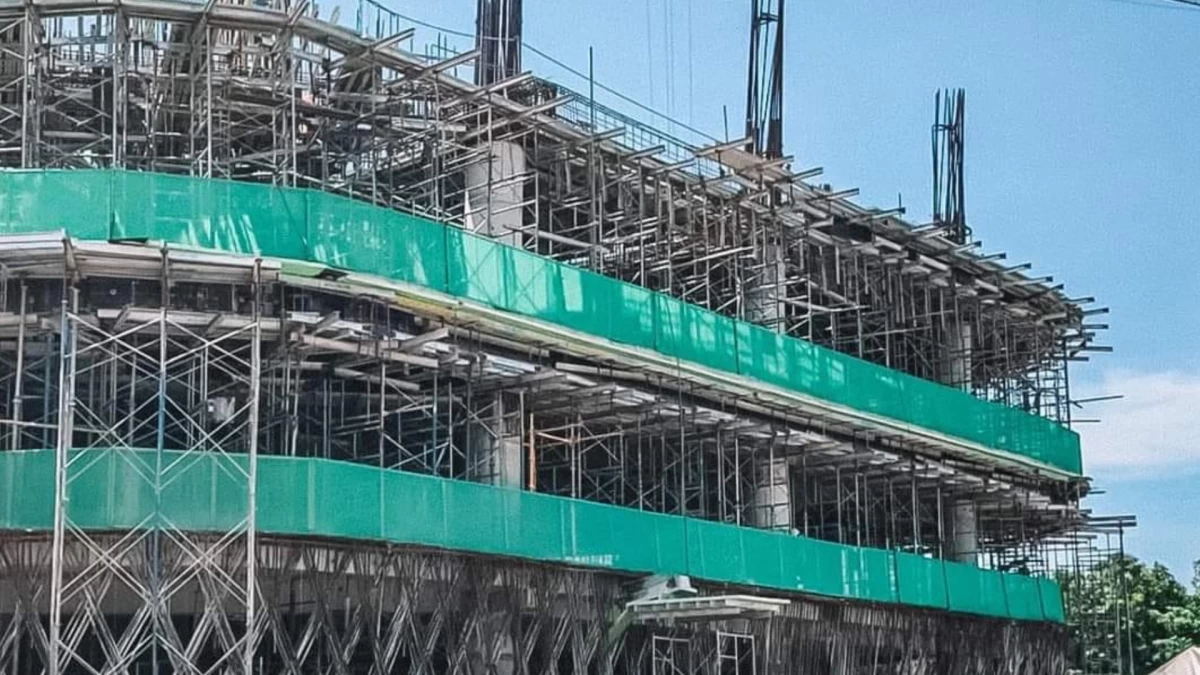
Construction activity in the Philippines slowed in November 2025 as typhoons battered the country, leading to declines in both residential and non-residential projects and signaling a cooling of the private building sector, the Philippine Statistics Authority (PSA) reported.
The latest PSA data released last Friday, Jan. 16, showed a 12.7-percent year-on-year decline in approved building permits—a key indicator of private construction activity—in November. The total number of approved projects reached 12,281, down from 14,066 during the same month in 2024 and 13,732 in October 2025.
In terms of value, PSA data showed that private construction projects in November totaled ₱40.2 billion, marking a 22.6-percent decline from the ₱51.91 billion recorded a year ago. In October, the value of approved projects stood at ₱49 billion.
As for floor area, the PSA reported a year-on-year decrease of 28.7 percent, with permits approved in November covering 2.75 million square meters (sqm), down from 3.86 million sqm a year earlier. In October, floor area also declined by 14 percent to 3.75 million sqm.
The PSA also reported declines in both residential and non-residential construction in November, at 14.5 percent and 9.7 percent, respectively. Residential projects led the month with 7,691 approved projects, accounting for more than three-fifths of total construction during the period, valued at ₱19.12 billion—lower than the projects approved during the same month in 2024 and in October.
The bulk of residential construction in November consisted of single-type houses, with 6,829 approved projects, representing 88.8 percent of total residential construction.
For non-residential construction, the PSA reported 2,854 approved projects in November, accounting for 23.2 percent of the total number of construction projects during the month, with a combined value of ₱17.51 billion—also lower than the projects approved a year ago and in October.
Commercial buildings made up the majority of non-residential projects, totaling 1,894, or 66.4 percent of all non-residential construction.
Despite having a higher number of projects and greater construction value, residential construction in November was outweighed by non-residential projects in terms of floor area. PSA data showed that non-residential projects accounted for 1.56 million sqm, compared to 1.15 million sqm for residential projects. Both sectors posted annual declines in floor area, at 17.1 percent for non-residential construction and 39.4 percent for residential construction.
The PSA added that construction for additions dropped by 44.8 percent to ₱380 million, alterations slid by 3.4 percent to ₱2.72 billion, and other construction activities fell by 33.4 percent to ₱470 million.
Michael Ricafort, chief economist at Rizal Commercial Banking Corp. (RCBC), told Manila Bulletin on Friday, Jan. 16, that the continued double-digit decline in approved building permits may partly reflect higher base effects last year, as well as disruptions from storms, flooding, and earthquakes that reduced working days and weighed on real estate and related sales.
“The said reduction in building permits is consistent with the slower local economic growth, at four percent in the third quarter of 2025, the lowest in 4.5 years or since the first quarter of 2021, and an average gross domestic product (GDP) growth of five percent from the first to the third quarter of 2025,” he added.