







MILF wary over newly passed BARMM redistricting law
Published Jan 17, 2026 05:24 pm


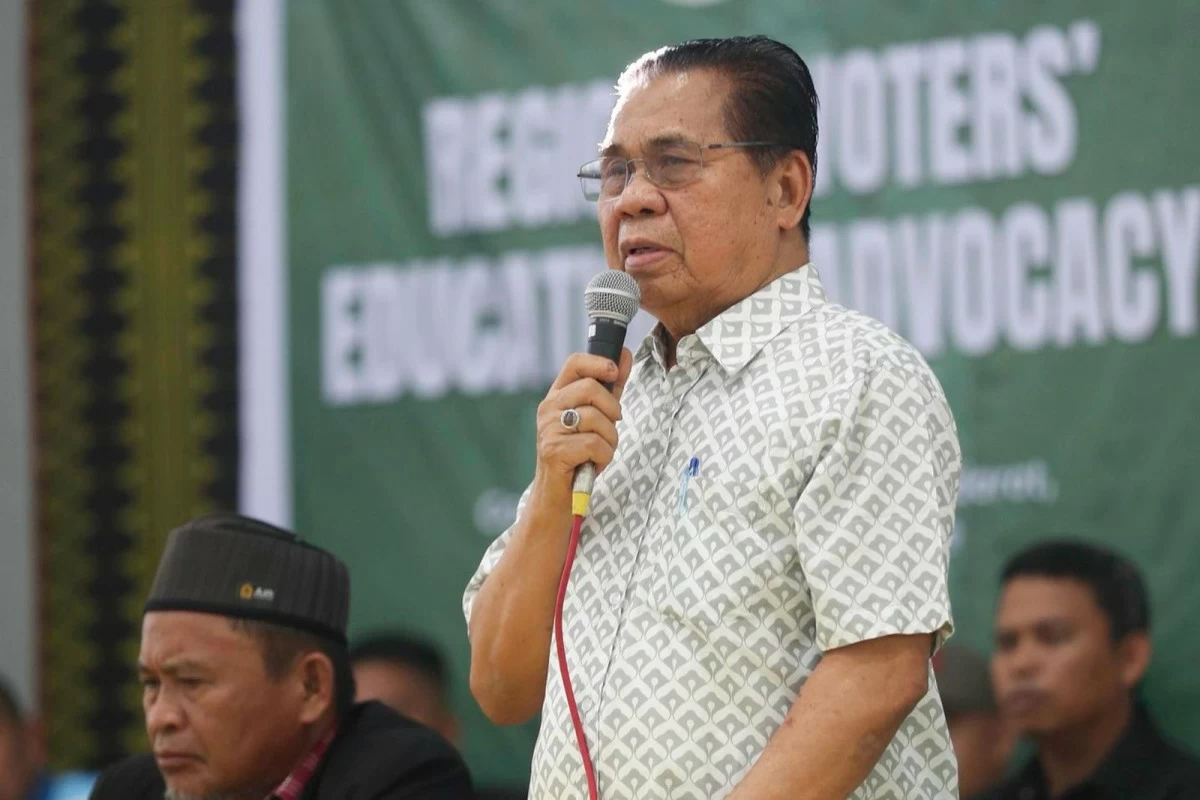
EBRAHIM
DAVAO CITY – The Moro Islamic Liberation Front (MILF) has expressed apprehension on the recently passed redistricting measure in the Bangsamoro Autonomous Region in Muslim Mindanao, saying that it “raises serious constitutional questions.”
In a statement, MILF Chairman Al Haj Murad Ebrahim said that while the they support the conduct of the first BARMM parliamentary election, the group is deeply concerned on the enactment of Parliament Bill No. 415.
The bill, "An Act Providing for the Apportionment of Parliamentary District Representative Seats in the Bangsamoro Autonomous Region in Muslim Mindanao," failed to reflect the clamor of the Bangsamoro people for fair and equitable representation, Ebrahim said.
“The measure raises serious constitutional questions, mirroring the defects that led the Supreme Court to declare Bangsamoro Autonomy Act No. 77 unconstitutional. Key issues include potential violations of the Bangsamoro Organic Law-mandated criteria for districts, such as contiguity, compactness, adjacency, and population distribution,” Ebrahim said in a statement on Friday, Jan. 16.
The MILF released the statement three days after the Bangsamoro parliament passed on third and final reading the redistricting measure that will pave the way for the conduct of the region’s first parliamentary elections.
In a special session, the bill was passed through nominal voting. Forty-eight members voted yes, 19 voted no, and four abstained.
Many of those who voted no were prominent officials of the MILF such as vice chairman and peace panel chief Mohagher Iqbal, lawyer Lanang Ali Jr., and Abdullah Macapaar (Commander Bravo).
The law seeks to establish 32 single-member parliamentary districts, allocating seats to Basilan (four), Lanao del Sur (nine), Maguindanao del Norte (five), Maguindanao del Sur (five), Tawi-Tawi (four), the Special Geographic Area (two), and Cotabato City (three).
Parliament Bill No. 415 was authored by Member of Parliament Naguib Sinarimbo, along with nine other lawmakers.
The MILF chief said that the measure utterly disregards and refuses to honor existing boundaries, and ignores historical and shared cultural origins, which were repeatedly emphasized during public consultations.
“We urge the public to actively participate in dialogues and continue to be vigilant,” Ebrahim appealed. “BARMM's transition to full autonomy demands legislation beyond reproach, prioritizing the rule of law over expediency.”
The Bangsamoro government had to craft a new redistricting law after the SC ruled that Bangsamoro Autonomy Act (BAA) Nos. 58 and 77 were unconstitutional.
The SC ruled that BAA 77 violated the Bangsamoro Organic Law’s requirements of contiguity, compactness, adjacency, and minimum population for districts, and unconstitutionally granted Congress and the President powers over apportionment and interim appointments reserved exclusively to the Bangsamoro Parliament.
It said BAA 77 was enacted after the start of the election period, contrary to the Voter’s Registration Act.
The High Court added that implementing BAA 58 after Sulu’s exclusion was unconstitutional because it would result in a Parliament with fewer than the 32 district seats required under the BOL’s 80-seat composition.
The bill awaits the signature of BARMM interim Chief Minister Abdulraof Macacua to become a law.