ADVERTISEMENT

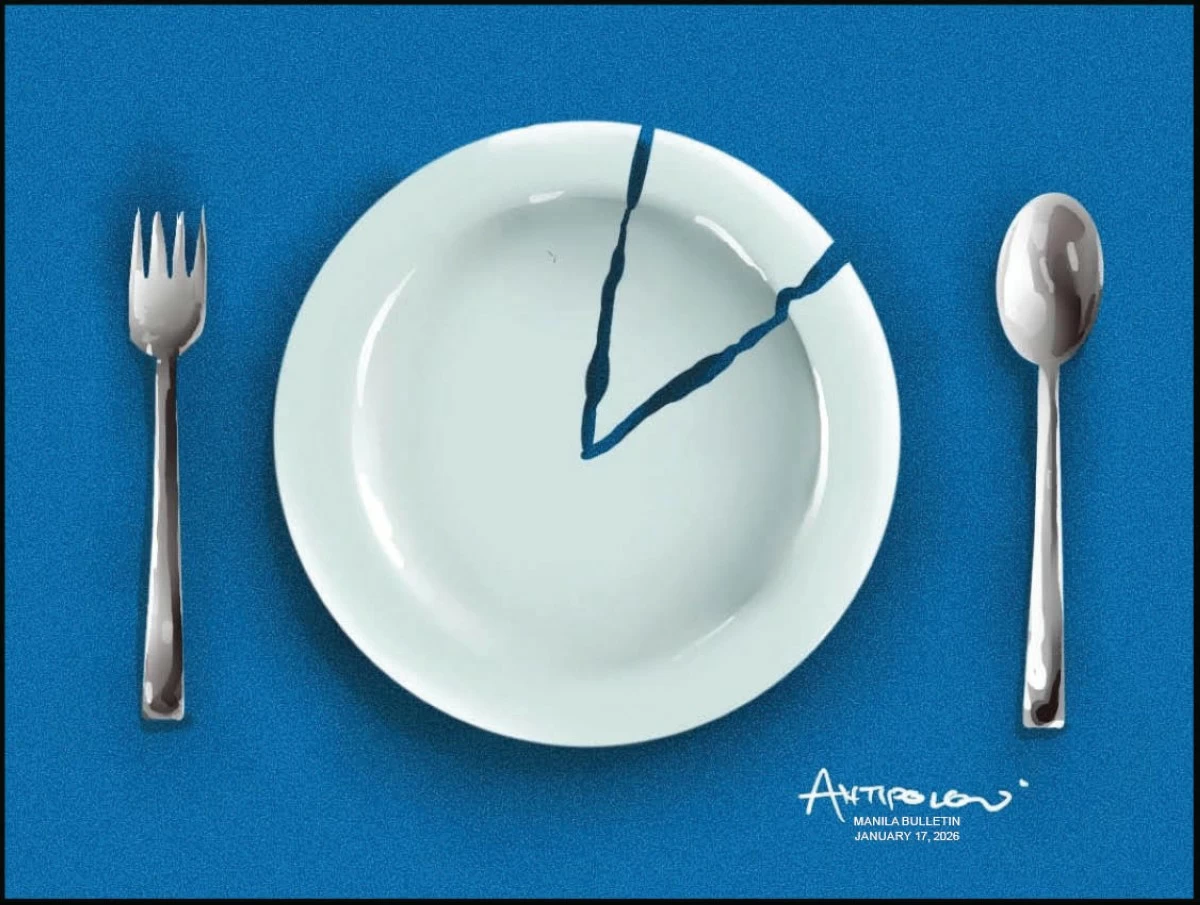
Hunger persists despite gains: A call for shared responsibility

Published Jan 17, 2026 12:05 am  |  Updated Jan 16, 2026 04:58 pm
The Social Weather Stations (SWS) survey released Jan. 14 offers a cautiously hopeful yet sobering picture of hunger in the Philippines. According to the Fourth Quarter 2025 survey, the proportion of Filipino families who experienced involuntary hunger declined to 20.1 percent, down from 22 percent in September.
While this decrease is welcome, it still means that one in five Filipino families went hungry at least once in the past three months. Such a figure should temper any celebration and compel both government and citizens to intensify efforts against hunger.
The survey, conducted nationwide among 1,200 adults from Nov. 24 to 30, 2025, reveals that hunger remains deeply uneven across regions. Mindanao posted the highest hunger incidence at 26.7 percent, followed by Metro Manila and the Visayas at 20.3 percent each. While Balance Luzon showed significant improvement, hunger rose sharply in Mindanao and the Visayas. These regional disparities highlight how economic vulnerability, food access, and social protection differ across the country—and why a one-size-fits-all solution is not the answer.
Equally troubling is the persistence of severe hunger, which affected 4.5 percent of families—those who experienced hunger often or always. Though this figure declined slightly, it represents families living in chronic deprivation, where skipping meals is not an occasional hardship but a regular reality.
Moderate hunger, affecting 15.6 percent of families, also signals instability that can easily worsen with price hikes, disasters, or job losses.
The Department of Social Welfare and Development (DSWD) welcomed the survey results, viewing the decline as encouragement to strengthen existing programs. Central to the government’s hunger mitigation strategy is the Walang Gutom Program, which provides ₱3,000 worth of monthly food credits to poor households through electronic benefit transfer cards. These credits allow beneficiaries to purchase nutritious food from accredited stores, while complementary components—nutrition education and job skills training—aim to address the roots of food insecurity.
The DSWD plans to expand the program’s coverage to 300,000 beneficiaries, using data from the Community-Based Monitoring System to ensure that aid reaches those who need it most. In addition, the department is working to scale up Walang Gutom Kitchens, which provide hot meals to individuals with little or no access to food, especially those living on the streets. Partnerships with non-government organizations are key to bringing these kitchens to more cities and regions.
While these initiatives are crucial, government action alone cannot eliminate hunger. Non-government organizations, faith-based groups, and community organizations play a vital role in feeding programs, disaster response, and community-level nutrition initiatives. By working closely with the DSWD in operating community kitchens, validating beneficiaries, and delivering services in hard-to-reach areas, NGOs help bridge gaps in coverage and implementation.
Yet hunger is not only an institutional problem—it is a societal one. Ordinary citizens also have a role to play. Filipinos can support local feeding programs through donations or volunteer work, particularly in schools and urban poor communities. Supporting community pantries, cooperatives, and local food producers strengthens grassroots solutions that make food more accessible. Citizens can also use their voices to demand transparency, efficiency, and sustained funding for hunger-alleviation programs, ensuring that these initiatives survive beyond political cycles.
At its core, hunger is a measure of how society treats its most vulnerable members. The slight easing of hunger in late 2025 shows that progress is possible, but the numbers remain unacceptably high. Until every Filipino family is assured of regular, nutritious meals, hunger must remain a national priority—and a shared responsibility.
ADVERTISEMENT
.most-popular .layout-ratio{ padding-bottom: 79.13%; } @media (min-width: 768px) and (max-width: 1024px) { .widget-title { font-size: 15px !important; } }

{{ articles_filter_1561_widget.title }}

.most-popular .layout-ratio{ padding-bottom: 79.13%; } @media (min-width: 768px) and (max-width: 1024px) { .widget-title { font-size: 15px !important; } }

{{ articles_filter_1562_widget.title }}

.most-popular .layout-ratio{ padding-bottom: 79.13%; } @media (min-width: 768px) and (max-width: 1024px) { .widget-title { font-size: 15px !important; } }

{{ articles_filter_1563_widget.title }}

{{ articles_filter_1564_widget.title }}

.mb-article-details { position: relative; } .mb-article-details .article-body-preview, .mb-article-details .article-body-summary{ font-size: 17px; line-height: 30px; font-family: "Libre Caslon Text", serif; color: #000; } .mb-article-details .article-body-preview iframe , .mb-article-details .article-body-summary iframe{ width: 100%; margin: auto; } .read-more-background { background: linear-gradient(180deg, color(display-p3 1.000 1.000 1.000 / 0) 13.75%, color(display-p3 1.000 1.000 1.000 / 0.8) 30.79%, color(display-p3 1.000 1.000 1.000) 72.5%); position: absolute; height: 200px; width: 100%; bottom: 0; display: flex; justify-content: center; align-items: center; padding: 0; } .read-more-background a{ color: #000; } .read-more-btn { padding: 17px 45px; font-family: Inter; font-weight: 700; font-size: 18px; line-height: 16px; text-align: center; vertical-align: middle; border: 1px solid black; background-color: white; } .hidden { display: none; }
function initializeAllSwipers() { // Get all hidden inputs with cms_article_id document.querySelectorAll('[id^="cms_article_id_"]').forEach(function (input) { const cmsArticleId = input.value; const articleSelector = '#article-' + cmsArticleId + ' .body_images'; const swiperElement = document.querySelector(articleSelector); if (swiperElement && !swiperElement.classList.contains('swiper-initialized')) { new Swiper(articleSelector, { loop: true, pagination: false, navigation: { nextEl: '#article-' + cmsArticleId + ' .swiper-button-next', prevEl: '#article-' + cmsArticleId + ' .swiper-button-prev', }, }); } }); } setTimeout(initializeAllSwipers, 3000); const intersectionObserver = new IntersectionObserver( (entries) => { entries.forEach((entry) => { if (entry.isIntersecting) { const newUrl = entry.target.getAttribute("data-url"); if (newUrl) { history.pushState(null, null, newUrl); let article = entry.target; // Extract metadata const author = article.querySelector('.author-section').textContent.replace('By', '').trim(); const section = article.querySelector('.section-info ').textContent.replace(' ', ' '); const title = article.querySelector('.article-title h1').textContent; // Parse URL for Chartbeat path format const parsedUrl = new URL(newUrl, window.location.origin); const cleanUrl = parsedUrl.host + parsedUrl.pathname; // Update Chartbeat configuration if (typeof window._sf_async_config !== 'undefined') { window._sf_async_config.path = cleanUrl; window._sf_async_config.sections = section; window._sf_async_config.authors = author; } // Track virtual page view with Chartbeat if (typeof pSUPERFLY !== 'undefined' && typeof pSUPERFLY.virtualPage === 'function') { try { pSUPERFLY.virtualPage({ path: cleanUrl, title: title, sections: section, authors: author }); } catch (error) { console.error('ping error', error); } } // Optional: Update document title if (title && title !== document.title) { document.title = title; } } } }); }, { threshold: 0.1 } ); function showArticleBody(button) { const article = button.closest("article"); const summary = article.querySelector(".article-body-summary"); const body = article.querySelector(".article-body-preview"); const readMoreSection = article.querySelector(".read-more-background"); // Hide summary and read-more section summary.style.display = "none"; readMoreSection.style.display = "none"; // Show the full article body body.classList.remove("hidden"); } document.addEventListener("DOMContentLoaded", () => { let loadCount = 0; // Track how many times articles are loaded const offset = [1, 2, 3, 4, 5, 6, 7, 8, 9, 10]; // Offset values const currentUrl = window.location.pathname.substring(1); let isLoading = false; // Prevent multiple calls if (!currentUrl) { console.log("Current URL is invalid."); return; } const sentinel = document.getElementById("load-more-sentinel"); if (!sentinel) { console.log("Sentinel element not found."); return; } function isSentinelVisible() { const rect = sentinel.getBoundingClientRect(); return ( rect.top < window.innerHeight && rect.bottom >= 0 ); } function onScroll() { if (isLoading) return; if (isSentinelVisible()) { if (loadCount >= offset.length) { console.log("Maximum load attempts reached."); window.removeEventListener("scroll", onScroll); return; } isLoading = true; const currentOffset = offset[loadCount]; window.loadMoreItems().then(() => { let article = document.querySelector('#widget_1690 > div:nth-last-of-type(2) article'); intersectionObserver.observe(article) loadCount++; }).catch(error => { console.error("Error loading more items:", error); }).finally(() => { isLoading = false; }); } } window.addEventListener("scroll", onScroll); });

Sign up by email to receive news.