






Manila Bulletin
 Business
Banking & Finance
DBP governance score climbs to 104% in latest regulatory review
Business
Banking & Finance
DBP governance score climbs to 104% in latest regulatory review
Business
Banking & Finance
DBP governance score climbs to 104% in latest regulatory review
DBP governance score climbs to 104% in latest regulatory review
Published Jan 17, 2026 09:17 am


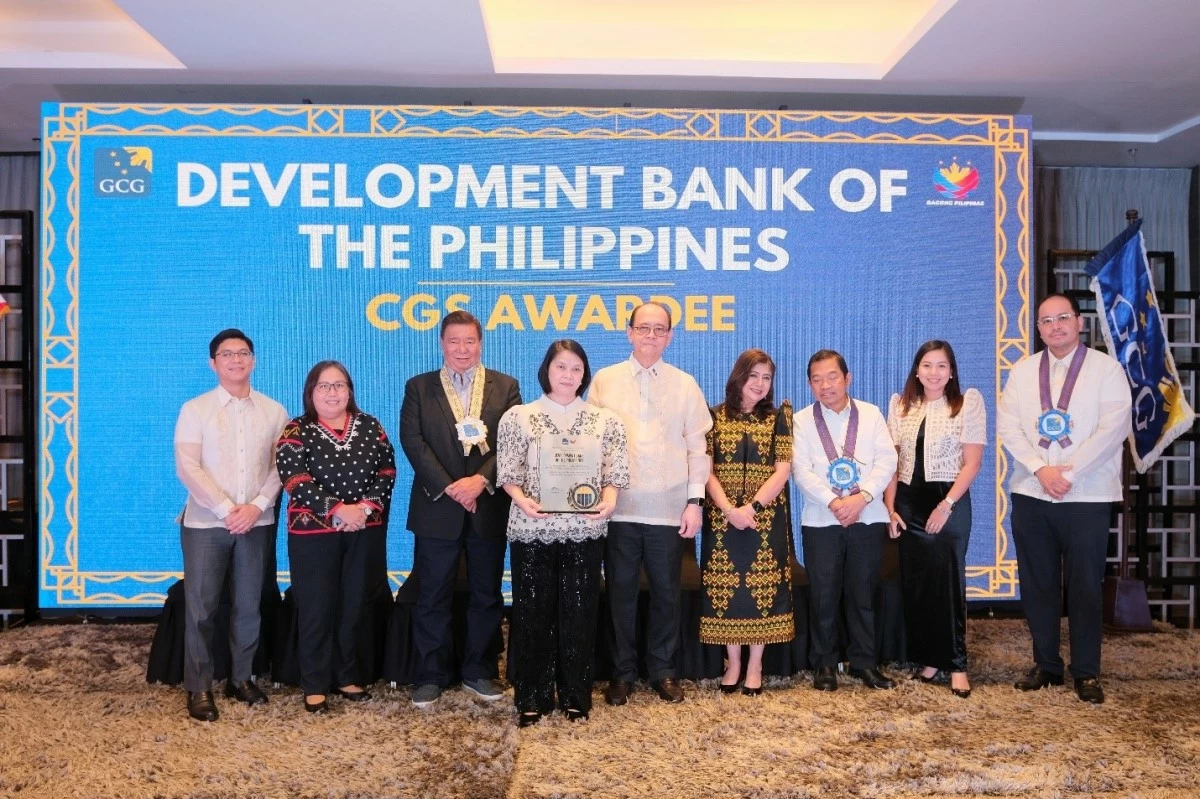
DBP Executive Vice President Catherine Magana (fourth from left) holds the award from the GCG in recognition of the Bank’s corporate governance initiatives. Also in photo are (from left): National Privacy Commission Chairman Johann Carlos S. Barcena, DBP Senior Vice President Soraya F. Adiong, former Senate President Franklin M. Drilon, GCG Chairperson Marius P. Corpus, GCG Commissioner Geraldine Marie B. Berberabe-Martinez, Department of Finance Undersecretary Rolando G. Tungpalan, DBP Corporate Secretary Maria Katrina L. Infante, and Department of Budget and Management Assistant Secretary Leonido J. Pulido III.
Development Bank of the Philippines (DBP), the nation’s 10th-largest lender by assets, secured the top ranking for corporate governance among state-run firms for a second consecutive year, according to the government’s primary regulatory body for the sector.
The state-owned lender achieved a score of 104.17 percent in the Governance Commission for GOCCs’ 2024 Corporate Governance Scorecard, surpassing its previous mark of 102.67 percent, DBP President and Chief Executive Officer Michael O. de Jesus said in a statement.
The annual assessment evaluates government-owned and controlled corporations against international benchmarks, including the Principles of Corporate Governance from the Organization for Economic Cooperation and Development and the ASEAN Corporate Governance Scorecard.
The recognition underscores DBP's efforts to align its internal controls with global standards as it manages a broad portfolio of development-oriented credit. Under the GOCC Governance Act of 2011, the regulatory commission serves as the central policy-making body tasked with enforcing transparency and operational efficiency across the state-enterprise sector.
For DBP, the high marks in governance are viewed as a prerequisite for maintaining the institutional integrity required to fulfill its mandate of financing high-impact economic sectors.
The bank remains a primary source of credit for four strategic areas of the Philippine economy: infrastructure and logistics; micro, small, and medium enterprises; environmental projects; and social services and community development.
De Jesus noted that the consistent performance in governance metrics provides a foundation for the bank’s operational discipline as it enters a new phase of strategic initiatives in 2026.
The improvement in the bank’s scorecard reflects a broader push within the Philippine state-banking sector to modernize reporting and compliance. By utilizing a methodology that mirrors the ASEAN standards, the regulator aims to ensure that domestic state firms remain competitive and transparent to both local stakeholders and international observers.
De Jesus said the accolade is a result of collective internal efforts to refine policy mechanisms and that the bank intends to further enhance its governance framework to ensure its lending programs remain responsive to public needs.
The Development Bank of the Philippines continues to leverage its balance sheet to support the national government’s developmental goals while operating under the heightened scrutiny of the state’s corporate governance watchdog.