






Manila Bulletin
 Business
The Economy
DOF orders deep audit of gov't agencies to reverse growth slump
Business
The Economy
DOF orders deep audit of gov't agencies to reverse growth slump
Business
The Economy
DOF orders deep audit of gov't agencies to reverse growth slump
DOF orders deep audit of gov't agencies to reverse growth slump
By Derco Rosal
Published Jan 16, 2026 01:56 pm


At A Glance
- After the decline in public spending in the second half of 2025, Philippine government officials are ramping up their efforts to lift expenditure performance in 2026 and are upbeat that the economy will recover.
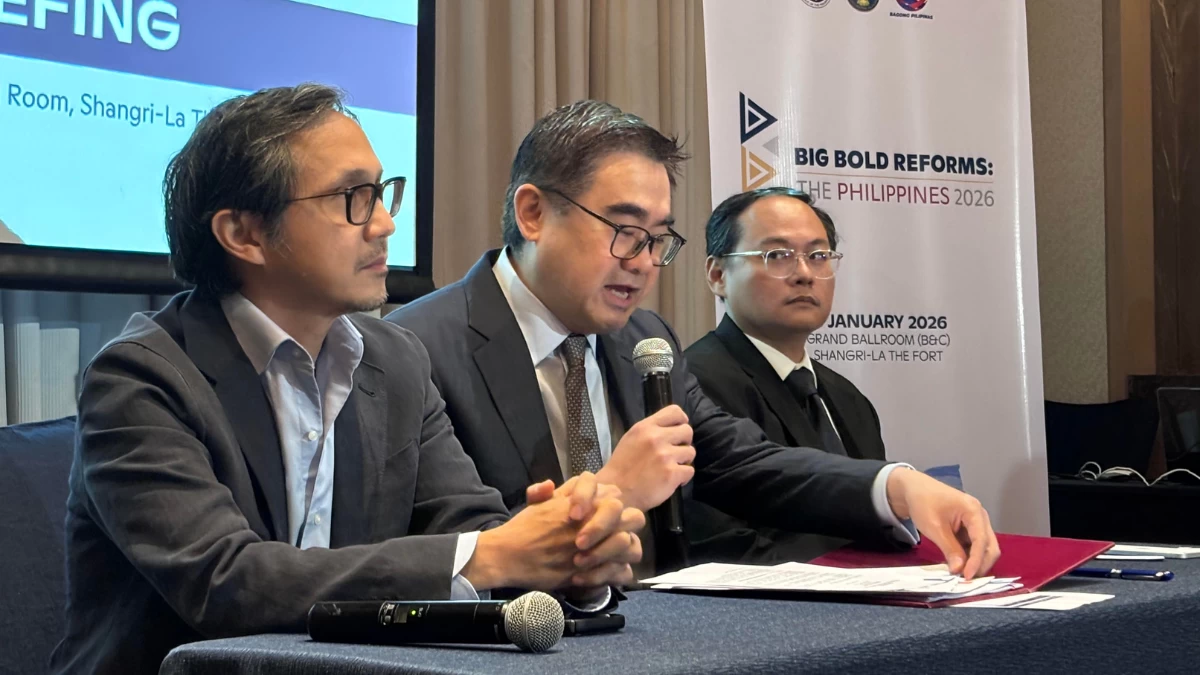
(From left) Department of Public Works and Highways (DPWH) Secretary Vivencio B. Dizon, Finance Secretary Frederick D. Go, and Transportation Secretary Giovanni Lopez
The Marcos administration vowed to intensify push to accelerate government spending and revive growth after its fiscal squeeze in late 2025 sent domestic output to its weakest performance in more than four years.
Finance Secretary Frederick D. Go told the private sector during the government’s launch of its reforms for 2026 that the economic team will scrutinize the spending programs of every agency to maximize efficiency.
“We will review all our respective expenditure programs to ensure that we spend on what is productive and efficient,” Go said, adding that economic expansion is seen regaining momentum and “bounce back to a five percent level of growth or higher in 2026.”
Go further noted that the long-term fundamentals of the Philippine economy “remain intact and on solid footing.”
Department of Public Works and Highways (DPWH) Secretary Vivencio B. Dizon told a press briefing on Friday, Jan. 16, that the government is “pretty optimistic” about lifting gross domestic product (GDP) growth in the first quarter of 2026.
Dizon said the DPWH aims to spend approximately ₱200 billion to ₱250 billion in the first three months of the year, at least 4.5 percent lower than the programmed level for the same period in 2025 at ₱261.8 billion.
He said the government is aiming to spend more and “more wisely” in 2026. This comes amid infrastructure spending plunging by 40 percent to ₱65.9 billion in October 2025, from ₱110 billion in October 2024, due to persistent delays in project payments stemming from a continued fiscal squeeze.
From January to October 2025, infrastructure and other capital outlays declined by ₱149.4 billion, or 13.7 percent, to ₱943 billion from ₱1.09 trillion in the same period in 2024.
Growth last year is expected to average 4.8 percent, well below the target of at least 5.5 percent. Local output slumped to four percent in the third quarter of 2025—the weakest in four and a half years.
National Socioeconomic Planner Arsenio M. Balisacan earlier lowered his growth forecast range for 2026 to five to six percent from six to seven percent previously, and for 2027 to 5.5 to 6.5 percent from six to seven percent.
Dizon said private sector sentiment is positive as stakeholders welcomed the government’s implementation of reforms, including efforts to curb abuse of the Bureau of Internal Revenue’s (BIR) letters of authority (LOAs).
He said some of the measures are seen as unprecedented, but they helped lift confidence despite weak economic performance in the past three quarters.