






Manila Bulletin
 Business
The Economy
Business group eyes 'economic windfall' from new Chinese visa waiver
Business
The Economy
Business group eyes 'economic windfall' from new Chinese visa waiver
Business
The Economy
Business group eyes 'economic windfall' from new Chinese visa waiver
Business group eyes 'economic windfall' from new Chinese visa waiver
Published Jan 16, 2026 02:42 pm


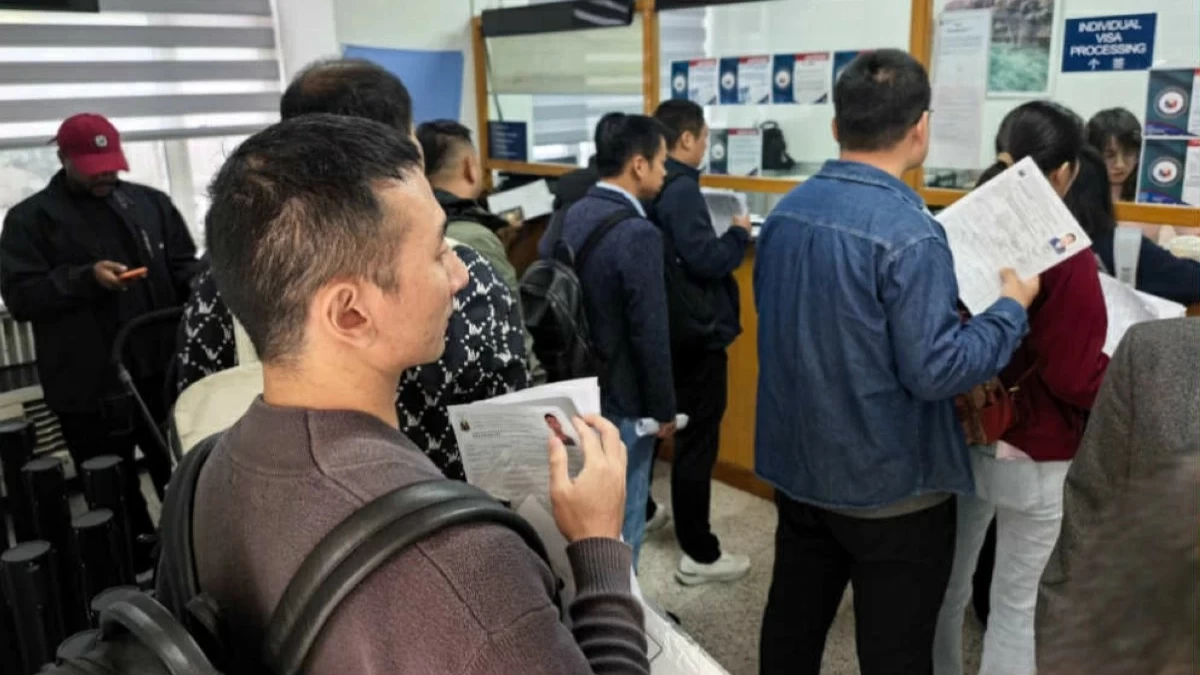
The Federation of Filipino Chinese Chambers of Commerce and Industry Inc. (FFCCCII) is throwing its weight behind a new 14-day visa-free entry policy for Chinese nationals, calling the move a critical reform to capture larger share of the world's most lucrative travel market.
In a statement on Friday, Jan. 16, FFCCCII President Victor Lim said the decision strategically aligns the Philippines with regional neighbors in the Association of Southeast Asian Nations that have already loosened entry requirements.
The policy shift comes as Chinese outbound travel is projected to climb from a pre-pandemic peak of 155 million journeys to more than 200 million by 2028.
Lim said the visa waiver is an essential step to ensure the Philippine archipelago remains competitive against rival destinations.
The business group views tourism as the “low-hanging fruit” of the Philippine economy, citing a combination of natural tropical assets and local hospitality.
Lim noted that the profile of the Chinese traveler has evolved into one that is increasingly affluent and tech-savvy.
These visitors are currently among the world’s highest-spending tourists, with consumption patterns that favor family travel, cultural immersion, luxury retail, and high-end culinary experiences.
The FFCCCII said that the economic windfall from increased arrivals would extend beyond the traditional hubs of Manila and Cebu. By facilitating easier entry, the organization expects a transformative impact on micro, small, and medium enterprises in rural areas.
Lim said the initiative is designed to create sustainable livelihoods and foster inclusive growth across the country’s various island provinces.
To support the government’s tourism agenda, the FFCCCII pledged to mobilize its extensive business networks to market the Philippines to the mainland Chinese audience.
However, the group cautioned that the policy’s success depends on a coordinated effort across several sectors.
Lim urged stakeholders in aviation, hospitality, retail, and local government to work together to improve the overall visitor experience.
He stressed that the country must maintain high standards of safety and service while ensuring the protection of its natural environment.
Lim concluded that the Philippines must seize this momentum to establish itself as a premier global destination and capitalize on the shifting dynamics of Asian tourism.