ADVERTISEMENT

Building a cleaner, more resilient energy future through GEOP

Published Jan 16, 2026 12:13 pm  |  Updated Jan 16, 2026 05:36 pm
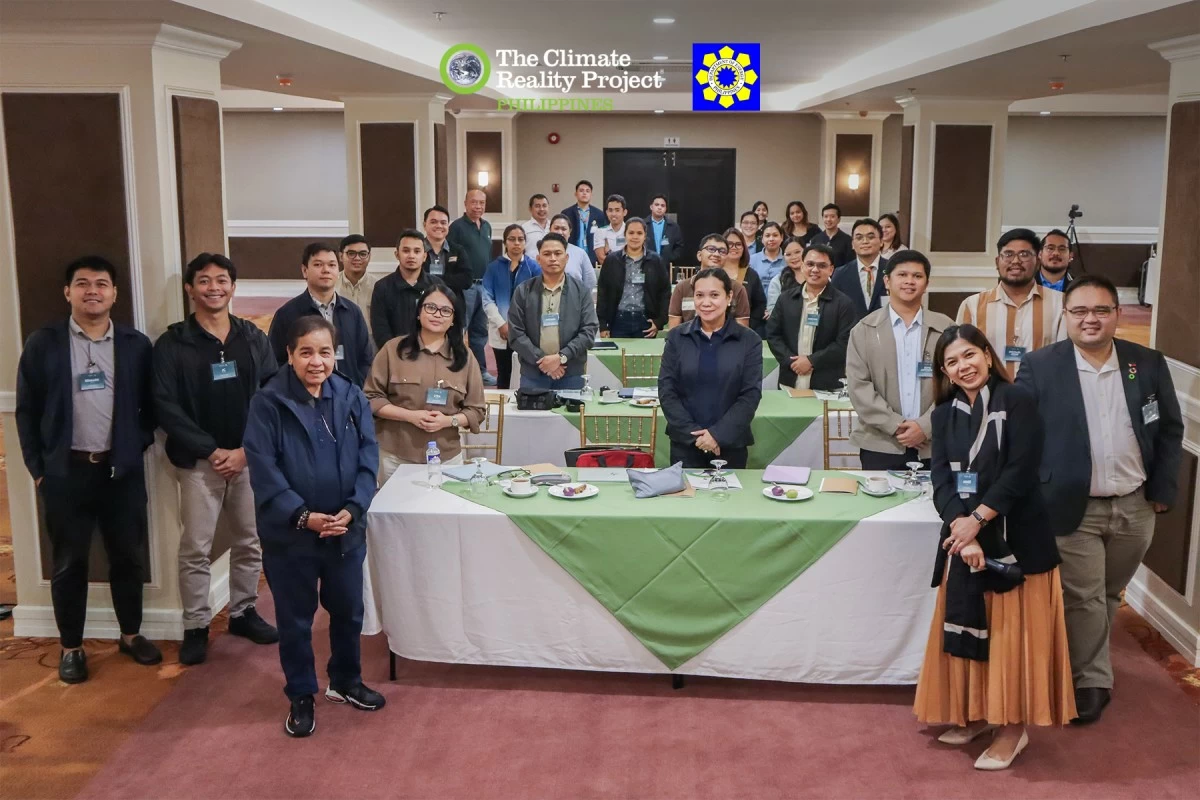
Climate Reality Philippines hosts the second leg of its information campaign on the Green Energy Option Program and other voluntary renewable energy mechanisms in Tagbilaran, Bohol.
The Climate Reality Project Philippines, in partnership with the Department of Energy (DOE) and the Philippine Economic Zone Authority (PEZA), recently held the second leg of Choosing REnewables, in Tagbilaran City, Bohol.  The campaign promotes the Green Energy Option Program (GEOP) and other voluntary renewable energy mechanisms,
Participants included representatives from local power distribution utilities, government agencies and the business sector, many of whom expressed strong interest in renewable energy (RE) during the series of discussions.
The campaign aimed to showcase the benefits of shifting to clean energy, particularly in the Visayas and Mindanao, regions that frequently experience electricity shortages due to recurring power plant outages and rising demand.
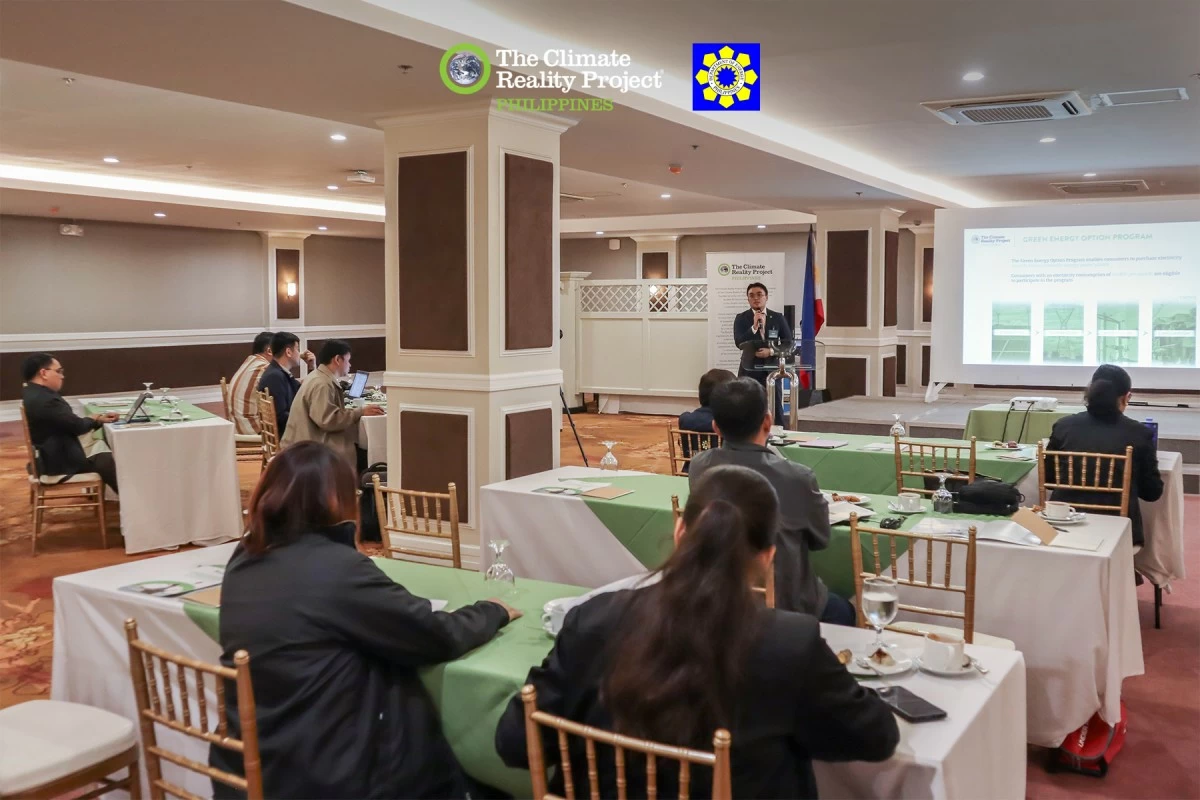
Energy Program Lead Pocholo Enriquez discusses Climate Reality Philippines’ study on GEOP’s benefits to its end users.
“What we want is to make sure that access to GEOP is available in all provinces and all regions connected to the grid,” said Pocholo Enriquez, energy program lead of Climate Reality Philippines. “There are still bureaucratic hurdles and limited RE supply accommodated under GEOP, but the work that we've done so far has been addressing these problems, and we are excited to see what the coming years will do to GEOP.”
Beyond energy security concerns, the Visayas and Mindanao also face high risks from climate change, including stronger storms and more intense heat waves. The most recent example was Typhoon Tino, which caused more than a hundred fatalities across the two regions during its onslaught.
Given the issues of energy instability and climate vulnerability, the Tagbilaran leg of Choosing REnewables emphasized the importance of investing in renewable energy to address both concerns. Through GEOP and other voluntary RE mechanisms, businesses, particularly those most affected by energy disruptions and climate risks, are provided with more accessible pathways to cleaner and more stable power sources.
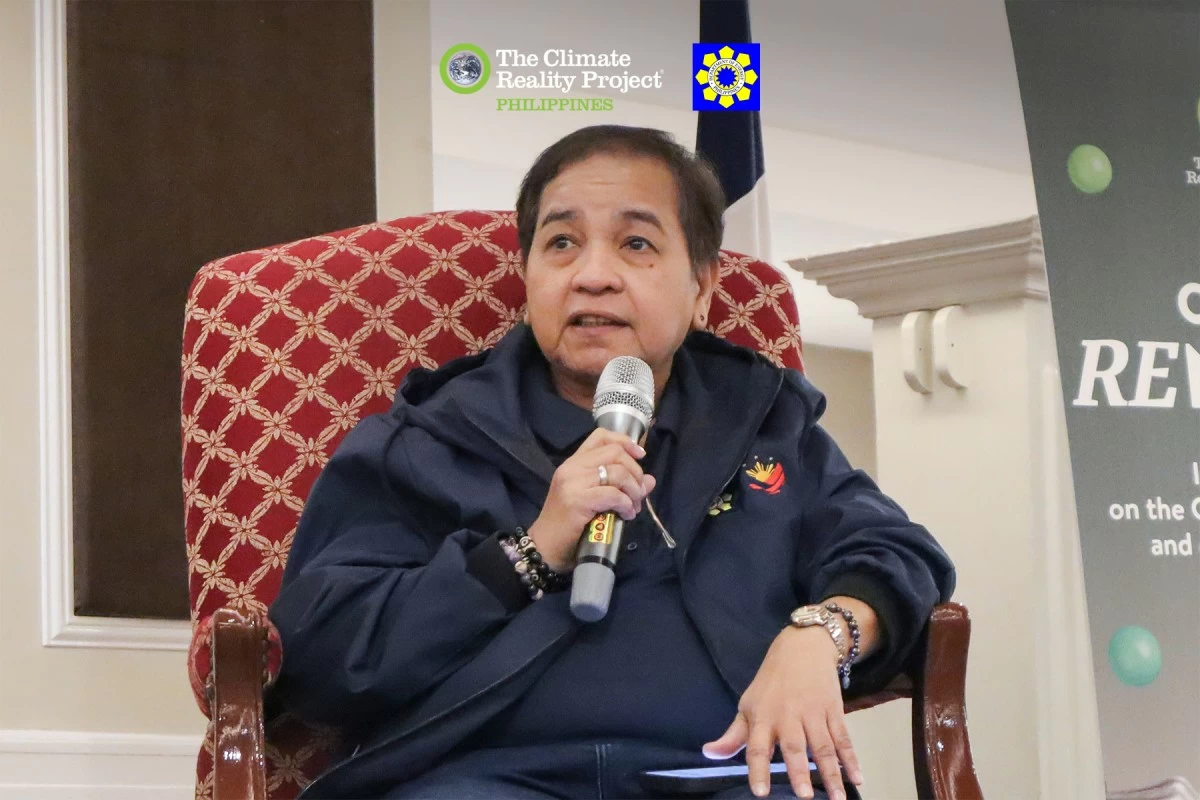
Department of Energy Undersecretary Mylene Capongcol sits down for a panel discussion with other GEOP stakeholders to talk about the ease of shifting to RE via the program.
“We are not only expanding customer choice, we are also creating a stronger market signal for investments in clean and indigenous energy resources,” said DOE Undersecretary Mylene Capongcol. “As you all know, having imported fuels has a lot of challenges both in price and supply. Shifting to renewables opens opportunities for innovation, greater competition and reduced dependence on imported energy.”
By nature, RE offers a more stable source of power. Unlike traditional energy sources like coal and oil, RE grounded in local resources, such as sunlight, water, and wind, is less vulnerable to global fuel price fluctuations. When integrated into the country’s existing energy sources, RE helps diversify supply, allowing communities to tap alternative sources during power plant outages.
GEOP stakeholders in energy policy and distribution share their insights about GEOP’s potential benefits for the VisMin areas.
Investing in RE also contributes to reducing carbon emissions, which are largely produced by fossil fuel-based power generation. As the energy sector remains a major contributor to the country’s greenhouse gas emissions, policymakers and civil society groups continue to stress the need for an accelerated transition to cleaner energy sources.
“Our goal is to promote how renewable energy can empower people with a more sustainable way of living on a habitable planet,” said Aimee Oliveros, interim branch manager of Climate Reality Philippines.
In regions highly vulnerable to both climate impacts and power shortages, GEOP serves as a practical mechanism to address these twin challenges. By strengthening energy security at the community level, Visayas and Mindanao can also contribute to the global efforts to reduce emissions through increased RE adoption.
“The GEOP market is expanding rapidly, and overall, electricity demand is growing every year. There are more opportunities for substantial development, especially in Visayas and Mindanao, as we shift to cleaner energy,” said Michael John Domingo, science research specialist at the DOE’s Renewable Energy Management Bureau.
To further examine these developments, Climate Reality Philippines is set to release a study on GEOP’s impact and benefits for current end-users. The report, scheduled for release on Jan. 21, 2026, will serve as a follow-up to the organization’s earlier analysis on GEOP’s role in enabling the RE renaissance in the Philippines.
ADVERTISEMENT
.most-popular .layout-ratio{ padding-bottom: 79.13%; } @media (min-width: 768px) and (max-width: 1024px) { .widget-title { font-size: 15px !important; } }

{{ articles_filter_1561_widget.title }}

.most-popular .layout-ratio{ padding-bottom: 79.13%; } @media (min-width: 768px) and (max-width: 1024px) { .widget-title { font-size: 15px !important; } }

{{ articles_filter_1562_widget.title }}

.most-popular .layout-ratio{ padding-bottom: 79.13%; } @media (min-width: 768px) and (max-width: 1024px) { .widget-title { font-size: 15px !important; } }

{{ articles_filter_1563_widget.title }}

{{ articles_filter_1564_widget.title }}

.mb-article-details { position: relative; } .mb-article-details .article-body-preview, .mb-article-details .article-body-summary{ font-size: 17px; line-height: 30px; font-family: "Libre Caslon Text", serif; color: #000; } .mb-article-details .article-body-preview iframe , .mb-article-details .article-body-summary iframe{ width: 100%; margin: auto; } .read-more-background { background: linear-gradient(180deg, color(display-p3 1.000 1.000 1.000 / 0) 13.75%, color(display-p3 1.000 1.000 1.000 / 0.8) 30.79%, color(display-p3 1.000 1.000 1.000) 72.5%); position: absolute; height: 200px; width: 100%; bottom: 0; display: flex; justify-content: center; align-items: center; padding: 0; } .read-more-background a{ color: #000; } .read-more-btn { padding: 17px 45px; font-family: Inter; font-weight: 700; font-size: 18px; line-height: 16px; text-align: center; vertical-align: middle; border: 1px solid black; background-color: white; } .hidden { display: none; }
function initializeAllSwipers() { // Get all hidden inputs with cms_article_id document.querySelectorAll('[id^="cms_article_id_"]').forEach(function (input) { const cmsArticleId = input.value; const articleSelector = '#article-' + cmsArticleId + ' .body_images'; const swiperElement = document.querySelector(articleSelector); if (swiperElement && !swiperElement.classList.contains('swiper-initialized')) { new Swiper(articleSelector, { loop: true, pagination: false, navigation: { nextEl: '#article-' + cmsArticleId + ' .swiper-button-next', prevEl: '#article-' + cmsArticleId + ' .swiper-button-prev', }, }); } }); } setTimeout(initializeAllSwipers, 3000); const intersectionObserver = new IntersectionObserver( (entries) => { entries.forEach((entry) => { if (entry.isIntersecting) { const newUrl = entry.target.getAttribute("data-url"); if (newUrl) { history.pushState(null, null, newUrl); let article = entry.target; // Extract metadata const author = article.querySelector('.author-section').textContent.replace('By', '').trim(); const section = article.querySelector('.section-info ').textContent.replace(' ', ' '); const title = article.querySelector('.article-title h1').textContent; // Parse URL for Chartbeat path format const parsedUrl = new URL(newUrl, window.location.origin); const cleanUrl = parsedUrl.host + parsedUrl.pathname; // Update Chartbeat configuration if (typeof window._sf_async_config !== 'undefined') { window._sf_async_config.path = cleanUrl; window._sf_async_config.sections = section; window._sf_async_config.authors = author; } // Track virtual page view with Chartbeat if (typeof pSUPERFLY !== 'undefined' && typeof pSUPERFLY.virtualPage === 'function') { try { pSUPERFLY.virtualPage({ path: cleanUrl, title: title, sections: section, authors: author }); } catch (error) { console.error('ping error', error); } } // Optional: Update document title if (title && title !== document.title) { document.title = title; } } } }); }, { threshold: 0.1 } ); function showArticleBody(button) { const article = button.closest("article"); const summary = article.querySelector(".article-body-summary"); const body = article.querySelector(".article-body-preview"); const readMoreSection = article.querySelector(".read-more-background"); // Hide summary and read-more section summary.style.display = "none"; readMoreSection.style.display = "none"; // Show the full article body body.classList.remove("hidden"); } document.addEventListener("DOMContentLoaded", () => { let loadCount = 0; // Track how many times articles are loaded const offset = [1, 2, 3, 4, 5, 6, 7, 8, 9, 10]; // Offset values const currentUrl = window.location.pathname.substring(1); let isLoading = false; // Prevent multiple calls if (!currentUrl) { console.log("Current URL is invalid."); return; } const sentinel = document.getElementById("load-more-sentinel"); if (!sentinel) { console.log("Sentinel element not found."); return; } function isSentinelVisible() { const rect = sentinel.getBoundingClientRect(); return ( rect.top < window.innerHeight && rect.bottom >= 0 ); } function onScroll() { if (isLoading) return; if (isSentinelVisible()) { if (loadCount >= offset.length) { console.log("Maximum load attempts reached."); window.removeEventListener("scroll", onScroll); return; } isLoading = true; const currentOffset = offset[loadCount]; window.loadMoreItems().then(() => { let article = document.querySelector('#widget_1690 > div:nth-last-of-type(2) article'); intersectionObserver.observe(article) loadCount++; }).catch(error => { console.error("Error loading more items:", error); }).finally(() => { isLoading = false; }); } } window.addEventListener("scroll", onScroll); });

Sign up by email to receive news.