ADVERTISEMENT

DepEd strengthens early childhood education as revised K to 10 curriculum enters final pilot phase

Published Jan 15, 2026 08:55 pm
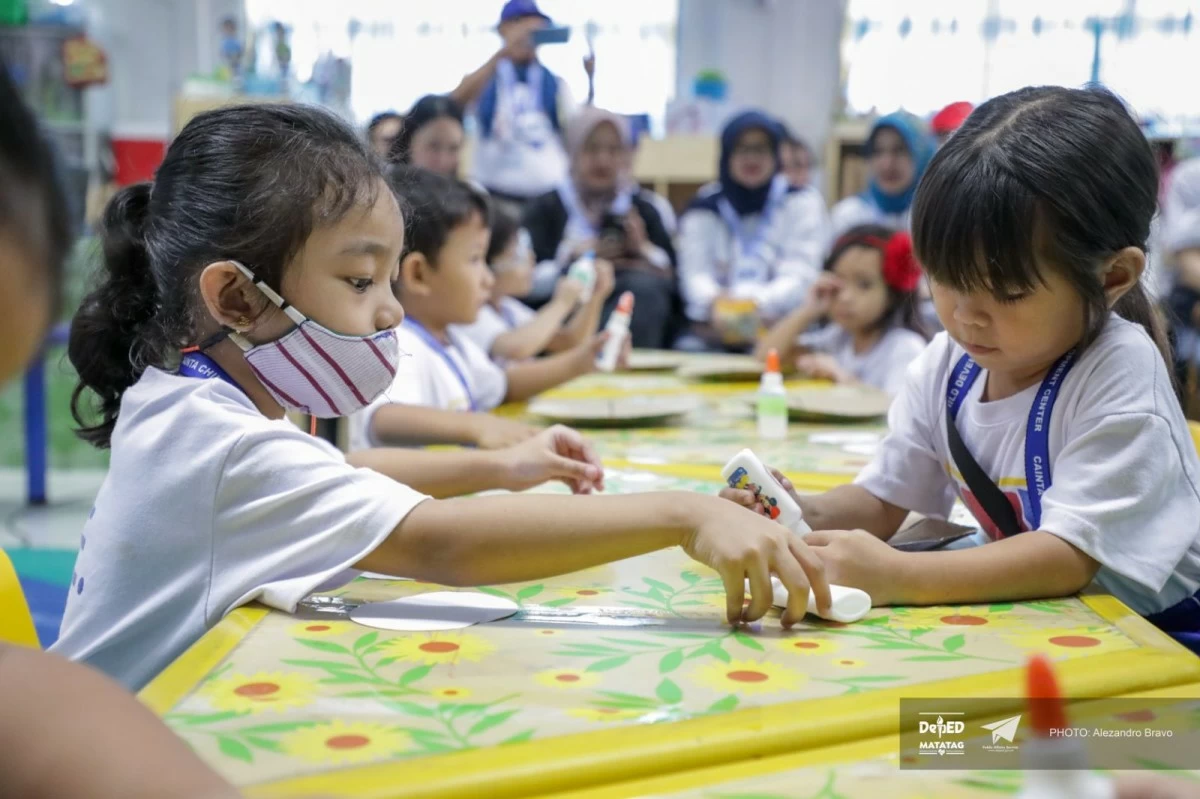
The Department of Education (DepEd) ramps up early childhood education efforts as the Revised K to 10 Curriculum reaches its final pilot phase for School Year 2025–2026. (DepEd photo)
Aiming to strengthen foundational learning skills and better prepare young learners for the succeeding stages of basic education, the Department of Education (DepEd) on Thursday, January 15, reaffirmed its commitment to early childhood education as the Revised K to 10 Curriculum enters the final phase of its pilot implementation for School Year 2025–2026.
DepEd Secretary Sonny Angara said education reform must go beyond curriculum design, emphasizing that learner readiness, nutrition, and classroom realities play a decisive role in improving learning outcomes, particularly in reading and numeracy.
“Alam natin na ang curriculum reform ay hindi madalian (We know that curriculum reform is not something that can be rushed). Real impact takes years. Pero may mga realidad sa silid-aralan na hindi puwedeng ipagpaliban (But there are classroom realities that cannot be postponed),” Angara said, noting that persistent challenges in reading and numeracy continue to confront schools, particularly in the early grades.
Under President Marcos’ education reform agenda, Angara said the government has been clear that policy changes must result in tangible improvements at the classroom level, even as systemic reforms take time to fully take effect.
Learner nutrition as a core education input
As part of this approach, DepEd has elevated learner nutrition as a core component of education rather than a supplementary intervention.
For SY 2025–2026, around 3.47 million learners—including all kindergarten pupils—received hot meals, while 2.85 million learners benefited from milk feeding under the School-Based Feeding Program (SBFP).
DepEd also reported that kindergarten enrollment rose to 1.98 million learners, the highest recorded in the past four years, underscoring the growing emphasis on early childhood care and development.
“Kaya sinasadya nating iangat ang early childhood care and development efforts (That’s why we are deliberately strengthening early childhood care and development efforts),” Angara said.
“Dahil gutom ang isa sa pinakamalaking hadlang sa pagkatuto, at kapag mahina ang pundasyon, mahirap umusad ang buong sistema (Because hunger is one of the biggest obstacles to learning, and when the foundation is weak, it is difficult for the whole system to move forward),” he added.
Beginning School Year 2026–2027, DepEd said it plans to further expand the SBFP to cover 4.64 million learners nationwide, including all kindergarten and Grade 1 pupils, reinforcing the government’s position that early-grade interventions are essential to the long-term success of education reforms.
Supporting learning recovery, classroom readiness
DepEd noted that these early interventions come as the Revised K to 10 Curriculum places greater emphasis on essential competencies in reading and mathematics during the formative years.
Beyond feeding programs, DepEd said it is strengthening learning recovery initiatives, ensuring the timely delivery of learning materials, expanding access to digital tools, and improving mental health support for both learners and teachers as part of broader reforms accompanying the curriculum transition.
DepEd also reported that it has boosted play-based learning by awarding 228,740 sets of kindergarten educational toys and distributing more than 2.2 million kindergarten activity sheets nationwide.
Under the DepEd Computerization Program, the agency procured more than 33,000 laptops for teaching personnel, 5,000 laptops for non-teaching staff, and 30,000 smart televisions.
Around 1.3 million Science and Mathematics Equipment (SME) packages are also being distributed to public schools.
“Kung patuloy tayong makikinig, uunahin ang pundasyon, at susuportahan ang mga guro at punong-guro, then every reform will finally have a real chance to work (If we continue to listen, prioritize the foundation, and support teachers and principals, then every reform will finally have a real chance to work),” Angara said. 

Related Tags

DepEd early childhood education Revised K to 10 Curriculum Philippines School-Based Feeding Program DepEd Kindergarten education Philippines Philippines education DepEd Secretary Sonny Angara
ADVERTISEMENT
.most-popular .layout-ratio{ padding-bottom: 79.13%; } @media (min-width: 768px) and (max-width: 1024px) { .widget-title { font-size: 15px !important; } }

{{ articles_filter_1561_widget.title }}

.most-popular .layout-ratio{ padding-bottom: 79.13%; } @media (min-width: 768px) and (max-width: 1024px) { .widget-title { font-size: 15px !important; } }

{{ articles_filter_1562_widget.title }}

.most-popular .layout-ratio{ padding-bottom: 79.13%; } @media (min-width: 768px) and (max-width: 1024px) { .widget-title { font-size: 15px !important; } }

{{ articles_filter_1563_widget.title }}

{{ articles_filter_1564_widget.title }}

.mb-article-details { position: relative; } .mb-article-details .article-body-preview, .mb-article-details .article-body-summary{ font-size: 17px; line-height: 30px; font-family: "Libre Caslon Text", serif; color: #000; } .mb-article-details .article-body-preview iframe , .mb-article-details .article-body-summary iframe{ width: 100%; margin: auto; } .read-more-background { background: linear-gradient(180deg, color(display-p3 1.000 1.000 1.000 / 0) 13.75%, color(display-p3 1.000 1.000 1.000 / 0.8) 30.79%, color(display-p3 1.000 1.000 1.000) 72.5%); position: absolute; height: 200px; width: 100%; bottom: 0; display: flex; justify-content: center; align-items: center; padding: 0; } .read-more-background a{ color: #000; } .read-more-btn { padding: 17px 45px; font-family: Inter; font-weight: 700; font-size: 18px; line-height: 16px; text-align: center; vertical-align: middle; border: 1px solid black; background-color: white; } .hidden { display: none; }
function initializeAllSwipers() { // Get all hidden inputs with cms_article_id document.querySelectorAll('[id^="cms_article_id_"]').forEach(function (input) { const cmsArticleId = input.value; const articleSelector = '#article-' + cmsArticleId + ' .body_images'; const swiperElement = document.querySelector(articleSelector); if (swiperElement && !swiperElement.classList.contains('swiper-initialized')) { new Swiper(articleSelector, { loop: true, pagination: false, navigation: { nextEl: '#article-' + cmsArticleId + ' .swiper-button-next', prevEl: '#article-' + cmsArticleId + ' .swiper-button-prev', }, }); } }); } setTimeout(initializeAllSwipers, 3000); const intersectionObserver = new IntersectionObserver( (entries) => { entries.forEach((entry) => { if (entry.isIntersecting) { const newUrl = entry.target.getAttribute("data-url"); if (newUrl) { history.pushState(null, null, newUrl); let article = entry.target; // Extract metadata const author = article.querySelector('.author-section').textContent.replace('By', '').trim(); const section = article.querySelector('.section-info ').textContent.replace(' ', ' '); const title = article.querySelector('.article-title h1').textContent; // Parse URL for Chartbeat path format const parsedUrl = new URL(newUrl, window.location.origin); const cleanUrl = parsedUrl.host + parsedUrl.pathname; // Update Chartbeat configuration if (typeof window._sf_async_config !== 'undefined') { window._sf_async_config.path = cleanUrl; window._sf_async_config.sections = section; window._sf_async_config.authors = author; } // Track virtual page view with Chartbeat if (typeof pSUPERFLY !== 'undefined' && typeof pSUPERFLY.virtualPage === 'function') { try { pSUPERFLY.virtualPage({ path: cleanUrl, title: title, sections: section, authors: author }); } catch (error) { console.error('ping error', error); } } // Optional: Update document title if (title && title !== document.title) { document.title = title; } } } }); }, { threshold: 0.1 } ); function showArticleBody(button) { const article = button.closest("article"); const summary = article.querySelector(".article-body-summary"); const body = article.querySelector(".article-body-preview"); const readMoreSection = article.querySelector(".read-more-background"); // Hide summary and read-more section summary.style.display = "none"; readMoreSection.style.display = "none"; // Show the full article body body.classList.remove("hidden"); } document.addEventListener("DOMContentLoaded", () => { let loadCount = 0; // Track how many times articles are loaded const offset = [1, 2, 3, 4, 5, 6, 7, 8, 9, 10]; // Offset values const currentUrl = window.location.pathname.substring(1); let isLoading = false; // Prevent multiple calls if (!currentUrl) { console.log("Current URL is invalid."); return; } const sentinel = document.getElementById("load-more-sentinel"); if (!sentinel) { console.log("Sentinel element not found."); return; } function isSentinelVisible() { const rect = sentinel.getBoundingClientRect(); return ( rect.top < window.innerHeight && rect.bottom >= 0 ); } function onScroll() { if (isLoading) return; if (isSentinelVisible()) { if (loadCount >= offset.length) { console.log("Maximum load attempts reached."); window.removeEventListener("scroll", onScroll); return; } isLoading = true; const currentOffset = offset[loadCount]; window.loadMoreItems().then(() => { let article = document.querySelector('#widget_1690 > div:nth-last-of-type(2) article'); intersectionObserver.observe(article) loadCount++; }).catch(error => { console.error("Error loading more items:", error); }).finally(() => { isLoading = false; }); } } window.addEventListener("scroll", onScroll); });

Sign up by email to receive news.