







Philippine population to hit 124 million by 2035—PSA
Published Jan 14, 2026 05:08 pm


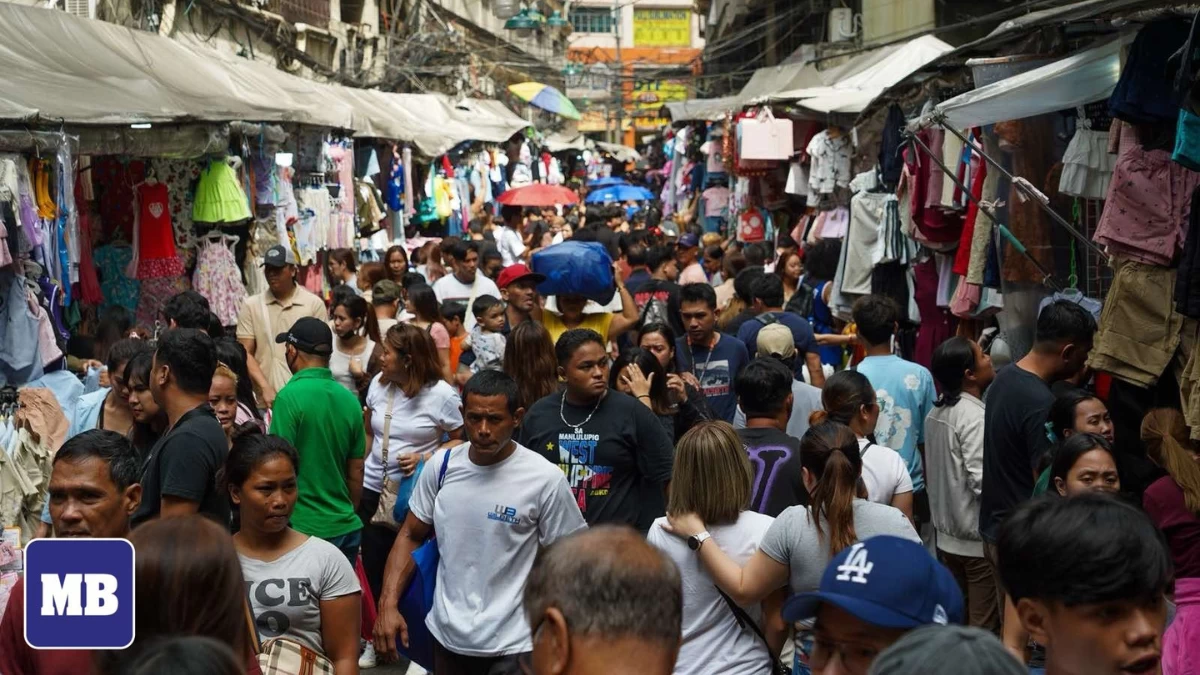
The Philippines’ total population is projected to reach 123.96 million by 2035, growing by 14.76 million over 15 years, the Philippines Statistical Authority (PSA) reported.
The latest PSA report released Tuesday, Jan. 13, projects the Philippines’ population to grow 0.85 percent annually from 2020 to 2035, with CALABARZON—comprising Cavite, Laguna, Batangas, Rizal, and Quezon—expected to remain the country’s most populous region.
PSA data showed that the population in 2020 totaled 109.2 million. By 2030, the male population is projected at 62.64 million, while females are expected to number 61.32 million, resulting in a sex ratio of 102 males per 100 females.
The PSA forecasted regional population distribution as follows: CALABARZON will lead with 19.07 million residents, followed by the National Capital Region (NCR) at 14.49 million, and Central Luzon at 14.02 million. The Cordillera Administrative Region (CAR) is expected to remain the smallest, with 2.13 million residents.
Most regions are projected to maintain a higher male population by 2035, with exceptions in NCR and Bangsamoro Autonomous Region in Muslim Mindanao (BARMM). In NCR, females are expected to slightly outnumber males, with 7.29 million females versus 7.20 million males, while BARMM’s population is projected to be nearly balanced.
As of 2020, PSA noted that nine regions had populations exceeding five million. By 2035, this figure is expected to rise to 12 regions, including Eastern Visayas, South Cotabato, Cotabato, Cotabato (City), Sultan Kudarat, Sarangani, and General Santos City (SOCCSKSARGEN), and BARMM.
Meanwhile, several regions are projected to see steady increases in population growth, PSA said including Bicol, Western Visayas, Eastern Visayas, Zamboanga Peninsula, SOCCSKSARGEN, BARMM, and Caraga. BARMM is expected to experience the largest rise, with its average annual growth rate increasing from 1.62 percent in 2020–2025 to 1.79 percent in 2030–2035.
Conversely, PSA data showed that growth rates are projected to decline in NCR, Cagayan Valley, Central Luzon, CALABARZON, and Northern Mindanao, with NCR’s growth rate falling from 0.53 percent in 2020–2025 to 0.40 percent in 2030–2035.
Other regions, PSA said such as CAR, Ilocos Region, Mindoro (Occidental & Oriental), Marinduque, Romblon, and Palawan (MIMAROPA), Central Visayas, and Davao Region, are expected to experience fluctuating growth rates, with minor increases or decreases in each five-year interval.