







Carbon reckoning we can't ignore
Published Jan 14, 2026 12:05 am
|
Updated Jan 13, 2026 05:43 pm


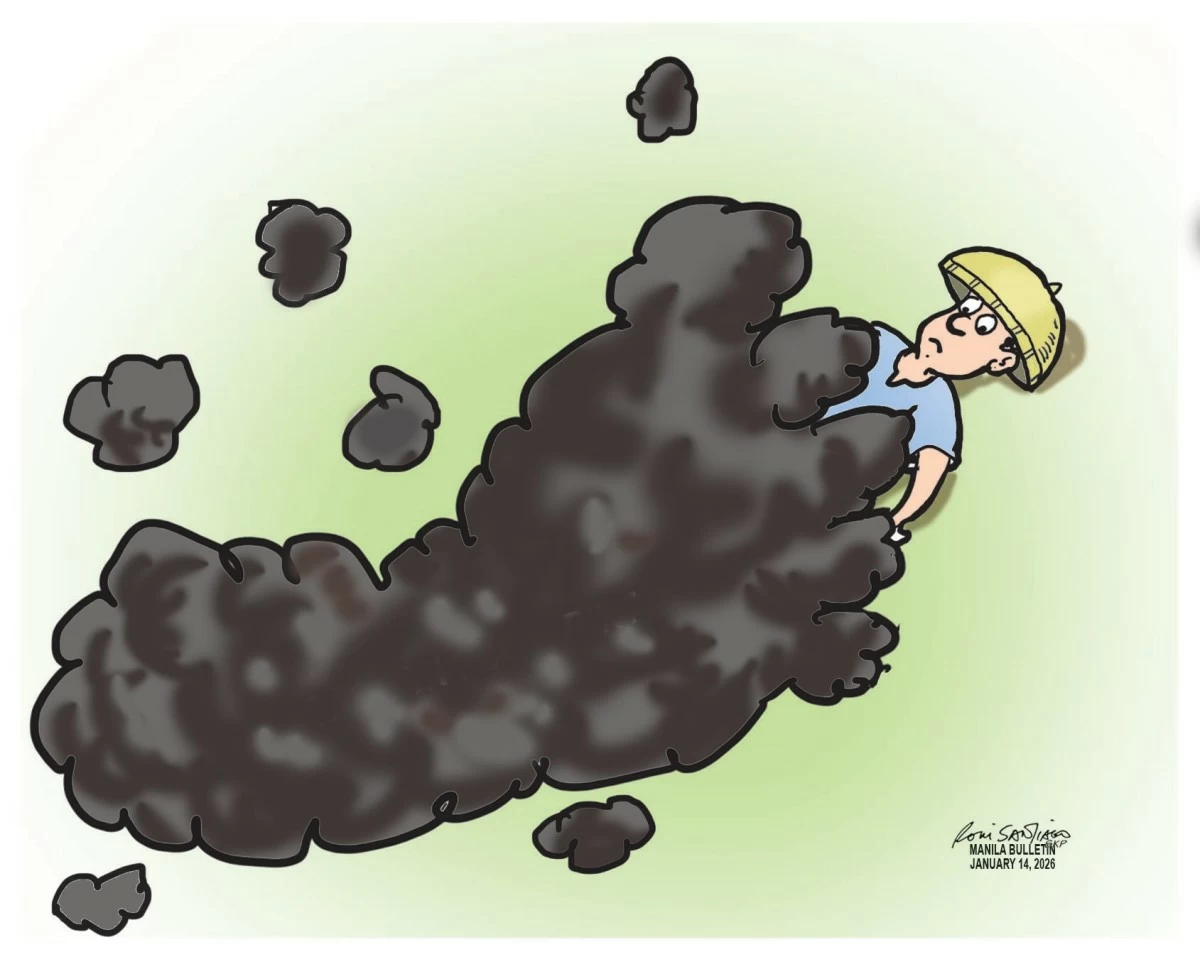
The projection of the Asia-Pacific Economic Cooperation (APEC) that the Philippines’ carbon emissions could surge by 142 percent by 2060 should not be dismissed as a mere abstract warning. It is in fact a clear indictment of the country’s current development trajectory and a reminder that good intentions—such as aggressive renewable energy targets—are not enough on their own.
In the same study, it showed that the power sector alone is expected to account for half of total carbon emissions for decades to come. Given this situation, incremental reforms will simply not suffice. What is required is a decisive, whole-of-society response that matches the scale of the problem.
The government must begin by confronting a rather uncomfortable reality. While existing laws provide a framework, they are inadequate for the urgency and magnitude of the climate challenge. Policies such as the Renewable Energy Act of 2008 and the Energy Efficiency and Conservation Act of 2019 have nudged the country in the right direction, but they have not fundamentally altered the dominance of fossil fuels in the energy mix. Coal plants continue to be approved, and transition timelines remain vague and nonbinding. What is needed is stronger, enforceable legislation that sets clear emission reduction targets, establishes a firm timetable for phasing down coal, and introduces carbon pricing mechanisms that reflect the true environmental cost of pollution.
Beyond legislation, governance matters just as much. Energy planning must be insulated from short-term political pressures and vested interests. Grid modernization, large-scale energy storage, and investment in transmission infrastructure are critical if renewable energy is to move from aspiration to backbone. Public funds and incentives should prioritize clean technologies rather than prolonging the life of carbon-intensive assets. Climate policy should also be integrated into transportation, urban planning, and agriculture—sectors that quietly but significantly add to the country’s carbon footprint.
The private sector, sometimes framed as part of the problem, must become a central part of the solution. Businesses have both the capital and the capacity to innovate faster than the government alone. Companies can commit to science-based emission targets, shift to renewable power through long-term supply contracts, and redesign supply chains to reduce waste and energy use. Financial institutions, in particular, play a pivotal role by redirecting investments away from high-emission projects and toward sustainable infrastructure. Greenwashing must give way to measurable, transparent action.
Yet no policy or corporate pledge will succeed without public participation. Each Filipino has a critical role to play in shaping the country’s carbon future. Individual choices—how we commute, what we consume, how we manage energy at home—may seem miniscule when ranged against the monstrous problem, but multiplied across millions, they carry real impact. More importantly, citizens must demand accountability. Climate action should be a non-negotiable issue in elections, local governance, and public discourse. Silence and apathy are, in effect, endorsements of the status quo.
The projected surge in emissions is evitable. It is a scenario—one that can still be altered if the country acts boldly now. The question is not whether the Philippines can afford stronger climate action, but whether it can afford the cost of inaction: worsening disasters, economic losses, and a future defined by crisis management rather than sustainable growth. This is the carbon reckoning we must face—and the moment to act is now, not in 2060 because even tomorrow might be too late.