






Manila Bulletin
 Business
Trade & Industry
BOC's fuel marking crackdown lifts tax collection to nearly ₱250 billion in 2025
Business
Trade & Industry
BOC's fuel marking crackdown lifts tax collection to nearly ₱250 billion in 2025
Business
Trade & Industry
BOC's fuel marking crackdown lifts tax collection to nearly ₱250 billion in 2025
BOC's fuel marking crackdown lifts tax collection to nearly ₱250 billion in 2025
By Derco Rosal
Published Jan 14, 2026 04:23 pm


At A Glance
- To curb fuel smuggling, the Bureau of Customs (BOC) strengthened its implementation of the Fuel Marking Program (FMP), which led to a two percent increase in the agency's tax revenue to nearly ₱250 billion in 2025.
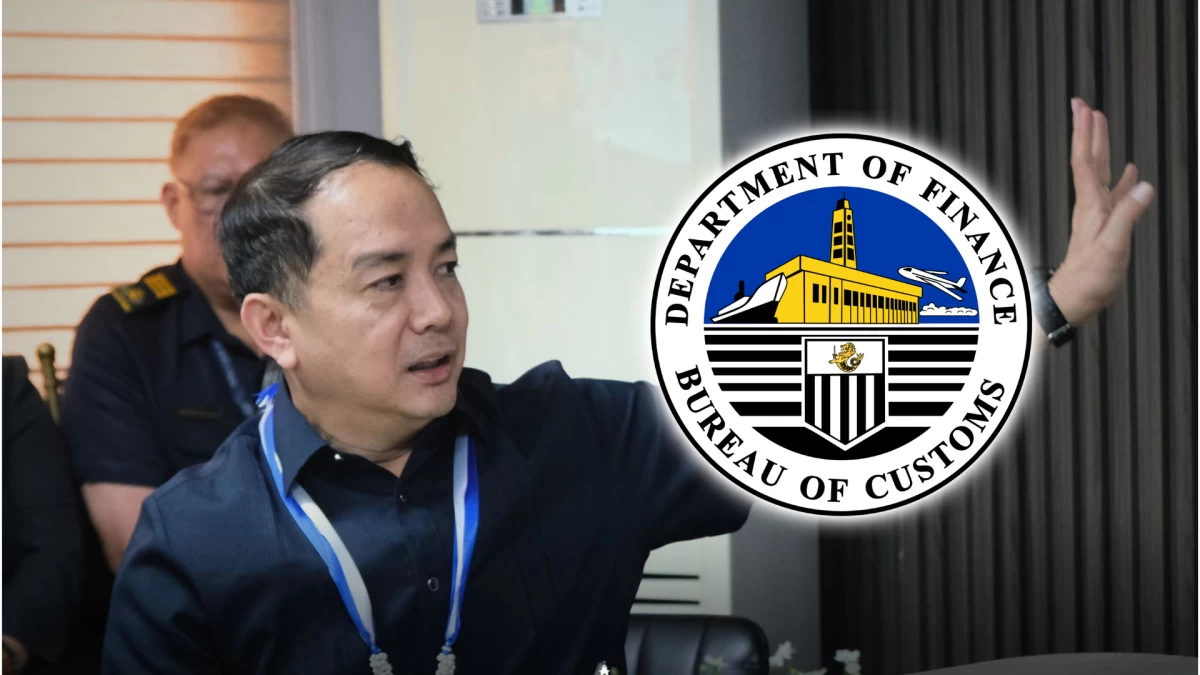
To curb fuel smuggling, the Bureau of Customs (BOC) strengthened its implementation of the Fuel Marking Program (FMP), leading to a two-percent increase in the agency’s tax revenue to nearly ₱250 billion in 2025.
According to the latest data from the second-largest tax collection agency, total tax revenues generated from marking over 21 billion liters of fuel in 2025 stood at ₱247.1 billion, higher than the ₱242.4 billion in duties and taxes collected in 2024—equivalent to 19.9 billion liters.
The BOC said the FMP continues to help detect fuel smuggling, ensure transparent fuel distribution, and support fair competition in the oil sector. It requires marking fuel products, whether imported or locally produced, to combat oil smuggling and prevent revenue losses from illegal imports or misdeclarations.
Launched in 2019, the program began field tests in April 2021, randomly checking gasoline, diesel, and kerosene across storage facilities, stations, and transport. Fuel lacking proper markers or with low levels may incur duties, taxes, fines, confiscation, and possible criminal charges.
“From dismantling smuggling networks and enforcing strict integrity policies to ensuring the proper disposition of seized goods and strengthening the FMP, the BOC remains firmly committed to transparent enforcement that protects government revenue, legitimate trade, and the welfare of the Filipino people,” Commissioner Ariel F. Nepomuceno said in a Jan. 14 statement.
To enforce trade compliance, the BOC revoked or suspended accreditations of 40 importers and 12 customs brokers for violating customs laws.
Also, as part of the government’s restitution efforts, the BOC seized 30 vehicles tied to the infamous Discaya family, which had been at the center of the flood control scandal. Thirteen of these vehicles were found to have violated customs laws and were subsequently seized by the BOC.
Five of these vehicles were auctioned, raising ₱47.8 million, all remitted to the national coffers to return unlawfully acquired assets to the public. “The remaining forfeited vehicles are scheduled for auction in accordance with existing regulations,” the BOC said.
Initial data also showed the BOC carried out over 1,000 enforcement operations in 2025, seizing smuggled and prohibited goods worth around ₱61.7 billion—down 27.6 percent from the ₱85.2 billion collected in 2024, equivalent to more than 2,100 anti-smuggling operations nationwide.
The BOC said these results were driven by stronger intelligence coordination, improved risk profiling, and closer cooperation with law enforcement and regulatory agencies.
Overall, the BOC missed its 2025 target of ₱958.7 billion, collecting just ₱934.4 billion due to weaker imports, the rice import ban, and global price fluctuations. While revenues were 1.9 percent higher than the ₱916.7 billion collected in 2024, the agency still fell 2.5 percent short of its target.
For 2026, 2027, and 2028, the BOC is expected to collect ₱1.01 trillion, ₱1.07 trillion, and ₱1.14 trillion, respectively.