Manila Bulletin
 Business
Stop juggling apps: Why SMEs need to ditch spreadsheets and embrace all-in-one software
Business
Stop juggling apps: Why SMEs need to ditch spreadsheets and embrace all-in-one software
Business
Stop juggling apps: Why SMEs need to ditch spreadsheets and embrace all-in-one software
Stop juggling apps: Why SMEs need to ditch spreadsheets and embrace all-in-one software
By Jemimah Mapa
Published Jan 13, 2026 10:13 am


At A Glance
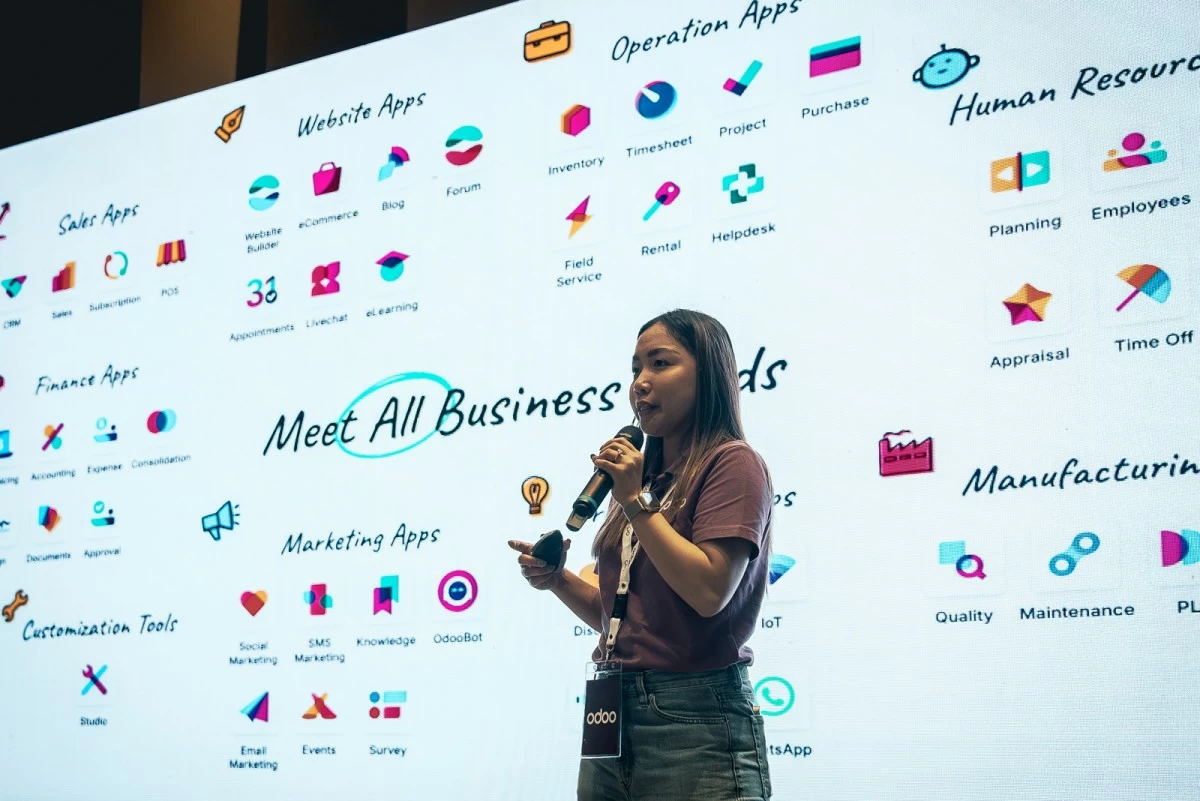
- Odoo is a fully integrated platform with over 70 business apps, all designed to work smoothly together in one place.
- Instead of juggling different apps for Customer Relationship Management (CRM), Invoicing and Accounting, Inventory and Warehouse Management, and E-commerce and Point of Sale (POS), Odoo brings everything together.
When owning or managing a Small and Medium Enterprise (SME) here in the Philippines one must have the passion, the diskarte, and the grit to make things work. But let’s be honest: beneath the drive often lies a frantic struggle with paperwork, mismatched spreadsheets, and a dozen different apps that simply don't talk to each other.
The sales team uses one tool, the finance department tracks expenses in an offline file, and the inventory is managed on a perpetually confusing Excel sheet that needs manual updating every five minutes. The result? Tedious double-entry, wasted time, and disjointed operations that cost money and growth opportunities.
As an SME, it's time to shift from working harder to working smarter. Focus on efficiency and leveraging resources to achieve better results with less effort. This is where Odoo steps in, not just as another corporate system, but as a practical partner built for growth.
A complete business platform
When people hear "Enterprise Resource Planning (ERP)," they usually think of a big, expensive system meant only for huge companies. But Odoo is different. It's a fully integrated platform with over 70 business apps, all designed to work smoothly together in one place.
Odoo is the one-stop platform that replaces all those separate tools. Instead of juggling different apps for Customer Relationship Management (CRM), Invoicing and Accounting, Inventory and Warehouse Management, and E-commerce and Point of Sale (POS), Odoo brings everything together.
Here's how it works: when the sales team closes a deal in the CRM, an invoice is automatically created. Once the invoice is paid, the accounting records update right away, and inventory adjusts — all within the same system, with no need to manually transfer data.
Most importantly, Odoo provides an SME-friendly pricing model that often helps reduce the monthly costs than the multiple standalone tools that businesses use today. This makes Odoo a compelling alternative for businesses, gaining more functionality with lesser unexpected costs.
Multiplying capacity in Manila
An immigration service based in Manila that helps clients build better lives in Canada, New Zealand, and Australia, was previously struggling with a disorganized and inefficient system for managing their business operations. Before Odoo, the team was dealing with a system that just didn’t sync up, such as important documents scattered across Google Drive, shared drives, and Outlook. This made it hard to track applications and respond to clients quickly. Their old setup was limiting them to handling only about 50 client groups a month.
Their operations have been transformed after adopting Odoo’s centralized platform. Apps like CRM, Sign, Documents, and Invoicing now work seamlessly together, streamlining workflows and allowing the team to handle more clients with greater efficiency and accuracy.
“[By] embracing Odoo, we’ll be able to embrace 100-200 clients compared to a 50 range of clients on monthly production,” their general manager shared in a video interview.
That has been a two to four times increase in their capacity to handle customers, all within the same team. For any SME, that kind of scalability and efficiency can make all the difference between getting by and really thriving. Through Odoo, they were able to set themselves up for long-term success by centralizing everything into one powerful system.
Ready for the future: Odoo 19, AI, and Philippines localization
As the business world moves faster, Odoo is also evolving, bringing powerful, cutting-edge tools directly to the SME level. The latest release, Odoo 19, comes with features made to simplify daily tasks even more and meet local requirements. Few of the remarkable features in the Odoo 19 are the integration of AI for an easier workflow and the PH Accounting Localization.
The new Odoo release uses AI to automate and speed up processes. Imagine generating professional marketing copy, summarizing complex documents, or even draft meeting agendas, all within the CRM or Project app. It’s a game-changer for cutting out those repetitive admin tasks.
What’s more exciting is that Odoo has reinforced its commitment to the Philippine market with robust Accounting Localization. This means the platform is designed to handle local tax requirements, BIR forms, and specific accounting standards, making compliance a lot less stressful for finance teams.
For Filipino SMEs tired of the mess that comes with spreadsheets and disorganized apps, the question is no longer if a unified management software is needed, but when it will be adopted.
Odoo offers a clear path out of the "Excel trap" and into a future where everything runs seamlessly as one integrated system. Now is the time to explore how an all-in-one software can streamline operations and boost efficiency.
Experience the future of business management
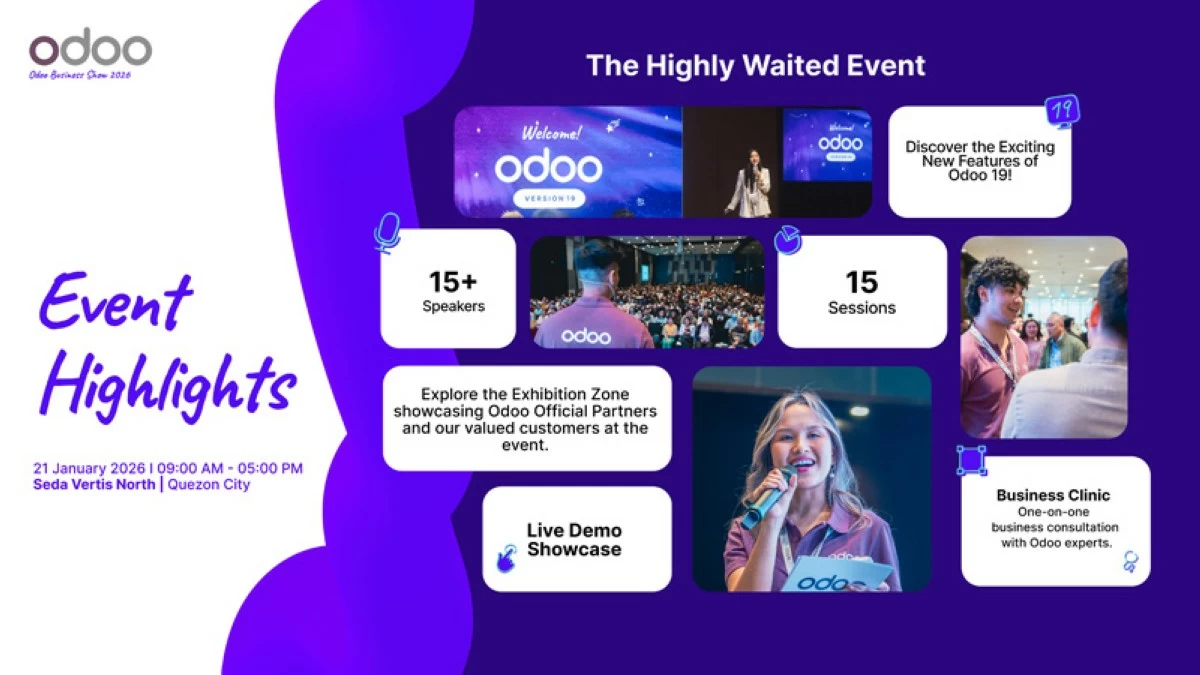
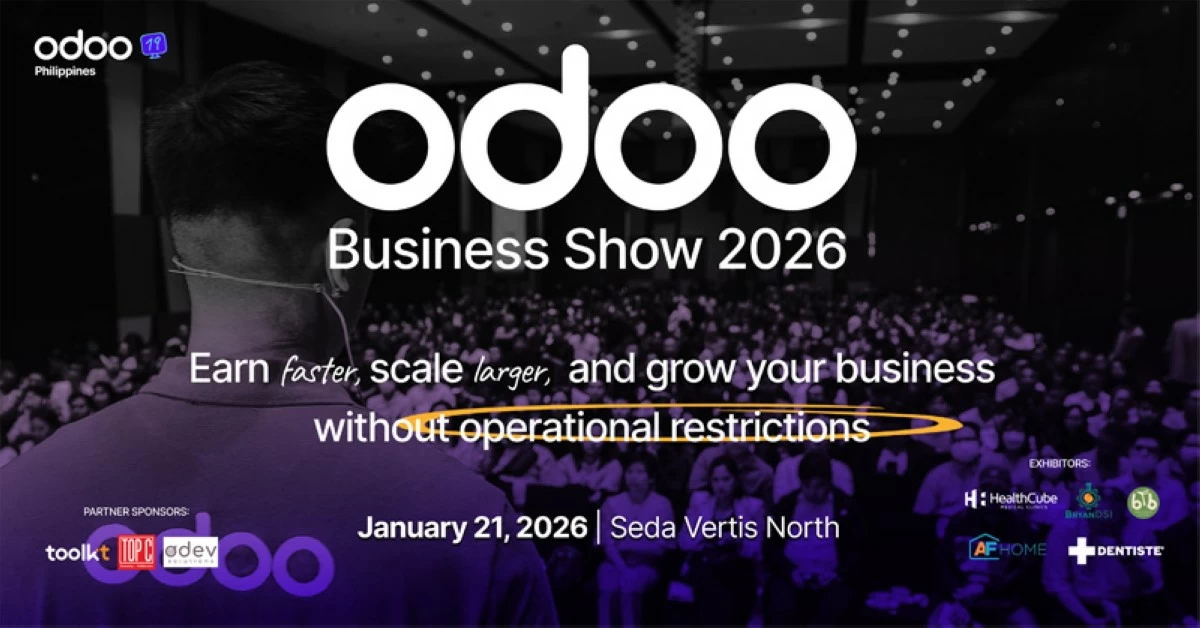
Odoo invites Filipino MSMEs to discover the transformative power of a truly integrated platform at the Odoo Business Show on January 21, 2026. The event will feature a live demonstration of Odoo 19, inspiring success stories from local businesses, and valuable networking opportunities.
Register for the Odoo Business Show here. Learn more about how Odoo can support your business at www.odoo.com.