ADVERTISEMENT

Stewardship of the people's trust: Government's primary responsibility

Published Jan 13, 2026 12:05 am  |  Updated Jan 12, 2026 06:06 pm
Public office is, at its core, a sacred trust. This truth was forcefully underscored by President Marcos Jr. in his recent address to newly promoted generals of the Armed Forces of the Philippines. While the occasion honored military advancement, the President’s message was, in essence, a reminder to the entire officialdom and bureaucracy. He emphasized that leadership—whether in uniform or in civilian posts—demands integrity, discipline, and fidelity to the Filipino people, especially in the stewardship of public resources.
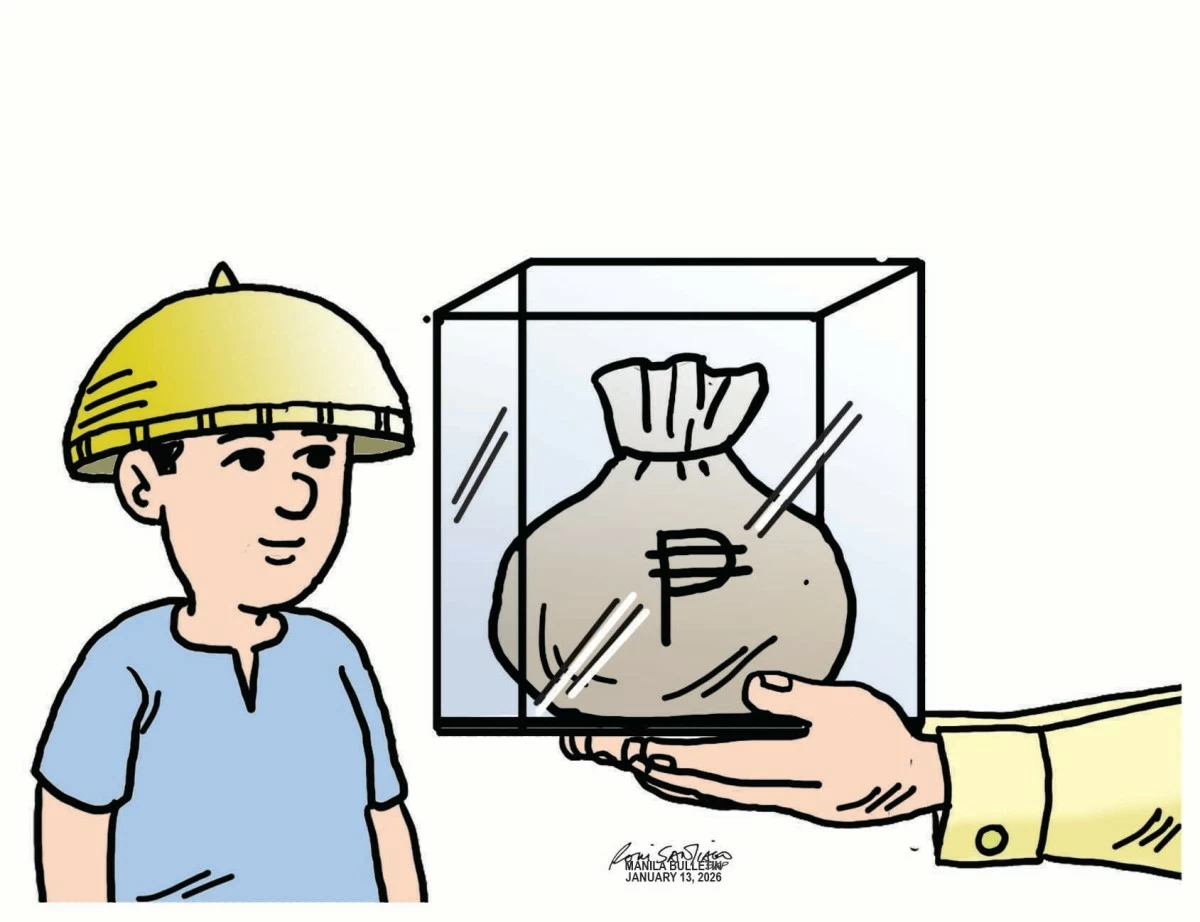
Every peso collected from taxpayers carries with it the sacrifices and aspirations of millions who expect government not merely to spend, but to spend wisely. In a time of competing demands—national security, social protection, infrastructure, education, health care, and climate resilience—the duty to safeguard public funds has become both more complex and more urgent. The President’s emphasis on honor and responsibility among senior officers echoes a broader expectation: that all those entrusted with authority must treat public resources with the same seriousness as they would the nation’s defense.
Safeguarding public funds is not limited to preventing corruption, vital as that is. It also means ensuring that spending decisions are purposeful, efficient, and aligned with long-term national development goals. Waste, inefficiency, and opacity—whether born of malice or neglect—deprive citizens of essential services and steadily erode trust in institutions. This is as true for civilian agencies as it is for the military establishment.
To meet this challenge, government must be candid about what it must stop, start, and continue doing.
Government must stop tolerating practices that normalize inefficiency and dilute accountability. Redundant programs, poorly justified budget insertions, and projects driven more by political visibility than public value must no longer be routine. The persistent “spend-it-or-lose-it” mindset that encourages hurried disbursements toward year’s end also deserves serious rethinking, as it often sacrifices quality, sustainability, and value for money. Equally damaging is any perception that accountability can be selective. As the President reminded the generals, rank and position should never place anyone above the standards they are sworn to uphold.
Government must start strengthening systems that hardwire transparency, performance, and citizen oversight into the public finance process. Accelerated digitalization of procurement, budgeting, and project monitoring can make transactions traceable and auditable, reducing discretion and abuse. Performance-based budgeting must also mature into a genuine management tool—rewarding programs that deliver measurable results and decisively reforming or discontinuing those that do not. Just as crucial is sustained investment in the professionalization of the civil service, ensuring that public servants are equipped with both technical competence and ethical grounding.
Government must continue empowering institutions that guard the public purse. Independent audit, vigilant legislative oversight, and a credible justice system remain indispensable to fiscal discipline. Findings of the Commission on Audit should be treated not as mere compliance hurdles but as roadmaps for institutional improvement. Partnerships with the private sector and civil society must also continue, guided by clear rules that protect public interest while maximizing impact.
President Marcos’ message to military leaders was clear: authority exists to serve, not to indulge. Applied across government, this principle is the bedrock of sound public finance. When public funds are safeguarded and wisely used, they become instruments of inclusive growth and national progress. This is how the government earns and honors the people's trust.
ADVERTISEMENT
.most-popular .layout-ratio{ padding-bottom: 79.13%; } @media (min-width: 768px) and (max-width: 1024px) { .widget-title { font-size: 15px !important; } }

{{ articles_filter_1561_widget.title }}

.most-popular .layout-ratio{ padding-bottom: 79.13%; } @media (min-width: 768px) and (max-width: 1024px) { .widget-title { font-size: 15px !important; } }

{{ articles_filter_1562_widget.title }}

.most-popular .layout-ratio{ padding-bottom: 79.13%; } @media (min-width: 768px) and (max-width: 1024px) { .widget-title { font-size: 15px !important; } }

{{ articles_filter_1563_widget.title }}

{{ articles_filter_1564_widget.title }}

.mb-article-details { position: relative; } .mb-article-details .article-body-preview, .mb-article-details .article-body-summary{ font-size: 17px; line-height: 30px; font-family: "Libre Caslon Text", serif; color: #000; } .mb-article-details .article-body-preview iframe , .mb-article-details .article-body-summary iframe{ width: 100%; margin: auto; } .read-more-background { background: linear-gradient(180deg, color(display-p3 1.000 1.000 1.000 / 0) 13.75%, color(display-p3 1.000 1.000 1.000 / 0.8) 30.79%, color(display-p3 1.000 1.000 1.000) 72.5%); position: absolute; height: 200px; width: 100%; bottom: 0; display: flex; justify-content: center; align-items: center; padding: 0; } .read-more-background a{ color: #000; } .read-more-btn { padding: 17px 45px; font-family: Inter; font-weight: 700; font-size: 18px; line-height: 16px; text-align: center; vertical-align: middle; border: 1px solid black; background-color: white; } .hidden { display: none; }
function initializeAllSwipers() { // Get all hidden inputs with cms_article_id document.querySelectorAll('[id^="cms_article_id_"]').forEach(function (input) { const cmsArticleId = input.value; const articleSelector = '#article-' + cmsArticleId + ' .body_images'; const swiperElement = document.querySelector(articleSelector); if (swiperElement && !swiperElement.classList.contains('swiper-initialized')) { new Swiper(articleSelector, { loop: true, pagination: false, navigation: { nextEl: '#article-' + cmsArticleId + ' .swiper-button-next', prevEl: '#article-' + cmsArticleId + ' .swiper-button-prev', }, }); } }); } setTimeout(initializeAllSwipers, 3000); const intersectionObserver = new IntersectionObserver( (entries) => { entries.forEach((entry) => { if (entry.isIntersecting) { const newUrl = entry.target.getAttribute("data-url"); if (newUrl) { history.pushState(null, null, newUrl); let article = entry.target; // Extract metadata const author = article.querySelector('.author-section').textContent.replace('By', '').trim(); const section = article.querySelector('.section-info ').textContent.replace(' ', ' '); const title = article.querySelector('.article-title h1').textContent; // Parse URL for Chartbeat path format const parsedUrl = new URL(newUrl, window.location.origin); const cleanUrl = parsedUrl.host + parsedUrl.pathname; // Update Chartbeat configuration if (typeof window._sf_async_config !== 'undefined') { window._sf_async_config.path = cleanUrl; window._sf_async_config.sections = section; window._sf_async_config.authors = author; } // Track virtual page view with Chartbeat if (typeof pSUPERFLY !== 'undefined' && typeof pSUPERFLY.virtualPage === 'function') { try { pSUPERFLY.virtualPage({ path: cleanUrl, title: title, sections: section, authors: author }); } catch (error) { console.error('ping error', error); } } // Optional: Update document title if (title && title !== document.title) { document.title = title; } } } }); }, { threshold: 0.1 } ); function showArticleBody(button) { const article = button.closest("article"); const summary = article.querySelector(".article-body-summary"); const body = article.querySelector(".article-body-preview"); const readMoreSection = article.querySelector(".read-more-background"); // Hide summary and read-more section summary.style.display = "none"; readMoreSection.style.display = "none"; // Show the full article body body.classList.remove("hidden"); } document.addEventListener("DOMContentLoaded", () => { let loadCount = 0; // Track how many times articles are loaded const offset = [1, 2, 3, 4, 5, 6, 7, 8, 9, 10]; // Offset values const currentUrl = window.location.pathname.substring(1); let isLoading = false; // Prevent multiple calls if (!currentUrl) { console.log("Current URL is invalid."); return; } const sentinel = document.getElementById("load-more-sentinel"); if (!sentinel) { console.log("Sentinel element not found."); return; } function isSentinelVisible() { const rect = sentinel.getBoundingClientRect(); return ( rect.top < window.innerHeight && rect.bottom >= 0 ); } function onScroll() { if (isLoading) return; if (isSentinelVisible()) { if (loadCount >= offset.length) { console.log("Maximum load attempts reached."); window.removeEventListener("scroll", onScroll); return; } isLoading = true; const currentOffset = offset[loadCount]; window.loadMoreItems().then(() => { let article = document.querySelector('#widget_1690 > div:nth-last-of-type(2) article'); intersectionObserver.observe(article) loadCount++; }).catch(error => { console.error("Error loading more items:", error); }).finally(() => { isLoading = false; }); } } window.addEventListener("scroll", onScroll); });

Sign up by email to receive news.