

ADVERTISEMENT

Over 16,000 classrooms to rise as DepEd secures approval for P105.7-billion PPP

Up to 800,000 learners to benefit from project addressing classroom shortages in high-need areas nationwide

Published Jan 13, 2026 01:28 pm

At A Glance

  • DepEd approves P105.7-B PPP for 16,459 classrooms to ease overcrowding in high-need areas
  • Up to 800,000 learners will benefit from smaller class sizes and improved learning conditions
  • Project boosts jobs and savings with over 57,000 jobs created and P40 billion in government savings
The Department of Education (DepEd) said the P105.7-billion public-private partnership (PPP) project will deliver more than 16,000 classrooms nationwide, aiming to ease overcrowding and benefit up to 800,000 public school learners. (DepEd / MB Visual Content Group)
More than 16,000 new classrooms are set to rise across high-need areas nationwide after the Department of Education (DepEd) secured government approval for a P105.7-billion public-private partnership (PPP) project— a major infrastructure push expected to ease chronic overcrowding and directly benefit up to 800,000 learners in public schools.
In a statement issued Tuesday, January 13, DepEd said it has rolled out the program as part of a major push to address overcrowded classrooms and accelerate school infrastructure development in high-need areas nationwide.
DepEd Secretary Sonny Angara said the initiative, known as the Public-Private Partnership for School Infrastructure Project Phase III (PSIP III), recently received approval from the Economy and Development Council (ED Council), chaired by President Marcos, signaling strong backing from the current administration.
Fast-tracking classroom construction
Angara stressed that DepEd can no longer rely on a single approach to solve the country’s persistent classroom shortage.
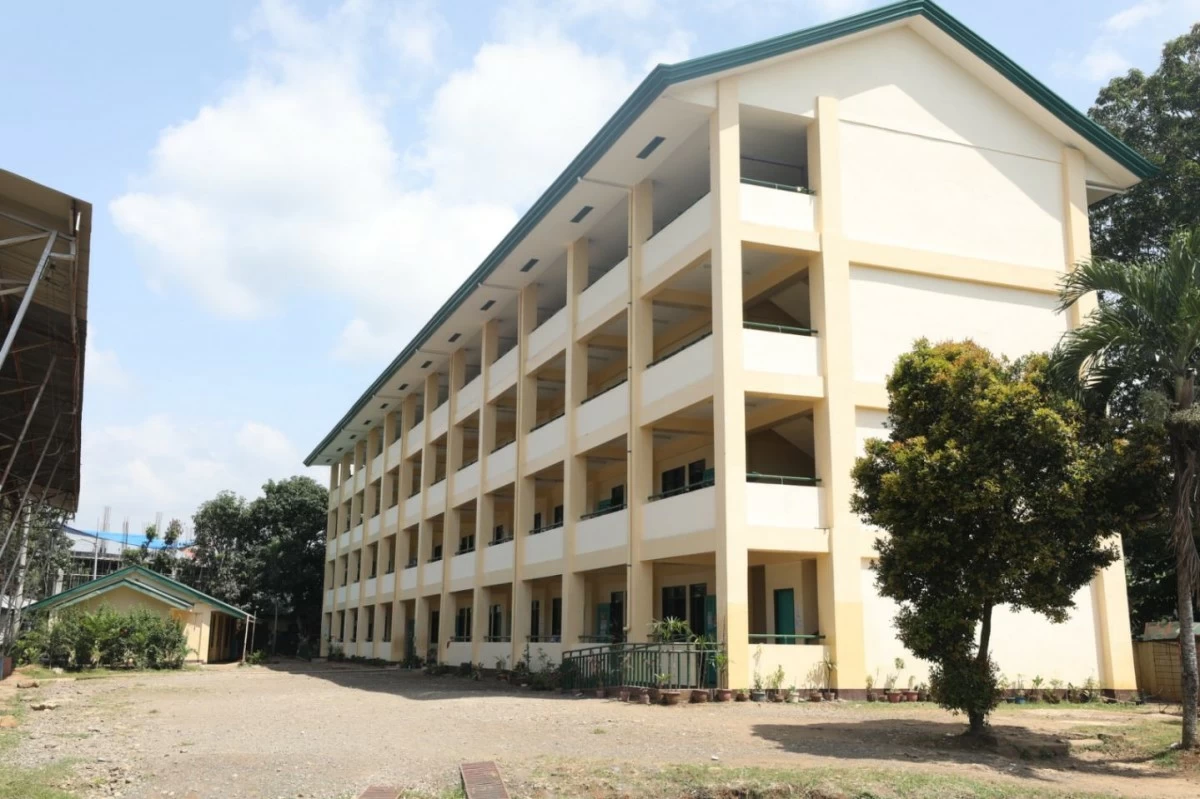
New classrooms on the rise: DepEd’s P105.7-B PPP to ease overcrowding for 800,000 learners. (DepEd photo)
“Hindi na puwedeng umasa lang tayo sa iisang paraan (We can no longer rely on just one approach),” Angara said.
He noted that PSIP is “one of our horses in this race to deliver classrooms faster to our communities.”
“Every classroom we build reduces congestion, improves safety, at nagbibigay ng sapat na espasyo para makapag-aral nang maayos ang mga bata at makapagturo nang epektibo ang mga guro (and provides enough space for children to study properly and for teachers to teach effectively),” he added.
DepEd said PSIP III forms part of broader reforms to speed up classroom construction and strengthen governance in school infrastructure.
Alongside the PPP project, DepEd said it has nearly 24,000 classrooms programmed for 2026 under the national budget and is expanding initiatives that allow local government units (LGUs) to directly construct school buildings.
These combined efforts aim to significantly reduce the country’s estimated 165,000-classroom backlog, DepEd added.
Jobs, savings, and a whole-of-nation approach
Angara said PSIP III reflects a “whole-of-nation approach,” tapping private sector expertise to deliver classrooms faster and more efficiently while boosting local industries.
The massive construction program is expected to generate more than 57,000 jobs nationwide, DepEd added.
Beyond employment, DepEd said the project is also projected to yield government savings of about P40.15 billion, based on DepEd estimates.
Benefits for learners and schools
Once fully operational, DepEd said the new classrooms are expected to directly benefit up to 800,000 learners annually, with millions more gaining indirectly from reduced congestion in over 1,000 public schools.
DepEd estimates that the average class size could drop to around 39 learners from about 50, improving classroom interaction, safety, and overall learning conditions.
The project is also expected to reduce the need for multiple-shift schedules, increase student contact time, and ease fatigue among both learners and teachers, DepEd said.
Green lane for DepEd PPPs
Angara noted that DepEd is working closely with the economic team, the PPP Center, and experts from the Asian Development Bank (ADB) to fast-track implementation, in line with President Marcos’ call for a “green lane” for DepEd PPP projects.
PSIP III will be implemented through a solicited PPP using a build-lease-and-transfer scheme, with DepEd overseeing implementation to ensure compliance with education standards and timelines.

With the backing of President Marcos, Education Secretary Sonny Angara highlighted the PSIP III as a key strategy to fast-track classroom construction in high-need areas across the country. (DepEd photo)
Timeline and historical context
DepEd said the project builds on earlier phases of the school infrastructure PPP.
PSIP I and II, implemented more than a decade ago, delivered a combined 13,391 classrooms.
With PSIP III, DepEd aims to deliver a critical mass of classrooms, making it the largest classroom PPP in Philippine history.
Based on the indicative timeline, bidding is expected to begin by March 2026, contract signing is targeted for August 2026, and construction is set to start by March 2027.
Full completion, DepEd said, is expected by March 2028, with all classrooms finished within 19 months after contract signing.
DepEd noted that the ambitious program underscores the administration’s commitment to improving access to quality education by ensuring safer, less crowded, and more conducive learning spaces for Filipino learners. 

Related Tags

DepEd classroom PPP P105.7-billion PPP project classroom shortage Philippines public-private partnership education DepEd PSIP III school infrastructure development Philippines overcrowded classrooms public schools
ADVERTISEMENT
.most-popular .layout-ratio{ padding-bottom: 79.13%; } @media (min-width: 768px) and (max-width: 1024px) { .widget-title { font-size: 15px !important; } }

{{ articles_filter_1561_widget.title }}

.most-popular .layout-ratio{ padding-bottom: 79.13%; } @media (min-width: 768px) and (max-width: 1024px) { .widget-title { font-size: 15px !important; } }

{{ articles_filter_1562_widget.title }}

.most-popular .layout-ratio{ padding-bottom: 79.13%; } @media (min-width: 768px) and (max-width: 1024px) { .widget-title { font-size: 15px !important; } }

{{ articles_filter_1563_widget.title }}

{{ articles_filter_1564_widget.title }}

.mb-article-details { position: relative; } .mb-article-details .article-body-preview, .mb-article-details .article-body-summary{ font-size: 17px; line-height: 30px; font-family: "Libre Caslon Text", serif; color: #000; } .mb-article-details .article-body-preview iframe , .mb-article-details .article-body-summary iframe{ width: 100%; margin: auto; } .read-more-background { background: linear-gradient(180deg, color(display-p3 1.000 1.000 1.000 / 0) 13.75%, color(display-p3 1.000 1.000 1.000 / 0.8) 30.79%, color(display-p3 1.000 1.000 1.000) 72.5%); position: absolute; height: 200px; width: 100%; bottom: 0; display: flex; justify-content: center; align-items: center; padding: 0; } .read-more-background a{ color: #000; } .read-more-btn { padding: 17px 45px; font-family: Inter; font-weight: 700; font-size: 18px; line-height: 16px; text-align: center; vertical-align: middle; border: 1px solid black; background-color: white; } .hidden { display: none; }
function initializeAllSwipers() { // Get all hidden inputs with cms_article_id document.querySelectorAll('[id^="cms_article_id_"]').forEach(function (input) { const cmsArticleId = input.value; const articleSelector = '#article-' + cmsArticleId + ' .body_images'; const swiperElement = document.querySelector(articleSelector); if (swiperElement && !swiperElement.classList.contains('swiper-initialized')) { new Swiper(articleSelector, { loop: true, pagination: false, navigation: { nextEl: '#article-' + cmsArticleId + ' .swiper-button-next', prevEl: '#article-' + cmsArticleId + ' .swiper-button-prev', }, }); } }); } setTimeout(initializeAllSwipers, 3000); const intersectionObserver = new IntersectionObserver( (entries) => { entries.forEach((entry) => { if (entry.isIntersecting) { const newUrl = entry.target.getAttribute("data-url"); if (newUrl) { history.pushState(null, null, newUrl); let article = entry.target; // Extract metadata const author = article.querySelector('.author-section').textContent.replace('By', '').trim(); const section = article.querySelector('.section-info ').textContent.replace(' ', ' '); const title = article.querySelector('.article-title h1').textContent; // Parse URL for Chartbeat path format const parsedUrl = new URL(newUrl, window.location.origin); const cleanUrl = parsedUrl.host + parsedUrl.pathname; // Update Chartbeat configuration if (typeof window._sf_async_config !== 'undefined') { window._sf_async_config.path = cleanUrl; window._sf_async_config.sections = section; window._sf_async_config.authors = author; } // Track virtual page view with Chartbeat if (typeof pSUPERFLY !== 'undefined' && typeof pSUPERFLY.virtualPage === 'function') { try { pSUPERFLY.virtualPage({ path: cleanUrl, title: title, sections: section, authors: author }); } catch (error) { console.error('ping error', error); } } // Optional: Update document title if (title && title !== document.title) { document.title = title; } } } }); }, { threshold: 0.1 } ); function showArticleBody(button) { const article = button.closest("article"); const summary = article.querySelector(".article-body-summary"); const body = article.querySelector(".article-body-preview"); const readMoreSection = article.querySelector(".read-more-background"); // Hide summary and read-more section summary.style.display = "none"; readMoreSection.style.display = "none"; // Show the full article body body.classList.remove("hidden"); } document.addEventListener("DOMContentLoaded", () => { let loadCount = 0; // Track how many times articles are loaded const offset = [1, 2, 3, 4, 5, 6, 7, 8, 9, 10]; // Offset values const currentUrl = window.location.pathname.substring(1); let isLoading = false; // Prevent multiple calls if (!currentUrl) { console.log("Current URL is invalid."); return; } const sentinel = document.getElementById("load-more-sentinel"); if (!sentinel) { console.log("Sentinel element not found."); return; } function isSentinelVisible() { const rect = sentinel.getBoundingClientRect(); return ( rect.top < window.innerHeight && rect.bottom >= 0 ); } function onScroll() { if (isLoading) return; if (isSentinelVisible()) { if (loadCount >= offset.length) { console.log("Maximum load attempts reached."); window.removeEventListener("scroll", onScroll); return; } isLoading = true; const currentOffset = offset[loadCount]; window.loadMoreItems().then(() => { let article = document.querySelector('#widget_1690 > div:nth-last-of-type(2) article'); intersectionObserver.observe(article) loadCount++; }).catch(error => { console.error("Error loading more items:", error); }).finally(() => { isLoading = false; }); } } window.addEventListener("scroll", onScroll); });

Sign up by email to receive news.