

ADVERTISEMENT

Gaps persist in Philippine universities' affirmative action, student support programs — survey

EDCOM 2 flags 'uneven' implementation; calls for CHED to strengthen affirmative action and inclusive support for vulnerable students

Published Jan 13, 2026 02:26 pm

At A Glance

  • Affirmative action exists in many universities, but its adoption varies: state universities lead, while private and local institutions lag, according to a new survey commissioned by EDCOM 2
  • Outreach exists, but student awareness and support for marginalized learners remain limited
  • EDCOM 2 urges CHED and UniFAST to set guidelines, track outcomes, and ensure inclusive support
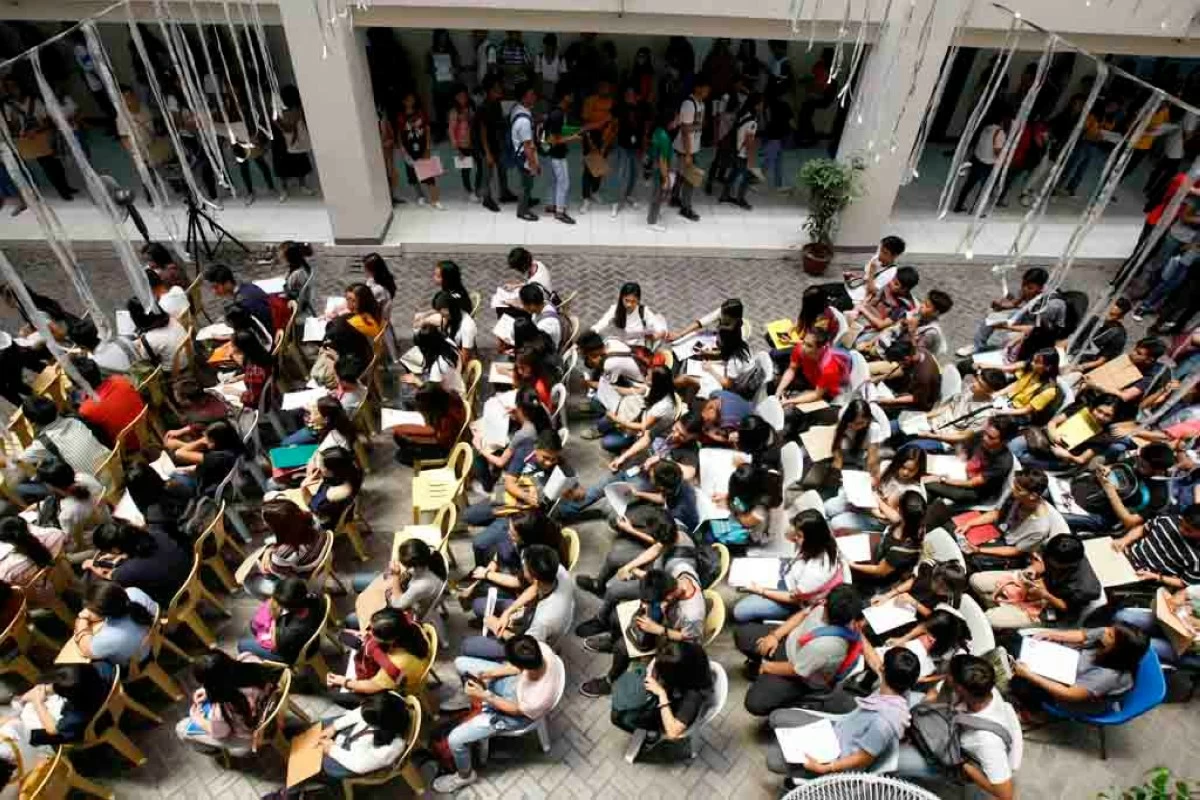
A new nationwide survey by EDCOM II finds that while many universities have affirmative action policies, their implementation and student support remain uneven. (Manila Bulletin / file photo)
While many Philippine universities have adopted affirmative action policies, implementation remains uneven, leaving significant gaps in student support programs, according to a new survey by the Second Congressional Commission on Education (EDCOM 2).
In a statement issued Tuesday, January 13, EDCOM 2 noted that the survey findings highlight persistent challenges in ensuring equitable access and assistance for students from marginalized and underrepresented groups across the country’s higher education institutions.
The study, titled “Affirmative Action in Philippine Higher Education Institutions: Evidence from a New Survey,” was conducted in partnership with Ateneo de Manila University, EDCOM 2 said. It provides the first comprehensive mapping of affirmative action policies in colleges and universities nationwide.
EDCOM 2 noted that affirmative action—measures such as quota systems, reserved slots, bridging programs, or adjusted admissions criteria—aims to level the playing field for students from low-income households, indigenous communities, persons with disabilities, and other marginalized groups.
While the Universal Access to Quality Tertiary Education Act (RA 10931) has removed tuition barriers, EDCOM 2 said the survey found that many disadvantaged students still face hurdles in accessing higher education.
Uneven adoption across institutions
EDCOM 2 reported that the survey covered 529 higher education institutions (HEIs) nationwide.
Results showed that 77 percent of state universities and colleges (SUCs) have at least one affirmative action policy, compared with 45 percent of private HEIs and only 43 percent of local universities and colleges (LUCs).
Socioeconomic disadvantage remains the most common criterion for support, while programs for students with disabilities, gender minorities, and those affected by conflict or disasters remain limited, EDCOM 2 said.
Low awareness, outreach challenges
EDCOM 2 pointed out that although most SUCs (78 percent) and LUCs (74 percent) conduct outreach to disadvantaged students, awareness of these policies remains low.
The survey showed that only 5 percent of students in SUCs and 40 percent in LUCs are aware of the available programs.
Entrance exams, common in public institutions, can both necessitate affirmative action measures and act as barriers for students who lack preparatory support, EDCOM 2 said.
Gaps in long-term student support
Beyond admissions, EDCOM 2 found that HEIs often lack comprehensive support services.
While career counseling is widely available and mental health support is prioritized by around 80 percent of institutions, preparatory programs for underprepared students are scarce.
EDCOM 2 also noted that more than half of the surveyed institutions do not track graduation or employment outcomes of students admitted through affirmative action.
CHED, UniFAST urged to take action
EDCOM 2 urged the Commission on Higher Education (CHED) and the Unified Student Financial Assistance System for Tertiary Education (UniFAST) to establish clear, nationwide guidelines for affirmative action, including monitoring student outcomes and ensuring inclusive support for all marginalized learners.
“As we improve participation and completion in higher education, it is imperative to ensure that no learner is left behind—especially students who have faced multiple hurdles to complete high school and now access higher education,” said EDCOM II Executive Director Dr. Karol Mark Yee.
UniFAST, under CHED, implements RA 10931, providing free tuition, subsidies, and loans to qualified Filipino students in public and private colleges and universities.
“We strongly urge CHED and UniFAST to develop a comprehensive policy for affirmative action, regularly collect data on student transitions and pathways, and work with public and private colleges and universities to ensure programs are in place for students with disabilities, ethnic minorities, and those affected by conflict or disasters,” Yee added.
EDCOM 2 said the survey findings will also be featured in the upcoming national education report, set for release on January 26, 2026. 

Related Tags

Philippine universities affirmative action EDCOM 2 survey student support programs Philippines CHED higher education policy UniFAST financial aid marginalized students access inclusive education Philippines
ADVERTISEMENT
.most-popular .layout-ratio{ padding-bottom: 79.13%; } @media (min-width: 768px) and (max-width: 1024px) { .widget-title { font-size: 15px !important; } }

{{ articles_filter_1561_widget.title }}

.most-popular .layout-ratio{ padding-bottom: 79.13%; } @media (min-width: 768px) and (max-width: 1024px) { .widget-title { font-size: 15px !important; } }

{{ articles_filter_1562_widget.title }}

.most-popular .layout-ratio{ padding-bottom: 79.13%; } @media (min-width: 768px) and (max-width: 1024px) { .widget-title { font-size: 15px !important; } }

{{ articles_filter_1563_widget.title }}

{{ articles_filter_1564_widget.title }}

.mb-article-details { position: relative; } .mb-article-details .article-body-preview, .mb-article-details .article-body-summary{ font-size: 17px; line-height: 30px; font-family: "Libre Caslon Text", serif; color: #000; } .mb-article-details .article-body-preview iframe , .mb-article-details .article-body-summary iframe{ width: 100%; margin: auto; } .read-more-background { background: linear-gradient(180deg, color(display-p3 1.000 1.000 1.000 / 0) 13.75%, color(display-p3 1.000 1.000 1.000 / 0.8) 30.79%, color(display-p3 1.000 1.000 1.000) 72.5%); position: absolute; height: 200px; width: 100%; bottom: 0; display: flex; justify-content: center; align-items: center; padding: 0; } .read-more-background a{ color: #000; } .read-more-btn { padding: 17px 45px; font-family: Inter; font-weight: 700; font-size: 18px; line-height: 16px; text-align: center; vertical-align: middle; border: 1px solid black; background-color: white; } .hidden { display: none; }
function initializeAllSwipers() { // Get all hidden inputs with cms_article_id document.querySelectorAll('[id^="cms_article_id_"]').forEach(function (input) { const cmsArticleId = input.value; const articleSelector = '#article-' + cmsArticleId + ' .body_images'; const swiperElement = document.querySelector(articleSelector); if (swiperElement && !swiperElement.classList.contains('swiper-initialized')) { new Swiper(articleSelector, { loop: true, pagination: false, navigation: { nextEl: '#article-' + cmsArticleId + ' .swiper-button-next', prevEl: '#article-' + cmsArticleId + ' .swiper-button-prev', }, }); } }); } setTimeout(initializeAllSwipers, 3000); const intersectionObserver = new IntersectionObserver( (entries) => { entries.forEach((entry) => { if (entry.isIntersecting) { const newUrl = entry.target.getAttribute("data-url"); if (newUrl) { history.pushState(null, null, newUrl); let article = entry.target; // Extract metadata const author = article.querySelector('.author-section').textContent.replace('By', '').trim(); const section = article.querySelector('.section-info ').textContent.replace(' ', ' '); const title = article.querySelector('.article-title h1').textContent; // Parse URL for Chartbeat path format const parsedUrl = new URL(newUrl, window.location.origin); const cleanUrl = parsedUrl.host + parsedUrl.pathname; // Update Chartbeat configuration if (typeof window._sf_async_config !== 'undefined') { window._sf_async_config.path = cleanUrl; window._sf_async_config.sections = section; window._sf_async_config.authors = author; } // Track virtual page view with Chartbeat if (typeof pSUPERFLY !== 'undefined' && typeof pSUPERFLY.virtualPage === 'function') { try { pSUPERFLY.virtualPage({ path: cleanUrl, title: title, sections: section, authors: author }); } catch (error) { console.error('ping error', error); } } // Optional: Update document title if (title && title !== document.title) { document.title = title; } } } }); }, { threshold: 0.1 } ); function showArticleBody(button) { const article = button.closest("article"); const summary = article.querySelector(".article-body-summary"); const body = article.querySelector(".article-body-preview"); const readMoreSection = article.querySelector(".read-more-background"); // Hide summary and read-more section summary.style.display = "none"; readMoreSection.style.display = "none"; // Show the full article body body.classList.remove("hidden"); } document.addEventListener("DOMContentLoaded", () => { let loadCount = 0; // Track how many times articles are loaded const offset = [1, 2, 3, 4, 5, 6, 7, 8, 9, 10]; // Offset values const currentUrl = window.location.pathname.substring(1); let isLoading = false; // Prevent multiple calls if (!currentUrl) { console.log("Current URL is invalid."); return; } const sentinel = document.getElementById("load-more-sentinel"); if (!sentinel) { console.log("Sentinel element not found."); return; } function isSentinelVisible() { const rect = sentinel.getBoundingClientRect(); return ( rect.top < window.innerHeight && rect.bottom >= 0 ); } function onScroll() { if (isLoading) return; if (isSentinelVisible()) { if (loadCount >= offset.length) { console.log("Maximum load attempts reached."); window.removeEventListener("scroll", onScroll); return; } isLoading = true; const currentOffset = offset[loadCount]; window.loadMoreItems().then(() => { let article = document.querySelector('#widget_1690 > div:nth-last-of-type(2) article'); intersectionObserver.observe(article) loadCount++; }).catch(error => { console.error("Error loading more items:", error); }).finally(() => { isLoading = false; }); } } window.addEventListener("scroll", onScroll); });

Sign up by email to receive news.