







Dakar is still running, and so is the Pajero story
Published Jan 13, 2026 01:28 am


At A Glance
- Dakar 2026 remains an active proving ground for endurance, with Dakar Classic highlighting how older rally raid vehicles continue to survive real stages today.
- Multiple privateer teams are campaigning classic Mitsubishi platforms, from the L300 Delica to early Pajeros and the Pajero Evo, reinforcing the brand's durability-driven heritage.
- There is renewed speculation around a Pajero revival, following recent European prototype sightings and a heritage-focused Ralliart teaser released during the rally.
The Dakar Rally is arguably the world's most famous rally raid, and as the 2026 edition continues across Saudi Arabia until the 17th of January, the event once again demonstrates why it remains motorsport’s most uncompromising endurance test. Day after day, competitors face punishing distances, navigation-heavy stages, and terrain that exposes any weakness in preparation or machinery. Dakar is an event that is contested stage by stage, under conditions that allow little margin for error.
Running alongside the modern rally, the Dakar Classic category allows older vehicles to come back onto real stages where reliability and consistency matter more than outright speed. These cars are required to function across the same environment, dealing with heat, dust, and cumulative wear over two demanding weeks.
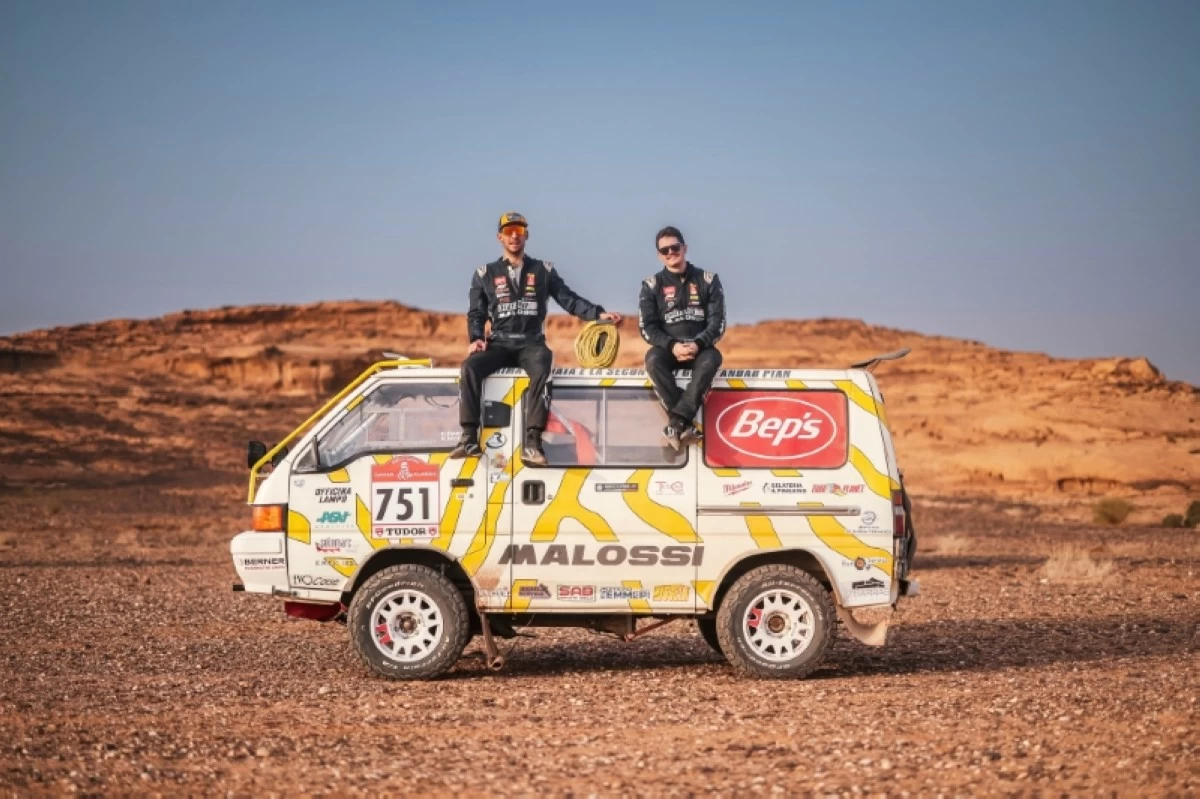
Photo courtesy of the official Dakar Rally Facebook page
Among the Dakar Classic field this year is a notable cluster of classic Mitsubishi entries, many of them platforms that helped define the brand’s reputation in rally raid, especially the Dakar. One of the most striking is car number 751, a 4x4 Mitsubishi L300 entered by Italy-based R Team, crewed by Henry Favre and Alessandro Iacovelli, both Italian. The L300, better known globally as the Delica, is not an unconventional sight on the Dakar Rally, as they used to serve as support vehicles during Mitsubishi's campaigns. Competing now, its presence reflects a period when simplicity, mechanical accessibility, and durability were central to off-road competition. Prepared for the Dakar Classic regulations, the 4x4 version of our well-loved utility van is covering real desert stages and surviving.
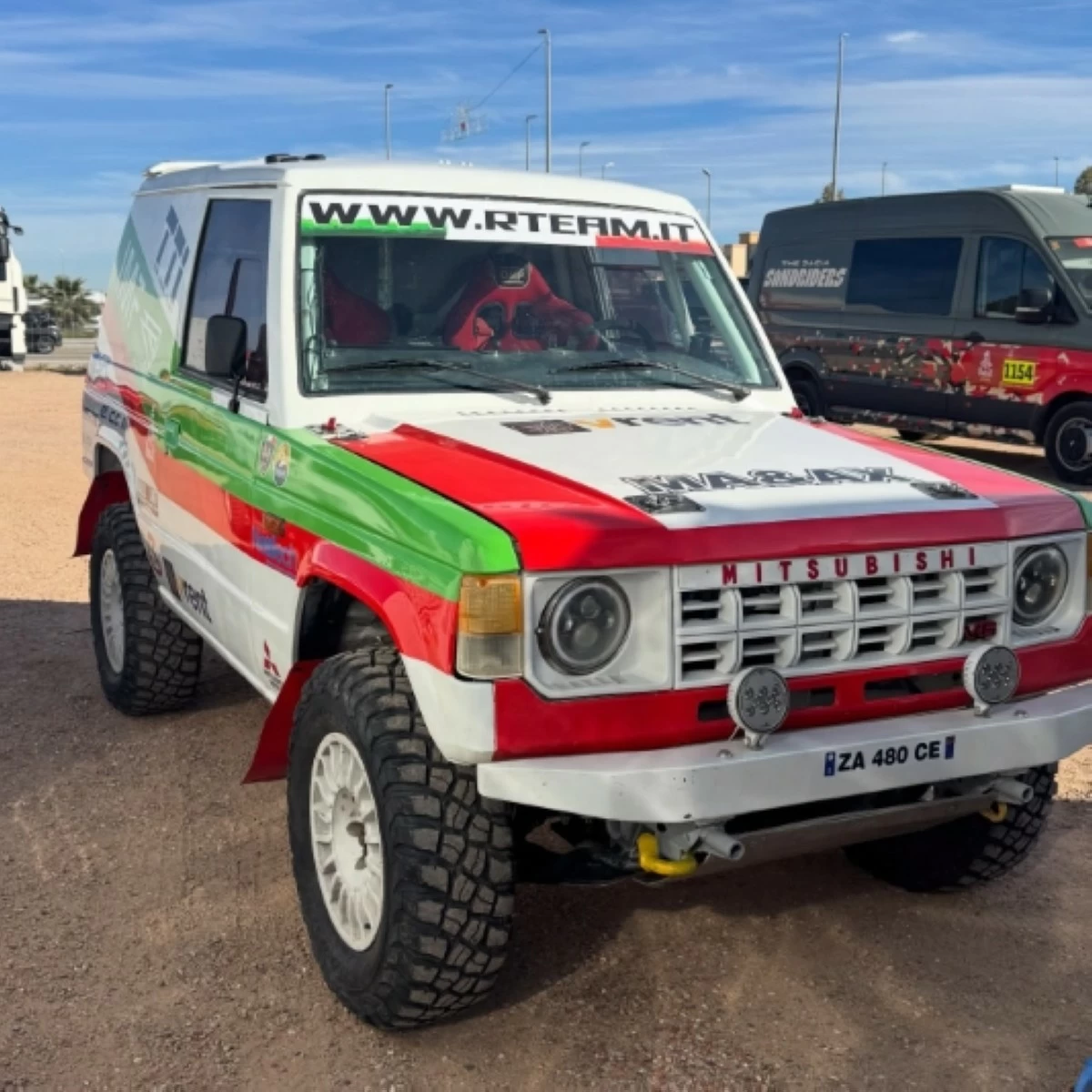
Photo courtesy of the official R-Team Italy Facebook page
Another notable Mitsubishi presence in this year’s Dakar Classic is car number 705, a first-generation Mitsubishi Pajero campaigned by Italy’s R Team and crewed by Marco Ernesto Leva and Alexia Giugni, both Italian. The pair are not newcomers to the event, having built experience across previous Dakar Classic editions, and they have approached the 2026 rally with a balance of competitiveness and consistency. Early in this year’s event, the crew briefly held the overall lead in the Classic classification, underlining how a well-prepared, period-correct Pajero can still run at the sharp end of this endurance-focused category.
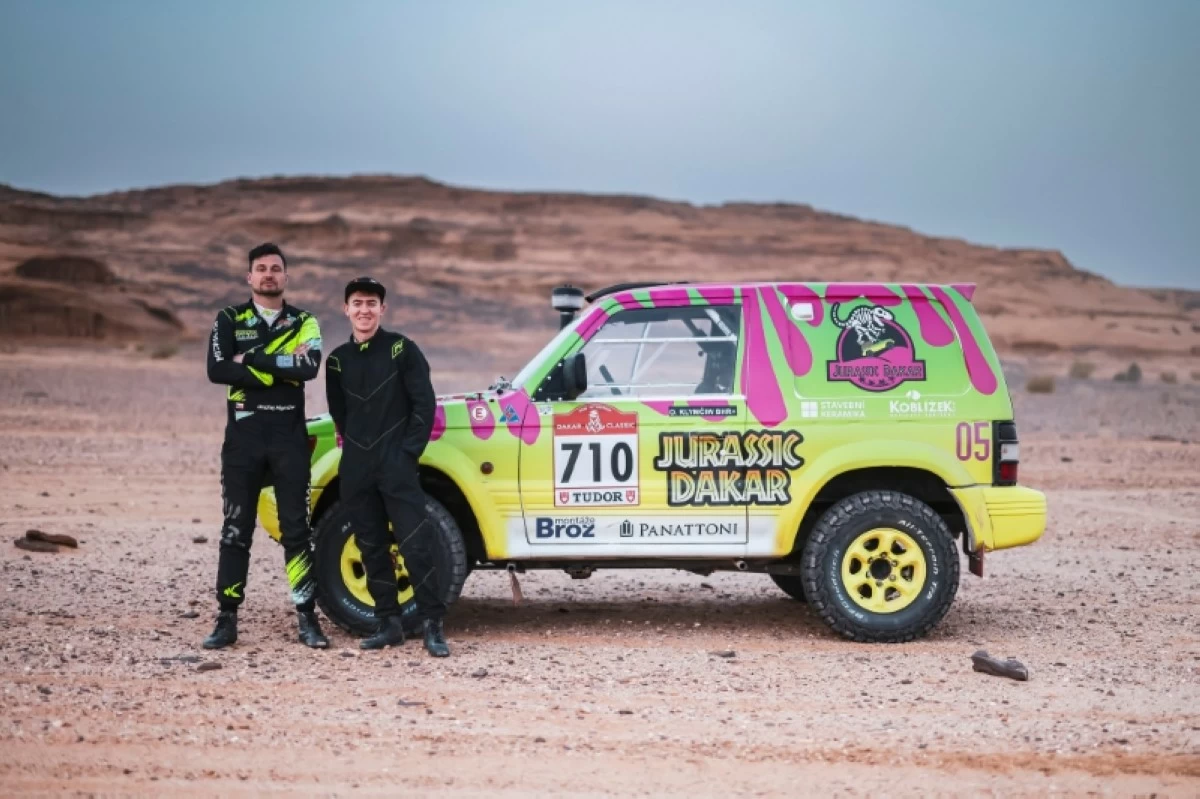
Photo courtesy of the official Dakar Rally Facebook page
Following closely is one of the oldest Pajeros in this year’s Classic field, car number 710, entered by Czech outfit Klymciw Racing. The team is running a 1994 Mitsubishi Pajero, crewed by Ondřej Klymčiw and Josef Broz, both from the Czech Republic. Beyond its age, the car has attracted attention for its distinctive “Jurassic Dakar” livery, a visual nod to the iconic Jeeps seen in the Jurassic Park films.
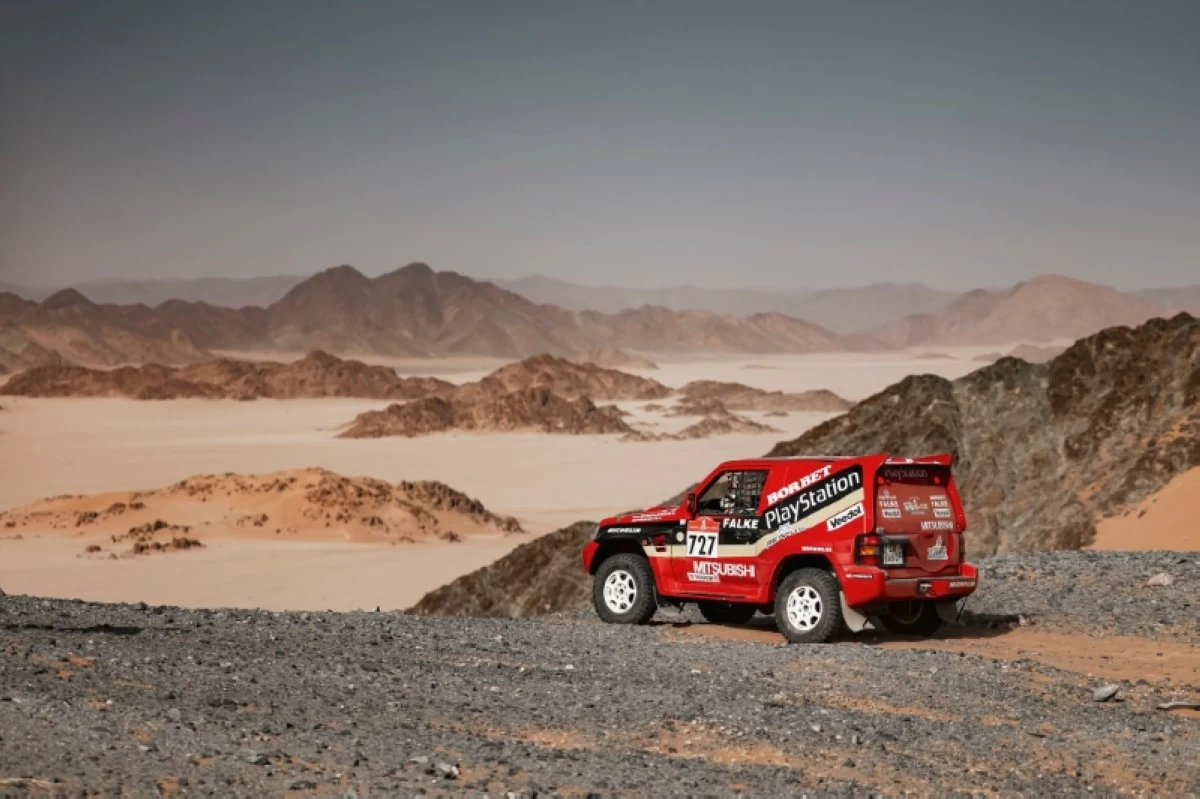
Photo courtesy of the official Dakar Rally Facebook page
Car number 727, meanwhile, is a late 90's Mitsubishi Pajero Evo entered by Team Casteu, driven by Peter Brabeck-Letmathe of Austria, with Jean-Michel Gayte of France as co-driver. The Pajero’s appearance at Dakar Classic shouldn't surprise anyone. It remains one of the most successful nameplates in Dakar history, and its continued use by privateer teams shows its reliability over sustained punishment.
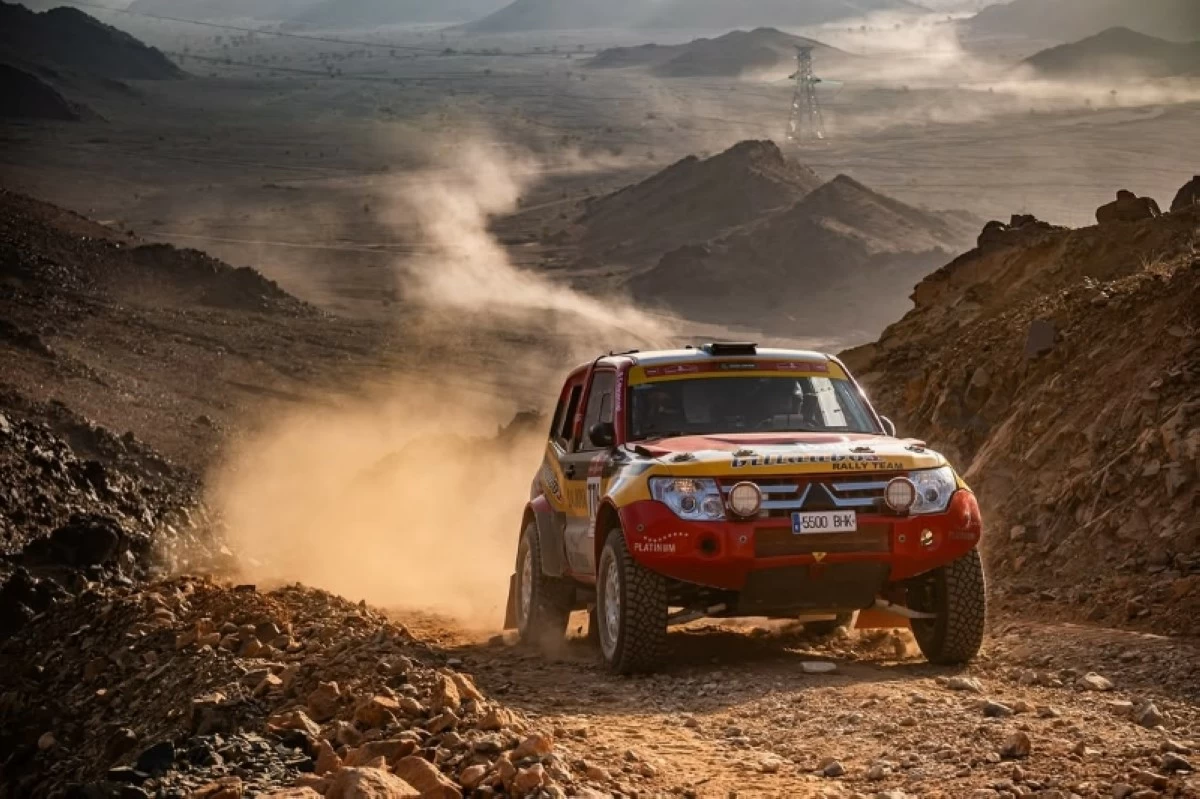
Photo courtesy of the official Dakar Rally Facebook page
Adding to Mitsubishi’s Dakar Classic presence is car number 776, a 2000s-era Mitsubishi Montero campaigned by Spain’s TH-Trucks Team. The crew consists of José Solé and Sergio Cerezo, both Spanish, running the vehicle in the later Dakar Classic H3 category. The Montero represents a more evolved generation of Mitsubishi’s ladder-frame off-roaders, yet still one rooted in the same rally raid philosophy.
Taken together, these entries illustrate why Mitsubishi’s Dakar legacy continues to resonate beyond factory participation. The vehicles are being driven across competitive routes, repaired at bivouacs, and pushed through the same environmental extremes that have always defined Dakar. Their continued progress highlights the durability and engineering priorities that once allowed the Japanese brand to dominate rally raid competition.
This historical context becomes especially relevant given the renewed speculation around a Pajero revival. Over the past year, multiple camouflaged, full-size Mitsubishi SUV prototypes have been photographed testing on European roads, with observers noting an upright, boxy profile and body-on-frame proportions consistent with a flagship off-roader rather than a crossover. The sightings have fueled talk that Mitsubishi is developing a new-generation Pajero, or a Montero-branded equivalent for certain markets, even as the company itself has stayed quiet on naming and timing. Earlier this month, the company released a heritage-focused motorsport video under its Ralliart banner. The clip traces Mitsubishi’s rally and rally raid past before closing on the silhouette of an unidentified SUV driving on public roads. No specifications are revealed, and no name is confirmed, but the visual language is unmistakably off-road oriented.
The timing of that teaser could not have been better. It arrived while Dakar 2026 is still ongoing, as classic Mitsubishis continue to appear in daily coverage of the rally raid. In that context, the video does not feel detached from reality. Instead, it is released into an environment where Mitsubishi’s older off-road models are once again demonstrating the endurance values the brand built its reputation on.
Rather than signaling a dramatic return to competition, the teaser functions more as a reminder. While the video hints at a future flagship SUV, the Dakar Classic entries provide tangible proof of what Mitsubishi’s off-road vehicles were designed to do. Pajeros, Monteros, and even a Delica-based L300 are still completing stages in one of the world’s harshest motorsport environments.
As Dakar 2026 continues, so does the hope that Mitsubishi’s rally raid story will come full circle once more.