






Manila Bulletin
 Philippines
National
China reiterates readiness to engage in 'candid dialogue' with PH
Philippines
National
China reiterates readiness to engage in 'candid dialogue' with PH
Philippines
National
China reiterates readiness to engage in 'candid dialogue' with PH
China reiterates readiness to engage in 'candid dialogue' with PH
Published Jan 13, 2026 02:38 pm


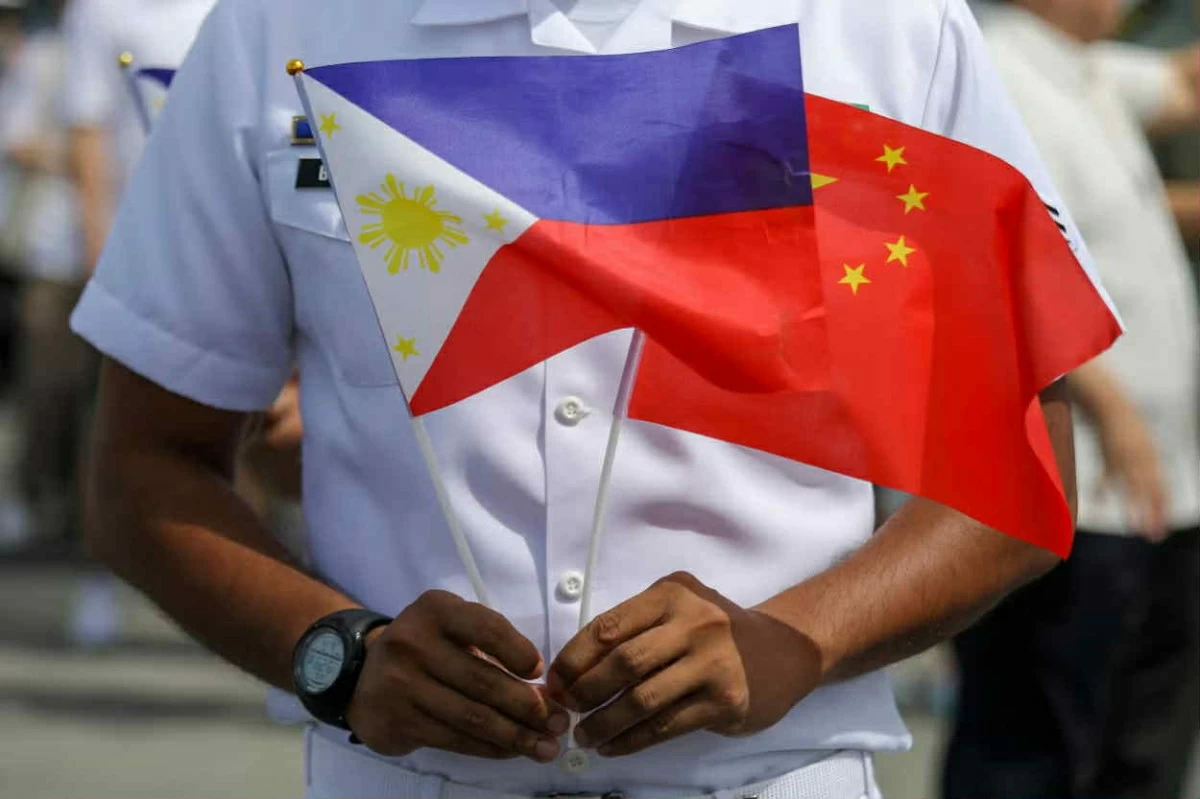
A man holds the flags of China and the Philippines. (AP Photo)
China has said it is ready to engage in candid dialogue with the Philippines, like what it says it does with other neighboring countries, as disputes in the South China Sea continues, involving now even Philippine government officials.
The Chinese Embassy in Manila made a statement on Monday night, Jan. 13, as word war between the embassy and several Philippine government officials, most notably Philippine Coast Guard (PCG) and West Philippine Sea spokesman Jay Tarriela, sees no sign of stopping.
After saying that Tarriela, the spokesman of the agency that continues to fight for the Philippines' right over the West Philippine Sea against China, "does nothing but spreading false, twisted, manipulative, misleading and provocative narratives," the embassy said "China stands ready to engage in candid dialogue with the Philippines on the basis of mutual respect to manage differences properly."
"No matter when Tarriela makes fallacious remarks on China and the South China Sea, and regardless of how many helpers he may call—one, ten, or a hundred—we are always ready to respond," it said.
"We will continue to tell facts and share truth to promote understanding and avoid miscalculation so as to grow China-Philippines relationship in a sound way," it added.
In the same statement, the embassy rejected the statement made earlier by the Philippine National Maritime Council, which said that Beijing's actions, particularly its "illegal, coercive, aggressive and deceptive (ICAD) activities within the maritime zones of the Philippines," directly result in tensions in the West Philippine Sea.
The embassy said "there is no such concept as 'maritime zone' in the United Nations Convention on the Law of the Sea (UNCLOS)."
"UNCLOS only provides for legal regimes such as the territorial sea and the exclusive economic zone (EEZ)," it claimed, adding that the Philippines is supposedly conducting "illegal patrols" in the waters, which the arbitral award rules to be rightfully belonging to the Philippines.
"The Philippines has been misleading the general public all these years by conflating the concepts of the territorial sea and the EEZ," the embassy also claimed.
"Some people provoke confrontation and tension under the pretext of 'safeguarding rights.' They push the Philippines to the forefront of geopolitical competition and to the brink of conflict with its friendly neighbor China," it said.
"This will only seriously damage the fundamental and long-term interests of the Philippines," it added.