






Manila Bulletin
 Philippines
National
DSWD to enforce rules barring politicians from AICS offsite payouts
Philippines
National
DSWD to enforce rules barring politicians from AICS offsite payouts
Philippines
National
DSWD to enforce rules barring politicians from AICS offsite payouts
DSWD to enforce rules barring politicians from AICS offsite payouts
Published Jan 12, 2026 05:04 pm


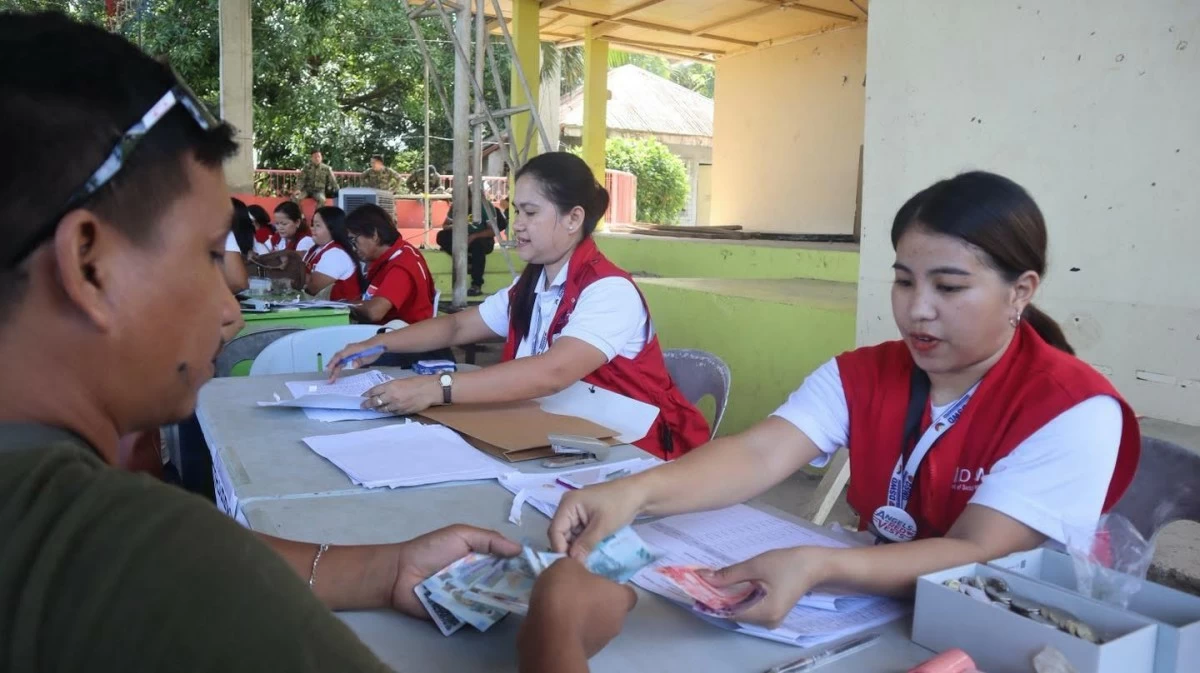
(Courtesy of DSWD)
The Department of Social Welfare and Development (DSWD) on Monday, Jan. 12 said it will adopt guidelines from the Ayuda Para sa Kapos ang Kita Program (AKAP) that prohibit the participation of politicians and other government officials in offsite payout activities for financial assistance programs, including the Assistance to Individuals in Crisis Situation (AICS).
DSWD Secretary Rex Gatchalian said the department intends to carry over provisions from Joint Memorandum Circular (JMC) No. 2025-01, which was earlier issued by the DSWD, Department of Labor and Employment (DOLE), and Department of Economy, Planning, and Development (DEPDev).
“Remember, we were tasked to create a Joint Memorandum Circular among DSWD, DOLE, at tsaka DEPDev [for AKAP]. And may explicit provision doon na kapag sa payouts, dapat wala talagang mga politiko (Remember, we were tasked to create a Joint Memorandum Circular among DSWD, DOLE, and DEPDev for AKAP, and there is an explicit provision that during payouts, there should really be no politicians present),” he said.
“So what we intend to do is to get that provision and explicitly move it to the memo circular for AICS,” Gatchalian added.
The JMC does not only bar politicians from joining payout activities but also prohibits the distribution of leaflets and the installation of posters and banners that could link assistance programs to any political personality.
Gatchalian said the restriction has long existed in DSWD policies covering AICS, Sustainable Livelihood Program, Emergency Cash Transfer, and other programs providing direct cash aid.
“Although, time immemorial, bago pa naman ako dumating sa departamento, may mga memo circular na ang DSWD that kept on repeating na bawal talaga during the act of any pay out. Hindi pwede talaga dapat doon ang mga politiko (Even long before I joined the department, the DSWD already had memorandum circulars repeatedly stating that politicians are really prohibited during any payout. They should really not be there),” he said.
The DSWD chief added that social workers implementing case management and payouts act as an “extra line of defense” against individuals who attempt to use government programs for political benefit.
“These professionals will not allow themselves to be used for the political gains of anybody. Maraming magpapanggap na, ‘Oo, kaya ko ‘yung DSWD,’ ‘Oo, ako ‘yung magre-refer sa inyo.’ Pero social worker pa rin ang magde-determine kung one, dapat bigyan o hindi bigyan. Pangalawa, kung magkano ang ibibigay (Many will pretend that they can control DSWD or that they can refer you, but it is still the social worker who determines who should receive assistance and how much will be given),” Gatchalian said.
“Even nga in the Department, nobody can overrule their recommendations,” he said.
Gatchalian reiterated that referrals from politicians or other personalities are not required to access DSWD services.
“Lagi ko itong inuulit-ulit sabihin—test us, subukan ninyo kami. Kahit na walang referral, pumunta kayo sa kahit na anong DSWD office. Kahit wala kang referral, tutulungan at tutulungan ka ng mga social workers namin (I always repeat this—test us, try us. Even without a referral, you can go to any DSWD office. Even without a referral, our social workers will help you,” he said.
He acknowledged that referrals are sometimes made by individuals who simply want to assist possible beneficiaries, but stressed that social workers ultimately determine eligibility based on need and established guidelines.
“Mayroon talagang gusto lang tumulong tapos tinuro kami. Pero pag tinuro ninyo kami, hindi ibig sabihin na kinommit ninyo kami na may matatanggap. Kasi kung sa opinyon ng social worker namin wala namang rason para bigyan ng tulong at hindi ka pumapasa sa guidelines, hindi ka pa rin makakatanggap ng tulong (There are really people who only want to help and refer beneficiaries to us. But referring them to us does not mean we are automatically committed to give aid, because if in the opinion of the social worker there is no valid reason to give assistance and the person does not meet the guidelines, they still will not receive help),” he said.