ADVERTISEMENT

Bansgamoro parliamentary election

Published Jan 12, 2026 12:05 am  |  Updated Jan 11, 2026 04:07 pm
PEACE BY PEACE
The first guest I welcomed this year to the new home of the Office of the Presidential Adviser on Peace, Reconciliation and Unity (OPAPRU) was Bangsamoro Parliament Speaker Mohammad S. Yacob, PhD.
Speaker Yacob’s visit signaled a great start for this year, as our discussions that day focused on the peace works in the Bangsamoro, and the Bangsamoro Parliamentary elections.
We agreed that the elections is not just a historic milestone that will become a major turning point in which the current Bangsamoro interim government fully transitions into a fully functioning democratic institution.
Under the Comprehensive Agreement on the Bangsamoro (CAB), the political track aims to replace decades of conflict, marginalization and exclusion with genuine self-governance that is anchored on a democratic structure.
The conduct of the first regular Bangsamoro Parliamentary elections is the culmination of that promise under the CAB. It signals the end of the transition period and the beginning of a truly empowered, Bangsamoro government with a direct mandate from its constituents.
This is why we view the upcoming elections not only as a political exercise. More than anything else, it is an affirmation that political power in the Bangsamoro will no longer come from a transitional process but emanates directly from the people.
According to Speaker Yacob, the Bangsamoro Parliament will convene a special session on Jan. 12 to deliberate on the proposed BARMM redistricting bill, which is a measure that is indispensable to holding the parliamentary elections.
The importance of this piece of legislation cannot be overemphasized. The redistricting law will determine how parliamentary seats are allocated in the region and how each district is represented. The law embodies fairness, inclusion, and legitimacy.
To ensure the successful conduct of the Bangsamoro elections, every sector must be given a voice and a stake in this new political order. Clearly-defined districts will ensure that no community is left behind and no group is disproportionately disadvantaged.
Emphasizing this principle of equity is essential to building increased public confidence in the upcoming elections and preventing the re-emergence of past grievances that peace agreements were meant to address.
The passage of the redistricting law will demonstrate the Bangsamoro Parliament’s readiness to carry out its mandate decisively and show its political maturity, which is the ability to translate long-term vision into reality.
This is the reason why the Marcos Administration remains firmly committed to ensuring that the Bangsamoro elections will be credible, inclusive, and peaceful, wherein its success will be felt across the BARMM and beyond
A duly-elected Bangsamoro government sends a powerful message to former combatants, their families and communities that have been long affected by conflict, and to future generations that the dividends of peace are now upon us.
During our conversation, Speaker Yacob and I also reflected on how far the Bangsamoro peace process has come. We first met in 2007 as fellows of the Bridging Leadership program at the Asian Institute of Management under Professor Ernesto Garilao.
At that time, the possibility of a duly-elected, fully-functioning Bangsamoro government that is elected through democratic means was still a dream, a long-term aspiration for him and his people. Today, it is now within reach.
At this crucial juncture, there is a need for unity of purpose. The completion of the CAB’s political track does not rest on one institution alone. There is a need for all stakeholders to work in solidarity to ensure the success of the Bangsamoro elections.
The Bangsamoro Parliament will play a very crucial role in making this happen. By passing the BARMM redistricting law and laying the legal foundation for the elections, it will help secure one of the most pivotal achievements of the peace process.
The successful implementation of peace agreements is not only measured in terms of the programs and projects that are carried out on the ground, but also by the institutions that are created and their sustainability in the coming years.
The Bangsamoro Parliamentary election is the clearest expression of that trust and confidence in the democratic processes, the trust that is built between the Bangsamoro and national governments, and the trust in a shared future.
As we move forward, we must keep our eyes on the ball. Completing the political track of the CAB through credible elections is not the end of our peacebuilding work. Rather, it is the turning point wherein a transitional body becomes constitutional and enduring.
The Bangsamoro people deserve a government that they can truly call their own. It must be built on representation, accountability, and the consent of the governed. The transition is ending, but the triumph of the Bangsamoro is just beginning.
This is a responsibility that we must all rise to meet. Let us deliver the election our people deserve. Let us complete the peace.
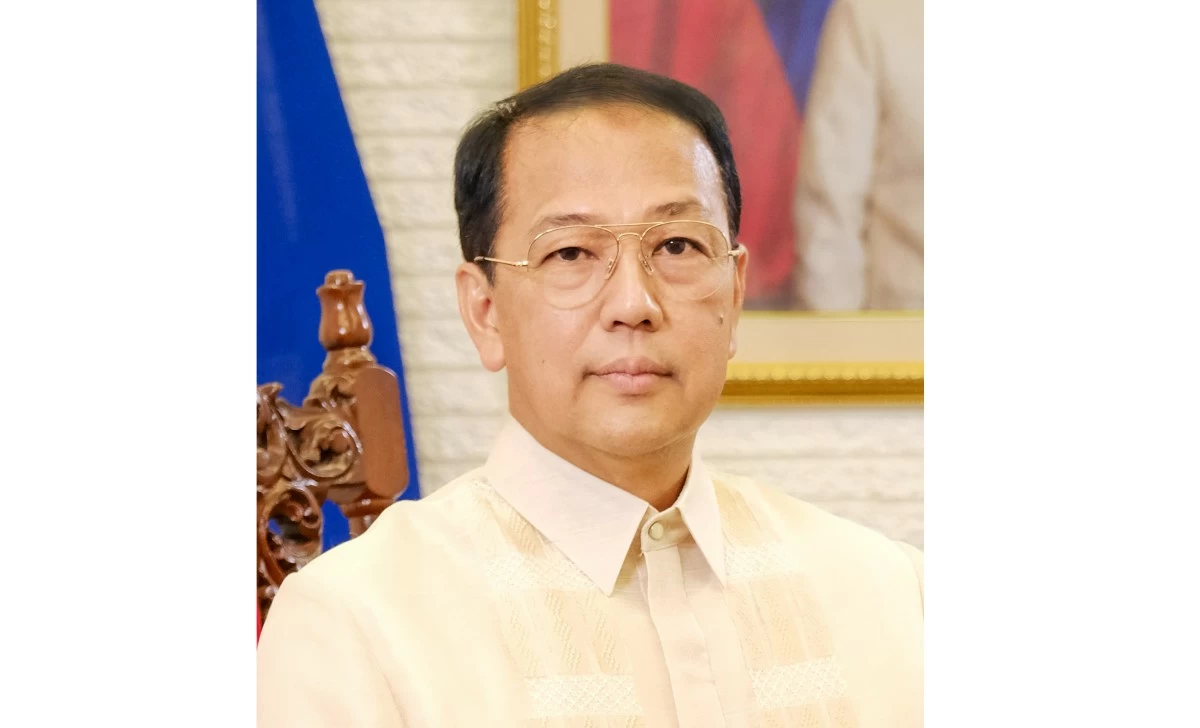
(Secretary Carlito G. Galvez, Jr. is the presidential adviser on peace, reconciliation and unity.)
ADVERTISEMENT
.most-popular .layout-ratio{ padding-bottom: 79.13%; } @media (min-width: 768px) and (max-width: 1024px) { .widget-title { font-size: 15px !important; } }

{{ articles_filter_1561_widget.title }}

.most-popular .layout-ratio{ padding-bottom: 79.13%; } @media (min-width: 768px) and (max-width: 1024px) { .widget-title { font-size: 15px !important; } }

{{ articles_filter_1562_widget.title }}

.most-popular .layout-ratio{ padding-bottom: 79.13%; } @media (min-width: 768px) and (max-width: 1024px) { .widget-title { font-size: 15px !important; } }

{{ articles_filter_1563_widget.title }}

{{ articles_filter_1564_widget.title }}

.mb-article-details { position: relative; } .mb-article-details .article-body-preview, .mb-article-details .article-body-summary{ font-size: 17px; line-height: 30px; font-family: "Libre Caslon Text", serif; color: #000; } .mb-article-details .article-body-preview iframe , .mb-article-details .article-body-summary iframe{ width: 100%; margin: auto; } .read-more-background { background: linear-gradient(180deg, color(display-p3 1.000 1.000 1.000 / 0) 13.75%, color(display-p3 1.000 1.000 1.000 / 0.8) 30.79%, color(display-p3 1.000 1.000 1.000) 72.5%); position: absolute; height: 200px; width: 100%; bottom: 0; display: flex; justify-content: center; align-items: center; padding: 0; } .read-more-background a{ color: #000; } .read-more-btn { padding: 17px 45px; font-family: Inter; font-weight: 700; font-size: 18px; line-height: 16px; text-align: center; vertical-align: middle; border: 1px solid black; background-color: white; } .hidden { display: none; }
function initializeAllSwipers() { // Get all hidden inputs with cms_article_id document.querySelectorAll('[id^="cms_article_id_"]').forEach(function (input) { const cmsArticleId = input.value; const articleSelector = '#article-' + cmsArticleId + ' .body_images'; const swiperElement = document.querySelector(articleSelector); if (swiperElement && !swiperElement.classList.contains('swiper-initialized')) { new Swiper(articleSelector, { loop: true, pagination: false, navigation: { nextEl: '#article-' + cmsArticleId + ' .swiper-button-next', prevEl: '#article-' + cmsArticleId + ' .swiper-button-prev', }, }); } }); } setTimeout(initializeAllSwipers, 3000); const intersectionObserver = new IntersectionObserver( (entries) => { entries.forEach((entry) => { if (entry.isIntersecting) { const newUrl = entry.target.getAttribute("data-url"); if (newUrl) { history.pushState(null, null, newUrl); let article = entry.target; // Extract metadata const author = article.querySelector('.author-section').textContent.replace('By', '').trim(); const section = article.querySelector('.section-info ').textContent.replace(' ', ' '); const title = article.querySelector('.article-title h1').textContent; // Parse URL for Chartbeat path format const parsedUrl = new URL(newUrl, window.location.origin); const cleanUrl = parsedUrl.host + parsedUrl.pathname; // Update Chartbeat configuration if (typeof window._sf_async_config !== 'undefined') { window._sf_async_config.path = cleanUrl; window._sf_async_config.sections = section; window._sf_async_config.authors = author; } // Track virtual page view with Chartbeat if (typeof pSUPERFLY !== 'undefined' && typeof pSUPERFLY.virtualPage === 'function') { try { pSUPERFLY.virtualPage({ path: cleanUrl, title: title, sections: section, authors: author }); } catch (error) { console.error('ping error', error); } } // Optional: Update document title if (title && title !== document.title) { document.title = title; } } } }); }, { threshold: 0.1 } ); function showArticleBody(button) { const article = button.closest("article"); const summary = article.querySelector(".article-body-summary"); const body = article.querySelector(".article-body-preview"); const readMoreSection = article.querySelector(".read-more-background"); // Hide summary and read-more section summary.style.display = "none"; readMoreSection.style.display = "none"; // Show the full article body body.classList.remove("hidden"); } document.addEventListener("DOMContentLoaded", () => { let loadCount = 0; // Track how many times articles are loaded const offset = [1, 2, 3, 4, 5, 6, 7, 8, 9, 10]; // Offset values const currentUrl = window.location.pathname.substring(1); let isLoading = false; // Prevent multiple calls if (!currentUrl) { console.log("Current URL is invalid."); return; } const sentinel = document.getElementById("load-more-sentinel"); if (!sentinel) { console.log("Sentinel element not found."); return; } function isSentinelVisible() { const rect = sentinel.getBoundingClientRect(); return ( rect.top < window.innerHeight && rect.bottom >= 0 ); } function onScroll() { if (isLoading) return; if (isSentinelVisible()) { if (loadCount >= offset.length) { console.log("Maximum load attempts reached."); window.removeEventListener("scroll", onScroll); return; } isLoading = true; const currentOffset = offset[loadCount]; window.loadMoreItems().then(() => { let article = document.querySelector('#widget_1690 > div:nth-last-of-type(2) article'); intersectionObserver.observe(article) loadCount++; }).catch(error => { console.error("Error loading more items:", error); }).finally(() => { isLoading = false; }); } } window.addEventListener("scroll", onScroll); });

Sign up by email to receive news.