ADVERTISEMENT

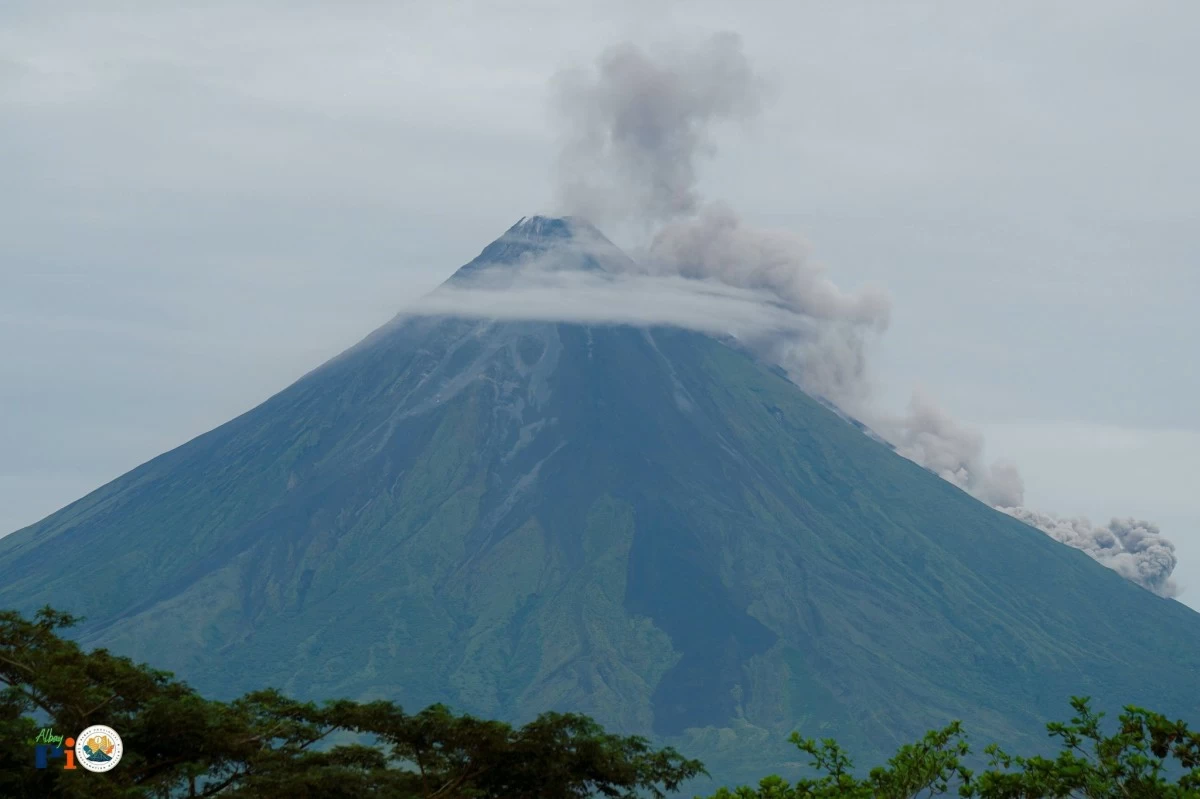
Albay readies mass evacuation as Mayon Volcano activity intensifies

Published Jan 12, 2026 05:26 pm
MAYON Volcano (FB)
MAYON Volcano (FB)
LEGAZPI CITY – The Albay Public Safety and Emergency Management Office (Apsemo) is preparing for the possible evacuation of nearly 80,000 residents, or about 19,758 families, should Mayon Volcano’s alert level be raised to Alert Level 4.
In a phone interview, Apsemo chief Roderick Mendoza said the families come from 59 barangays in nine local government units located within the extended seven- to eight-kilometer danger zone.
Mendoza said the provincial government is closely coordinating with the Department of Education (DepEd) to ready schools that may be used as evacuation centers, including preparations for logistics and essential supplies.
“We are coordinating with the Department of Education (DepEd) for preparations for evacuation centers, logistics, and supply preparations. Our Provincial Engineering Office (PEO) will conduct siphoning of all toilets in schools to be used in case,” he said.
Mendoza said PEO will also repair damaged classrooms to ensure that facilities are fit for evacuees.
The Albay Provincial Health Office said it has already prepositioned medicines and medical supplies in anticipation of possible health concerns during mass evacuations.
The Bicol Regional Hospital and Medical Center (BRHMC) is also set to augment the operations of the Josefina Belmonte Duran Albay Provincial Hospital for Mayon-related emergencies.
“We have established a Joint Operations Center with representatives from all frontline agencies involved in the Mayon response, with a feedback mechanism to monitor the situation and guide immediate actions,” Mendoza said.
Apsemo reported that 1,133 families, or 4,039 individuals, from the six-kilometer Permanent Danger Zone are currently staying in evacuation centers.
The Philippine Institute of Volcanology and Seismology (Phivolcs) recorded on Monday 133 rockfall events and 37 pyroclastic density currents, locally known as “uson,” along with continuous weak volcanic tremor.
Mayon also emitted grayish plumes reaching up to 800 meters above the crater, drifting east-southeast and northeast.
Meanwhile, based on the National Disaster Risk Reduction and Management Council (NDRRMC) tally Monday, a total of 1,131 families or 4, 141 persons from 13 villages in Albay were affected by Mayon's ongoing restiveness.
As of posting time, there were still 1,116 families or 4,092 persons in 14 evacuation centers, while 15 families or 48 individuals are being assisted outside.

Related Tags

Mayon Volcano Albay
ADVERTISEMENT
.most-popular .layout-ratio{ padding-bottom: 79.13%; } @media (min-width: 768px) and (max-width: 1024px) { .widget-title { font-size: 15px !important; } }

{{ articles_filter_1561_widget.title }}

.most-popular .layout-ratio{ padding-bottom: 79.13%; } @media (min-width: 768px) and (max-width: 1024px) { .widget-title { font-size: 15px !important; } }

{{ articles_filter_1562_widget.title }}

.most-popular .layout-ratio{ padding-bottom: 79.13%; } @media (min-width: 768px) and (max-width: 1024px) { .widget-title { font-size: 15px !important; } }

{{ articles_filter_1563_widget.title }}

{{ articles_filter_1564_widget.title }}

.mb-article-details { position: relative; } .mb-article-details .article-body-preview, .mb-article-details .article-body-summary{ font-size: 17px; line-height: 30px; font-family: "Libre Caslon Text", serif; color: #000; } .mb-article-details .article-body-preview iframe , .mb-article-details .article-body-summary iframe{ width: 100%; margin: auto; } .read-more-background { background: linear-gradient(180deg, color(display-p3 1.000 1.000 1.000 / 0) 13.75%, color(display-p3 1.000 1.000 1.000 / 0.8) 30.79%, color(display-p3 1.000 1.000 1.000) 72.5%); position: absolute; height: 200px; width: 100%; bottom: 0; display: flex; justify-content: center; align-items: center; padding: 0; } .read-more-background a{ color: #000; } .read-more-btn { padding: 17px 45px; font-family: Inter; font-weight: 700; font-size: 18px; line-height: 16px; text-align: center; vertical-align: middle; border: 1px solid black; background-color: white; } .hidden { display: none; }
function initializeAllSwipers() { // Get all hidden inputs with cms_article_id document.querySelectorAll('[id^="cms_article_id_"]').forEach(function (input) { const cmsArticleId = input.value; const articleSelector = '#article-' + cmsArticleId + ' .body_images'; const swiperElement = document.querySelector(articleSelector); if (swiperElement && !swiperElement.classList.contains('swiper-initialized')) { new Swiper(articleSelector, { loop: true, pagination: false, navigation: { nextEl: '#article-' + cmsArticleId + ' .swiper-button-next', prevEl: '#article-' + cmsArticleId + ' .swiper-button-prev', }, }); } }); } setTimeout(initializeAllSwipers, 3000); const intersectionObserver = new IntersectionObserver( (entries) => { entries.forEach((entry) => { if (entry.isIntersecting) { const newUrl = entry.target.getAttribute("data-url"); if (newUrl) { history.pushState(null, null, newUrl); let article = entry.target; // Extract metadata const author = article.querySelector('.author-section').textContent.replace('By', '').trim(); const section = article.querySelector('.section-info ').textContent.replace(' ', ' '); const title = article.querySelector('.article-title h1').textContent; // Parse URL for Chartbeat path format const parsedUrl = new URL(newUrl, window.location.origin); const cleanUrl = parsedUrl.host + parsedUrl.pathname; // Update Chartbeat configuration if (typeof window._sf_async_config !== 'undefined') { window._sf_async_config.path = cleanUrl; window._sf_async_config.sections = section; window._sf_async_config.authors = author; } // Track virtual page view with Chartbeat if (typeof pSUPERFLY !== 'undefined' && typeof pSUPERFLY.virtualPage === 'function') { try { pSUPERFLY.virtualPage({ path: cleanUrl, title: title, sections: section, authors: author }); } catch (error) { console.error('ping error', error); } } // Optional: Update document title if (title && title !== document.title) { document.title = title; } } } }); }, { threshold: 0.1 } ); function showArticleBody(button) { const article = button.closest("article"); const summary = article.querySelector(".article-body-summary"); const body = article.querySelector(".article-body-preview"); const readMoreSection = article.querySelector(".read-more-background"); // Hide summary and read-more section summary.style.display = "none"; readMoreSection.style.display = "none"; // Show the full article body body.classList.remove("hidden"); } document.addEventListener("DOMContentLoaded", () => { let loadCount = 0; // Track how many times articles are loaded const offset = [1, 2, 3, 4, 5, 6, 7, 8, 9, 10]; // Offset values const currentUrl = window.location.pathname.substring(1); let isLoading = false; // Prevent multiple calls if (!currentUrl) { console.log("Current URL is invalid."); return; } const sentinel = document.getElementById("load-more-sentinel"); if (!sentinel) { console.log("Sentinel element not found."); return; } function isSentinelVisible() { const rect = sentinel.getBoundingClientRect(); return ( rect.top < window.innerHeight && rect.bottom >= 0 ); } function onScroll() { if (isLoading) return; if (isSentinelVisible()) { if (loadCount >= offset.length) { console.log("Maximum load attempts reached."); window.removeEventListener("scroll", onScroll); return; } isLoading = true; const currentOffset = offset[loadCount]; window.loadMoreItems().then(() => { let article = document.querySelector('#widget_1690 > div:nth-last-of-type(2) article'); intersectionObserver.observe(article) loadCount++; }).catch(error => { console.error("Error loading more items:", error); }).finally(() => { isLoading = false; }); } } window.addEventListener("scroll", onScroll); });

Sign up by email to receive news.