







A school, a community, a legacy
Published Jan 12, 2026 12:05 am
|
Updated Jan 11, 2026 04:05 pm


FROM THE MARGINS
On Dec. 28, alumni of Ambray Elementary School returned home not merely to mark an anniversary, but to honor a shared journey 70 years in the making. The school’s 70th Grand Alumni Homecoming was more than a reunion – it was a celebration of how one school shaped generations and, in turn, helped shape a city.
To understand the story of Ambray Elementary School is to understand the history of San Pablo City itself.
Education rooted in community
Long before San Pablo City earned the name “City of Seven Lakes,” it was known as Sampalok – a quiet settlement where learning was woven into daily life. Early San Pableños learned through farming, gathering food, and storytelling. Education was informal, yet deeply rooted in community, culture, and survival.
Colonial rule reshaped this landscape. Under Spanish governance, education became centralized and religious, often limited to the privileged. Still, the Education Decree of 1863 planted a crucial seed by mandating primary schools for boys and girls in every town.
Each era that followed redefined education’s role. The Malolos Constitution envisioned free and secular schooling. During the Japanese occupation, nationalism and discipline were emphasized. After World War II devastated San Pablo—burning farms, flattening homes, and halting livelihoods—education emerged as a pathway to recovery and resilience.
A turning point
In the late 1940s, San Pablo regained economic footing through the coconut industry. Companies like Franklin Baker reopened, providing employment to thousands. For a time, prosperity seemed secure.
Yet dependence on a single industry revealed its fragility. Aging trees, pests, climate change, and fluctuating global prices led to economic uncertainty. As livelihoods became less predictable, families increasingly turned to education as their children’s best hope for stability and opportunity beyond agriculture.
From makeshift beginnings
Ambray Elementary School traces its beginnings to the early 1940s as La Penson Elementary School under the Central School District. Classes were held along Lakandula, Peñalosa, and Unson streets — under houses, in small sheds, and borrowed spaces— reflecting both scarcity and determination.
In 1955, a defining moment arrived when Mr. Ceferino Ambray, a civic leader, and philanthropist, donated 1,015 sqm of land along the highway, formally establishing Ambray Elementary School. The first classrooms were simple army-type structures. Under the leadership of its first principal, Mrs. Barbara Flores, and with the legal assistance of Atty. Gertrudes Flores, the school’s foundations were secured. Continued community support provided needs, like additional classrooms, and helped the school grow. Today, Ambray stands on 2,132 sqm of land — a testament to shared responsibility.
A school that felt like home
From the late 1950s through the 1980s, Ambray flourished, providing pupils with a balanced education that blended academics with life skills — agriculture, work education, language, and arithmetic.
Learning extended beyond textbooks. Teachers fostered creativity through music, folk dance, Balagtasan, and literature. Pupils tended vegetable gardens, practiced conservation, and learned entrepreneurship by selling ice buko, pandesal, and candies — small ventures that built confidence and independence. Playtime was equally formative, as children learned friendship and social values through games like sipa, tumbang preso, piko, holen and others.
At the heart of it all were dedicated and nurturing teachers. Within the district, Ambray earned a reputation for excellence. Parents proudly said, “Sa Ambray ka mag-aral dahil magaling na eskuwelahan.”
Alumni: Living proof of a legacy
Seventy years on, Ambray’s alumni stand as living proof of its enduring impact. Graduates have become educators, lawyers, doctors, entrepreneurs, public servants, and social innovators. Some founded microfinance institutions, and NGOs serving communities across the Philippines and Southeast Asia.
Others chose to stay, becoming parents, mentors, and civic leaders who continue to strengthen the community – carrying forward the values of humility, diligence and service.
Seventy years —and the journey ahead
These shared memories came together last December at the 70th Grand Alumni Homecoming, organized by dedicated officers including Francesca Torre, Clark Lantin, Jaime Pallan, Nerissa Calabia-Drapiza, Yolanda Pereras, Carol Galomo, Lorna Roxas, Ema Cervana, Florida Sanchez, Rosita Perez, Julieta Angeles, Demetrio Reyes, and Ambray teachers Maricel Punzalan, Cherry Guerra, MaVi Sanchez, and Remelie de Villa among others. Nearly 500 alumni attended.
The celebration opened with a motorcade and Thanksgiving Mass, followed by a program that united generations through prayer, the school hymn, and cultural performances. Reflections from retired teachers and alumni – among them Cecilio Perez, Mario Biscocho, and former Justice Danton Bueser – were deeply inspiring, as were the messages from actor JC Santos and Principal Cristina Calingasan.
From silong classrooms to a respected institution, Ambray Elementary School remains faithful to its mission: to educate not only for work, but for life. Its story reminds us that a school rooted in its community becomes more than a place of learning — it becomes a legacy carried across generations.
* * *
“Education is not the filling of a pail, but the lighting of a fire.” – William Butler Yeats
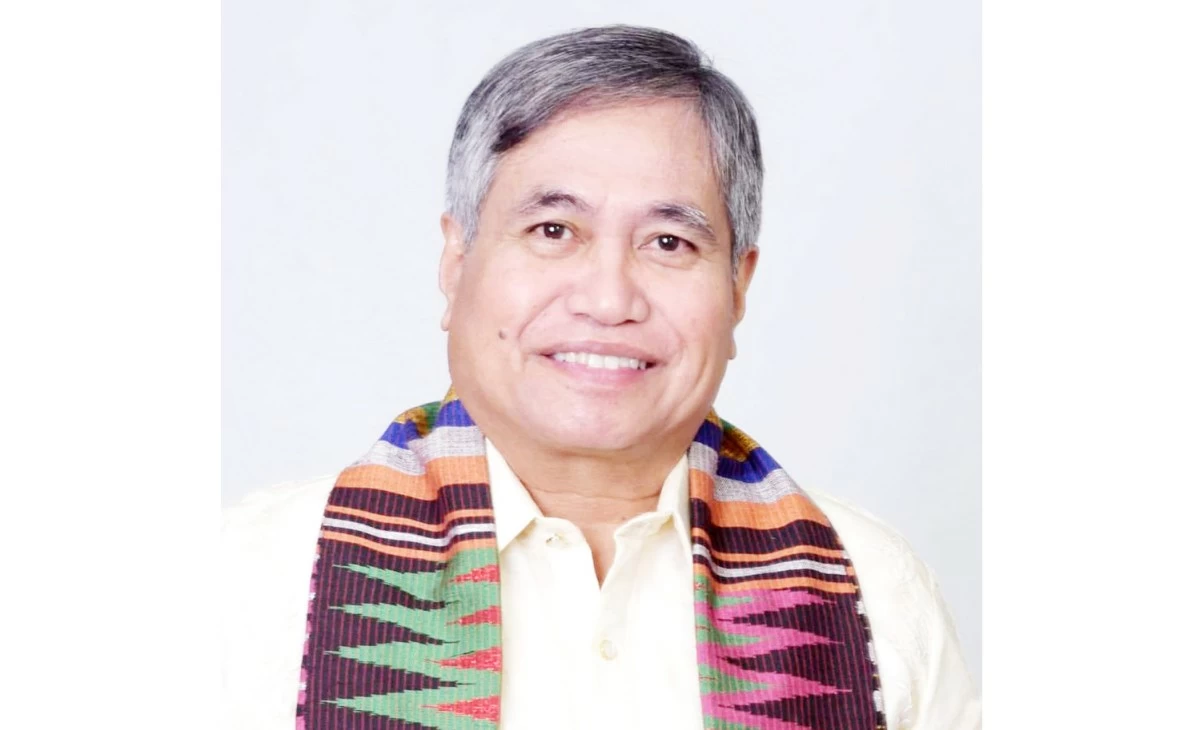
(Dr. Jaime Aristotle B. Alip is a poverty eradication advocate. He is the founder of the Center for Agriculture and Rural Development Mutually-Reinforcing Institutions (CARD MRI), a group of 23 organizations that provide social development services to eight million economically-disadvantaged Filipinos and insure more than 27 million nationwide.)