






Manila Bulletin
 Philippines
National
Sandro Marcos: House OKs 12 of 48 LEDAC bills in just 22 session days
Philippines
National
Sandro Marcos: House OKs 12 of 48 LEDAC bills in just 22 session days
Philippines
National
Sandro Marcos: House OKs 12 of 48 LEDAC bills in just 22 session days
Sandro Marcos: House OKs 12 of 48 LEDAC bills in just 22 session days
Published Jan 11, 2026 12:39 pm


At A Glance
- Majority Leader Ilocos Norte 1st district Rep. Sandro Marcos reported that the House of Representatives approved on third and final reading in just 22 session days 12 of the 48 priority measures identified by the Legislative-Executive Development Advisory Council (LEDAC).
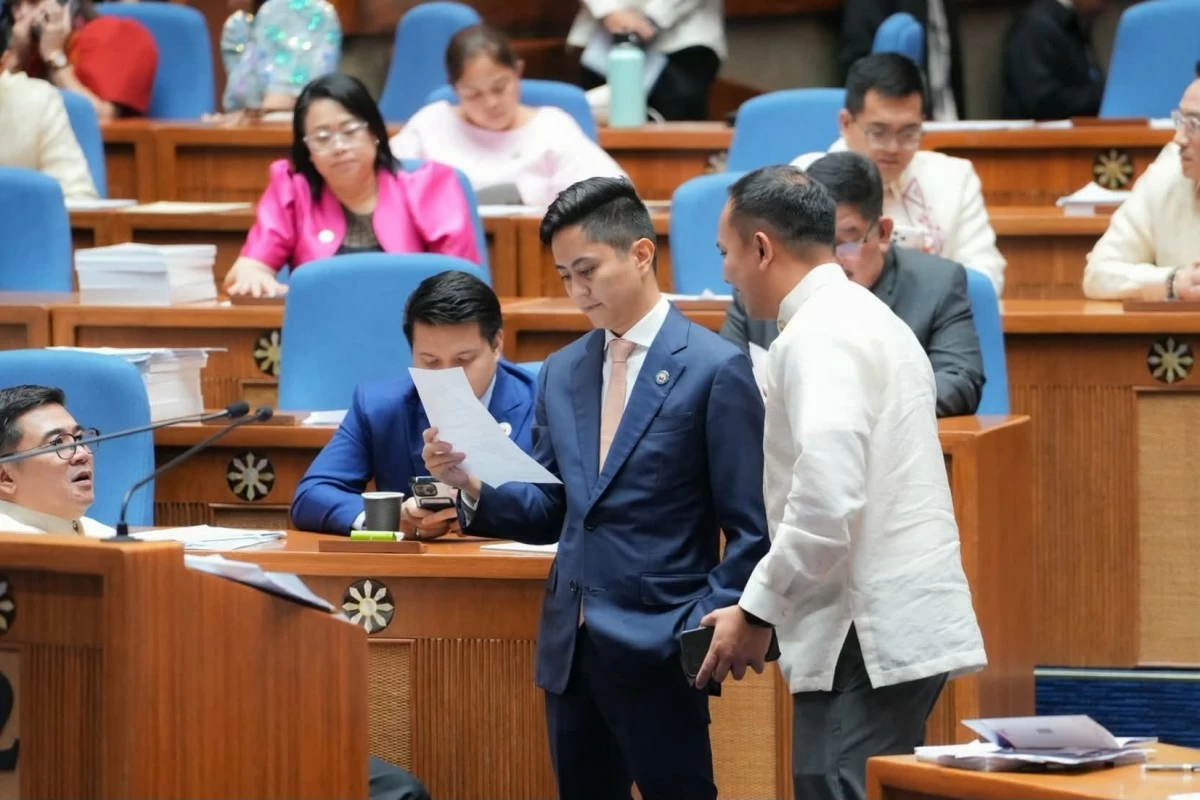
Ilocos Norte 1st district Rep. Sandro Marcos (Facebook)
Majority Leader Ilocos Norte 1st district Rep. Sandro Marcos reported that the House of Representatives approved on third and final reading in just 22 session days 12 of the 48 priority measures identified by the Legislative-Executive Development Advisory Council (LEDAC).
“Under the leadership of Speaker Bojie Dy, we wanted the first months of the 20th Congress to send a clear signal that the House is serious about delivering on the LEDAC. This signifies the hard work and unity of House members in passing these vital pieces of legislation,” Rep. Marcos said in a statement Sunday, Jan. 11.
The current 20th Congress began on June 30, 2025, and signalled the start of the filing of bills and other measures.
Rep. Marcos noted that the House has already produced one national law transmitted to the President – the P6.793-trillion 2026 General Appropriations Act (GAA). It has also generated 52 adopted resolutions and 32 House-approved bills--26 of which were of national importance and six local measures.
The presidential son says these numbers reflect “a House that is trying to match the pace of the challenges facing the country,” with LEDAC priorities serving as the spine of the chamber’s reform workload.
He explained that of the 48-item LEDAC, 12 bills were already approved on third reading, five measures approved by the committee and awaiting comments from the appropriations and ways and means panels, and 15 measures under technical working group or committee deliberation.
Rep. Marcos said the 12 LEDAC measures already passed on third and final reading in the House were:
(1) the EPIRA amendments to strengthen the Energy Regulatory Commission’s oversight and consumer protection powers,
(2) the waste-to-energy bill on waste treatment technology,
(3) the National Center for Geriatric Health,
(4) the amendments to the Government Assistance to Students and Teachers in Private Education Act,
(5) the Assistance to Individuals in Crisis Situations (AICS) Act,
(6) the amendments to the National Building Code,
(7) the Blue Economy Act,
(8) the National Reintegration Bill,
(9) the amendments to the Teachers Professionalization Act,
(10) the Extension of the Estate Tax Amnesty Period,
(11) the Department of Water Resources bill, and
(12) the amendments to the Bank Deposits Secrecy Law.
Rep. Marcos added that five other LEDAC measures have already cleared their main substantive committees and now await the input of the appropriations and ways and means panels. These are:
(1) the bill modernizing the Bureau of Immigration,
(2) the National Land Use Act,
(3) the measure creating the Independent People’s Commission,
(4) the Presidential Merit Scholarship Program, and
(5) the amendments to the Universal Access to Quality Tertiary Education Act.
“These are big structural reforms, from land use to immigration to scholarships, and we want to make sure that when they reach the plenary, their funding and fiscal implications are fully worked out,” reckoned the House majority leader.
At the same time, he stressed that 15 LEDAC items are in the thick of technical working group and committee deliberations. These are:
(1) the second waste-to-energy bill on the broader regulatory framework,
(2) amendments to the Universal Health Care Act,
(3) the proposed excise tax on single-use plastics,
(4) amendments to the Rice Tariffication Law,
(5) amendments to the Masustansyang Pagkain Para sa Batang Pilipino Act,
(6) the Classroom-Building Acceleration Program,
(7) the Philippine Civil Registration and Vital Statistics Act,
(8) amendments to the Pantawid Pamilyang Pilipino Program (4Ps) Act,
(9) the measure strengthening the Bases Conversion and Development Authority,
(10) disaster risk financing insurance,
(11) amendments to the Magna Carta for MSMEs,
(12) amendments to the Fisheries Code,
(13) the Right to Information bill,
(14) amendments to the Local Government Code on the special education fund, and
(15) the reprogramming of the Seal of Good Local Governance.
Meanwhile, the remaining 17 LEDAC measures will be tackled soon at the House committee level. The LEDAC is led by no less than President Marcos.