ADVERTISEMENT

Over 9.6 million devotees join Traslacion 2026

Published Jan 10, 2026 12:33 pm  |  Updated Jan 10, 2026 01:24 pm
(Photo taken by John Louie Abrina/MANILA BULLETIN)

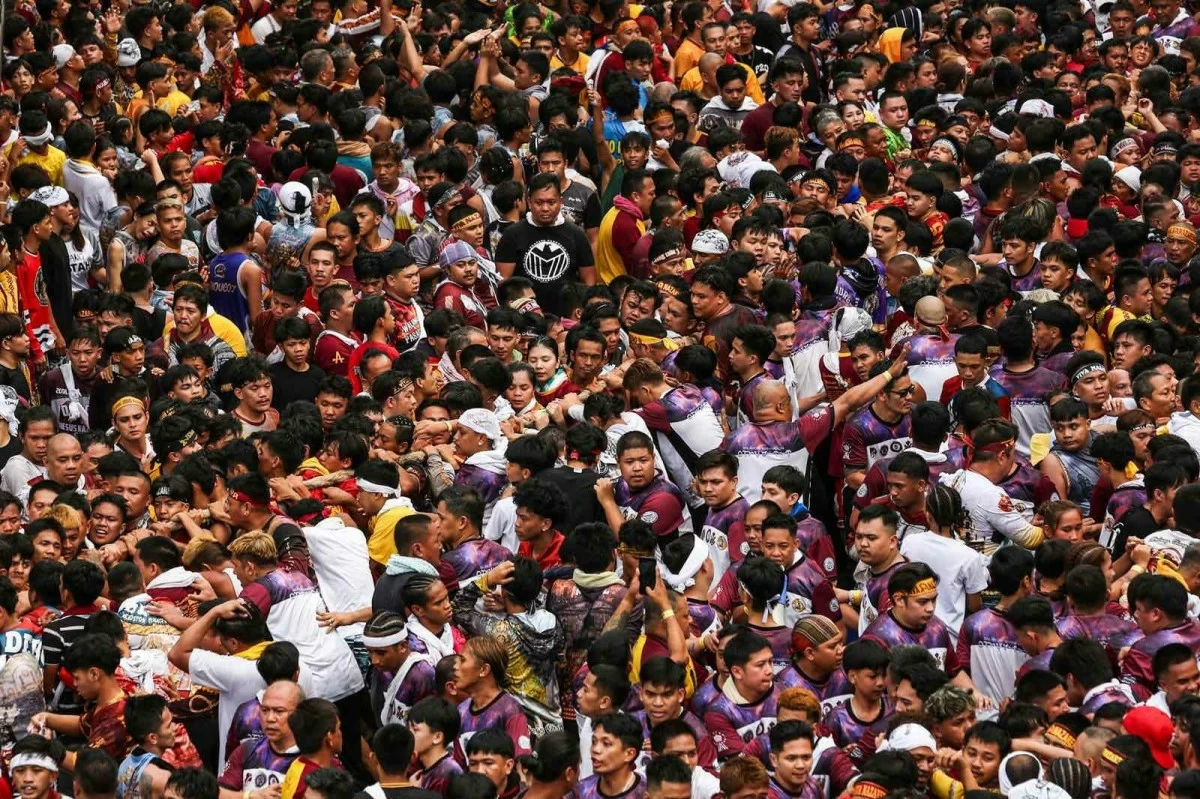
The annual Traslacion of Jesus Nazarene drew an unprecedented turnout of devotees this year, with crowd estimates reaching approximately 9.6 million people who joined and participated in the historic event, officials and on‑site reports indicate.

The figure reflects the massive scale of devotion that accompanied the longest Traslacion in history, which lasted a remarkable 30 hours and 50 minutes before the Andas carrying the image finally returned to the Minor Basilica and National Shrine of Jesus Nazareno in Quiapo at around 10:50 a.m. Saturday, Jan. 10, 2026.

From December devotions to January procession

Preparations for Traslacion 2026 began as early as December, with a series of religious activities and crowd-drawing events leading up to the Jan. 9 feast day of Jesus Nazarene.
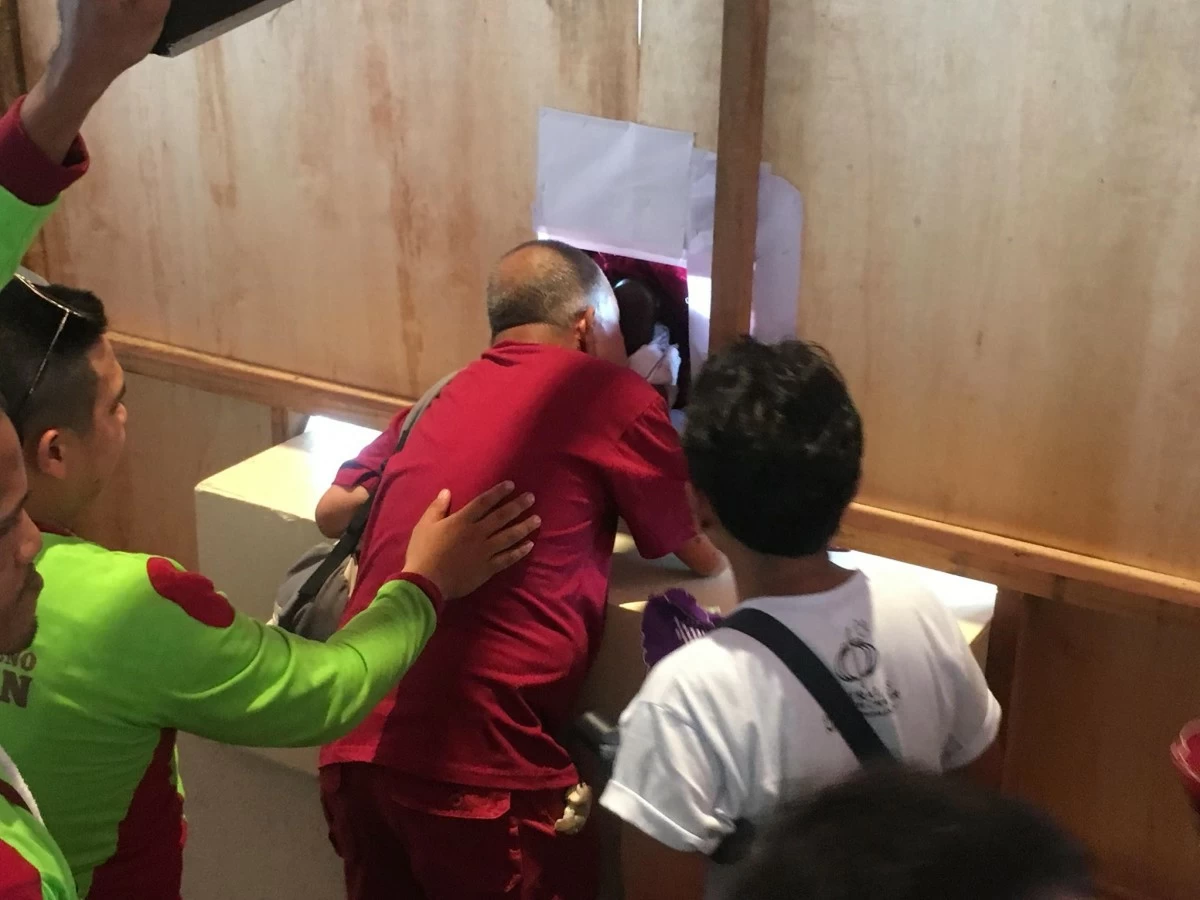
In the first days of December, Quiapo Church opened the traditional Misa Novenario, a nine-day series of Masses attended by thousands of devotees daily. The novena Masses continued throughout the month, drawing pilgrims from various parts of the country.

By late December, the church also began accepting devotees for the blessing of Jesus Nazarene images and replicas, while authorities ramped up coordination meetings, route inspections, and security planning in anticipation of the massive turnout.

On Jan. 2, Quiapo Church issued advisories on the schedule of activities, crowd control measures, and health reminders, urging devotees to prepare physically and spiritually for the upcoming feast.

The traditional Pahalik formally began on Jan. 7 at Quirino Grandstand, with thousands lining up overnight to venerate the image.

The activity continued for several days, eventually prompting church officials to extend the Pahalik until Jan. 10 due to the sustained influx of devotees.

On Jan. 8, final preparations were put in place, including the deployment of security forces, emergency medical teams, and volunteers along the Traslacion route.

Devotees also began camping overnight at Luneta and nearby areas in anticipation of the procession.

The Traslacion proper commenced in the early hours of Jan. 9, with the Andas departing from Quirino Grandstand and traversing major streets of Manila. The procession extended into Jan. 10, ultimately lasting 30 hours and 30 minutes, making it the longest Traslacion in history.

The Andas finally arrived at the Minor Basilica and National Shrine of Jesus Nazarene at 10:25 a.m. on Saturday, Jan. 10, marking the culmination of weeks of devotion, preparation, and religious observance.

Crowd buildup and key milestones
Crowd estimates steadily rose as the Traslacion progressed from Quirino Grandstand through Manila’s major thoroughfares. Early on Jan. 9, authorities recorded around 95,000 devotees along P. Burgos Avenue before the Andas passed through Finance Road and Ayala Boulevard, where the crowd grew to more than 210,000 by mid-morning.
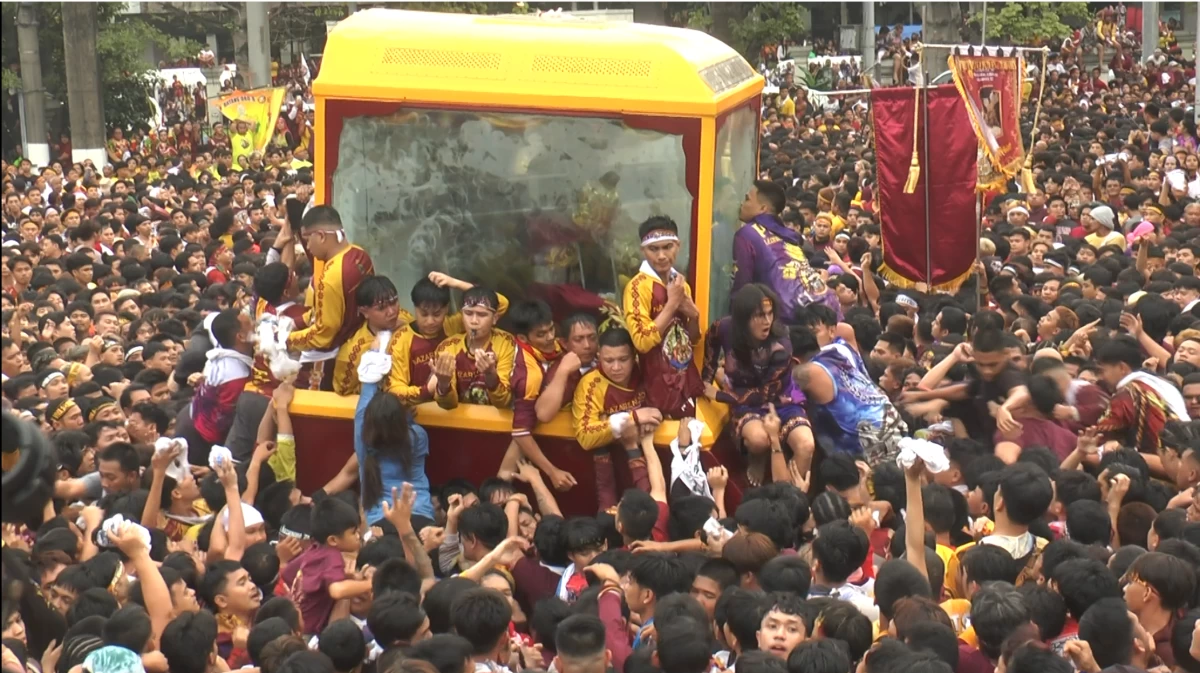
The image of Jesus Nazareno is surrounded by a sea of Catholic devotees as they take part in the traditional Traslacion along Carlos Palanca Street in Manila on Friday, January 9, 2026, as thousands of faithful joined the annual procession in celebration of the Feast of Jesus Nazareno, one of the country’s largest religious gatherings. (John Louie Abrina)
By late morning and early afternoon, as the Andas approached Carlos Palanca Street, estimates ranged from 187,000 to over 350,000, with authorities noting increasingly dense conditions that slowed movement.
At around 3 p.m., crowd figures reached 645,200, coinciding with the snapping of one of the Andas ropes near Arlegui Street, further delaying the procession.
As night fell, the number of devotees continued to surge. By 6 p.m., estimates climbed to over 961,000, and by 9 p.m., authorities said more than 2.4 million devotees had already joined the Traslacion.
The Andas remained stalled at various points in Quiapo’s narrow streets late into the night.
By midnight of Jan. 10, the accumulated crowd estimate reached more than 4.03 million, according to the Innovation Integrated GIS and Data Hub of the Manila Disaster Risk Reduction and Management Office.
(Photo taken by John Louie Abrina/MANILA BULLETIN)
The procession officially crossed the 24-hour mark at 3:59 a.m., making it the longest Traslacion in at least a decade.
At 4:05 a.m., the Andas arrived at San Sebastian Basilica for the traditional Dungaw, where church authorities later announced a temporary halt, a historic first. Despite this, the Traslacion resumed shortly after dawn.
By 8:38 a.m., nearly 29 hours into the procession, the Andas turned onto Quezon Boulevard, with an estimated 1.4 million devotees gathered in the area.
It reached Villalobos Street shortly before 10 a.m. and finally arrived at the Quiapo Church arch in Plaza Miranda at 10:43 a.m.
At 10:50 a.m., the Andas of Jesus Nazareno finally entered Quiapo Church, greeted by hundreds of thousands of devotees chanting “Viva Hesus Nazareno!”, bringing the historic Traslacion to its long-awaited conclusion.

Related Tags

metronews QUIAPO CHURCH TRASLACION 2026 Manila
ADVERTISEMENT
.most-popular .layout-ratio{ padding-bottom: 79.13%; } @media (min-width: 768px) and (max-width: 1024px) { .widget-title { font-size: 15px !important; } }

{{ articles_filter_1561_widget.title }}

.most-popular .layout-ratio{ padding-bottom: 79.13%; } @media (min-width: 768px) and (max-width: 1024px) { .widget-title { font-size: 15px !important; } }

{{ articles_filter_1562_widget.title }}

.most-popular .layout-ratio{ padding-bottom: 79.13%; } @media (min-width: 768px) and (max-width: 1024px) { .widget-title { font-size: 15px !important; } }

{{ articles_filter_1563_widget.title }}

{{ articles_filter_1564_widget.title }}

.mb-article-details { position: relative; } .mb-article-details .article-body-preview, .mb-article-details .article-body-summary{ font-size: 17px; line-height: 30px; font-family: "Libre Caslon Text", serif; color: #000; } .mb-article-details .article-body-preview iframe , .mb-article-details .article-body-summary iframe{ width: 100%; margin: auto; } .read-more-background { background: linear-gradient(180deg, color(display-p3 1.000 1.000 1.000 / 0) 13.75%, color(display-p3 1.000 1.000 1.000 / 0.8) 30.79%, color(display-p3 1.000 1.000 1.000) 72.5%); position: absolute; height: 200px; width: 100%; bottom: 0; display: flex; justify-content: center; align-items: center; padding: 0; } .read-more-background a{ color: #000; } .read-more-btn { padding: 17px 45px; font-family: Inter; font-weight: 700; font-size: 18px; line-height: 16px; text-align: center; vertical-align: middle; border: 1px solid black; background-color: white; } .hidden { display: none; }
function initializeAllSwipers() { // Get all hidden inputs with cms_article_id document.querySelectorAll('[id^="cms_article_id_"]').forEach(function (input) { const cmsArticleId = input.value; const articleSelector = '#article-' + cmsArticleId + ' .body_images'; const swiperElement = document.querySelector(articleSelector); if (swiperElement && !swiperElement.classList.contains('swiper-initialized')) { new Swiper(articleSelector, { loop: true, pagination: false, navigation: { nextEl: '#article-' + cmsArticleId + ' .swiper-button-next', prevEl: '#article-' + cmsArticleId + ' .swiper-button-prev', }, }); } }); } setTimeout(initializeAllSwipers, 3000); const intersectionObserver = new IntersectionObserver( (entries) => { entries.forEach((entry) => { if (entry.isIntersecting) { const newUrl = entry.target.getAttribute("data-url"); if (newUrl) { history.pushState(null, null, newUrl); let article = entry.target; // Extract metadata const author = article.querySelector('.author-section').textContent.replace('By', '').trim(); const section = article.querySelector('.section-info ').textContent.replace(' ', ' '); const title = article.querySelector('.article-title h1').textContent; // Parse URL for Chartbeat path format const parsedUrl = new URL(newUrl, window.location.origin); const cleanUrl = parsedUrl.host + parsedUrl.pathname; // Update Chartbeat configuration if (typeof window._sf_async_config !== 'undefined') { window._sf_async_config.path = cleanUrl; window._sf_async_config.sections = section; window._sf_async_config.authors = author; } // Track virtual page view with Chartbeat if (typeof pSUPERFLY !== 'undefined' && typeof pSUPERFLY.virtualPage === 'function') { try { pSUPERFLY.virtualPage({ path: cleanUrl, title: title, sections: section, authors: author }); } catch (error) { console.error('ping error', error); } } // Optional: Update document title if (title && title !== document.title) { document.title = title; } } } }); }, { threshold: 0.1 } ); function showArticleBody(button) { const article = button.closest("article"); const summary = article.querySelector(".article-body-summary"); const body = article.querySelector(".article-body-preview"); const readMoreSection = article.querySelector(".read-more-background"); // Hide summary and read-more section summary.style.display = "none"; readMoreSection.style.display = "none"; // Show the full article body body.classList.remove("hidden"); } document.addEventListener("DOMContentLoaded", () => { let loadCount = 0; // Track how many times articles are loaded const offset = [1, 2, 3, 4, 5, 6, 7, 8, 9, 10]; // Offset values const currentUrl = window.location.pathname.substring(1); let isLoading = false; // Prevent multiple calls if (!currentUrl) { console.log("Current URL is invalid."); return; } const sentinel = document.getElementById("load-more-sentinel"); if (!sentinel) { console.log("Sentinel element not found."); return; } function isSentinelVisible() { const rect = sentinel.getBoundingClientRect(); return ( rect.top < window.innerHeight && rect.bottom >= 0 ); } function onScroll() { if (isLoading) return; if (isSentinelVisible()) { if (loadCount >= offset.length) { console.log("Maximum load attempts reached."); window.removeEventListener("scroll", onScroll); return; } isLoading = true; const currentOffset = offset[loadCount]; window.loadMoreItems().then(() => { let article = document.querySelector('#widget_1690 > div:nth-last-of-type(2) article'); intersectionObserver.observe(article) loadCount++; }).catch(error => { console.error("Error loading more items:", error); }).finally(() => { isLoading = false; }); } } window.addEventListener("scroll", onScroll); });

Sign up by email to receive news.