

ADVERTISEMENT

Marcoleta questions veto on unprogrammed appropriations; warns of project delays, revenue losses

Published Jan 10, 2026 02:37 pm

At A Glance

  • Senator Rodante Marcoleta has questioned the veto on several unprogrammed appropriations in the GAA, warning that it could undermine GOCC viability, delay strategic infrastructure and foreign-assisted projects, weaken industry support programs, and affect legally mandated obligations. He also expressed skepticism over large social assistance allocations.
Senator Rodante Marcoleta has raised concerns over the veto on several unprogrammed appropriation items in the General Appropriations Act (GAA), saying many of the items should not have been removed, particularly those originally proposed by the executive itself in the National Expenditure Program (NEP).
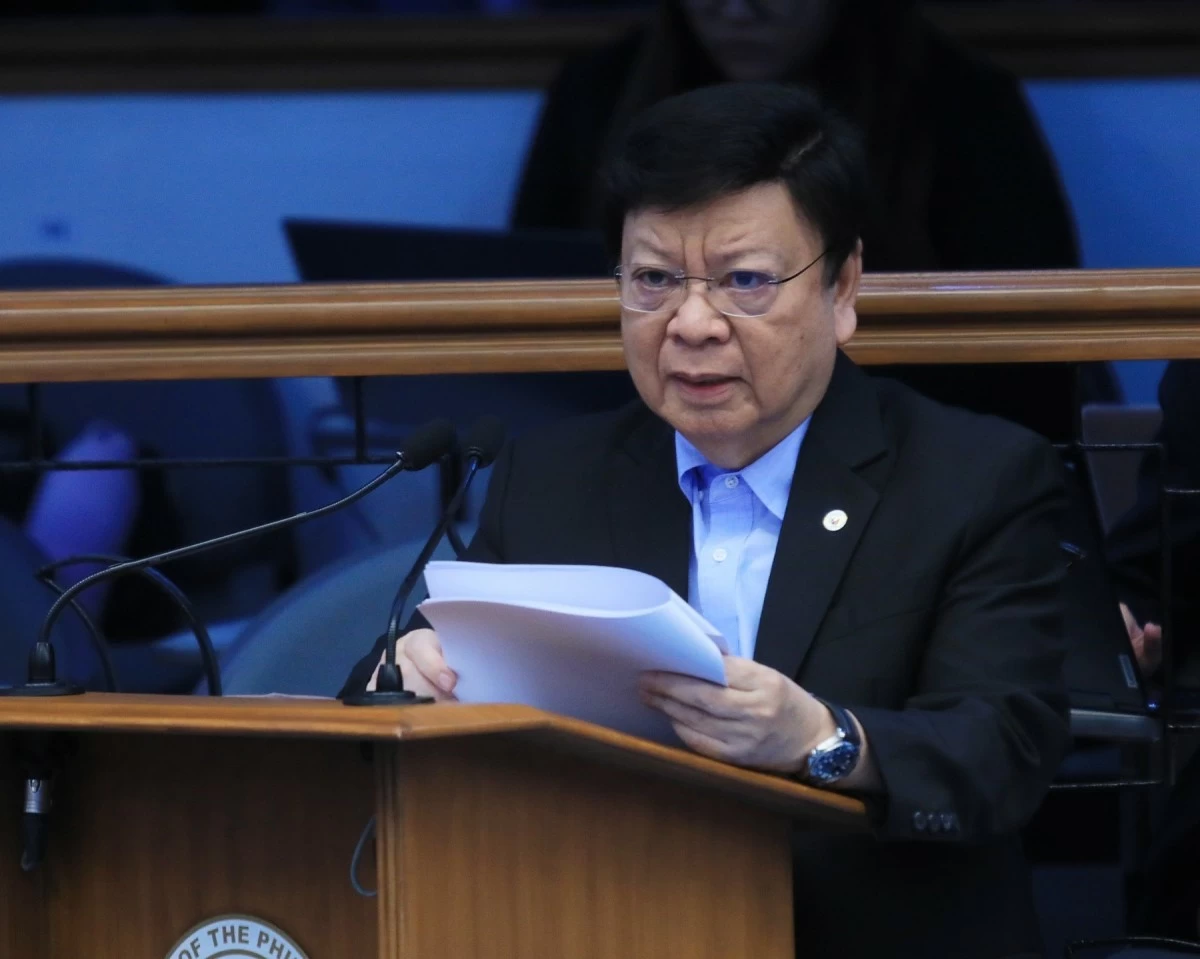
Senator Rodante Marcoleta (Senate PRIB photo)
In a television program on Net 25, Marcoleta said it was puzzling that items contained in the NEP were later vetoed by the Office of the President.
“Magtataka ka, bakit vineto eh siya mismo nagpanukala, nasa NEP mga ’yun eh. Bakit mo ive-veto galing sa Office of the President?” he said.
(You’ll wonder, why was it vetoed when he himself proposed it, since those were in the NEP. Why would you veto something coming from the Office of the President?)
Among the vetoed items cited by Marcoleta was budgetary support for government-owned and -controlled corporations (GOCCs). He said GOCCs play a significant role in generating non-tax revenues when given adequate subsidies to recover and operate efficiently. With around 350 GOCCs, he said even if only half become profitable, they could provide substantial additional revenues to the government.
The removal of budgetary support, he warned, could cripple struggling GOCCs.
“So paano kung titigok-tigok na ’yun? Siguradong patay ’yun (So what if those are already barely surviving? They will surely collapse),” he said.
Marcoleta also cited funds intended for local government units (LGUs) that he said had not been released for a long time. When asked if these referred to the Internal Revenue Allotment (IRA), he clarified that the amounts involved went beyond the IRA and included other unpaid obligations to LGUs from previous years.
He said these were rightfully due to be released and were likewise included in the NEP before being vetoed.
He further noted that some allocations under unprogrammed appropriations for government personal services requirements were also vetoed. These included funds for retirement benefits and salary upgrades for government personnel. According to Marcoleta, part of these allocations was placed under unprogrammed appropriations to shield them from veto, but they were still removed.
The senator said the veto also affected long-standing industry programs, including the Comprehensive Automotive Resurgence Strategy (CARS), launched in 2015, which provides financial and tax incentives to support vehicle and spare parts manufacturing. He said the related Revitalizing the Automotive Industry for Competitive Enhancement (RACE) program was likewise vetoed, undermining efforts to support the local automotive industry.
Marcoleta described as “mabigat” (heavy) the veto of counterpart funding for foreign-assisted projects, amounting to P35 billion. He said counterpart funding is a legal and contractual obligation once foreign loans are approved, and removing it could damage the country’s credibility with development partners.
He said that such actions could discourage future partners from engaging with the Philippines.
The rookie senator also cautioned that the absence of counterpart funds could delay strategic infrastructure projects by as much as four years. As examples, Marcoleta cited the Metro Subway project and the North-South Commuter Railway, noting that construction activities are already visible on the ground.
“Bakit kinakailangan, yung importante, yung strategic, bakit ’yun ang vi-neto? (Why is it necessary that what is important, what is strategic, is what gets vetoed?)” he said, pointing to worsening traffic conditions.
At the same time, Marcoleta said he would have preferred the veto of the Assistance to Individuals in Crisis Situation (AICS) program, which he said had an allocation of P63 billion. He expressed skepticism over the program, saying the funds would again pass through politicians. He also cited allocations for the Medical Assistance for Indigent and Financially Incapacitated Patients (MAIFIP) at P51 billion and TUPAD at P22 billion, noting that the Senate version had already reduced AICS to about P27 billion.

Related Tags

rodante marcoleta GOCC 2026 budget financial aid President Marcos
ADVERTISEMENT
.most-popular .layout-ratio{ padding-bottom: 79.13%; } @media (min-width: 768px) and (max-width: 1024px) { .widget-title { font-size: 15px !important; } }

{{ articles_filter_1561_widget.title }}

.most-popular .layout-ratio{ padding-bottom: 79.13%; } @media (min-width: 768px) and (max-width: 1024px) { .widget-title { font-size: 15px !important; } }

{{ articles_filter_1562_widget.title }}

.most-popular .layout-ratio{ padding-bottom: 79.13%; } @media (min-width: 768px) and (max-width: 1024px) { .widget-title { font-size: 15px !important; } }

{{ articles_filter_1563_widget.title }}

{{ articles_filter_1564_widget.title }}

.mb-article-details { position: relative; } .mb-article-details .article-body-preview, .mb-article-details .article-body-summary{ font-size: 17px; line-height: 30px; font-family: "Libre Caslon Text", serif; color: #000; } .mb-article-details .article-body-preview iframe , .mb-article-details .article-body-summary iframe{ width: 100%; margin: auto; } .read-more-background { background: linear-gradient(180deg, color(display-p3 1.000 1.000 1.000 / 0) 13.75%, color(display-p3 1.000 1.000 1.000 / 0.8) 30.79%, color(display-p3 1.000 1.000 1.000) 72.5%); position: absolute; height: 200px; width: 100%; bottom: 0; display: flex; justify-content: center; align-items: center; padding: 0; } .read-more-background a{ color: #000; } .read-more-btn { padding: 17px 45px; font-family: Inter; font-weight: 700; font-size: 18px; line-height: 16px; text-align: center; vertical-align: middle; border: 1px solid black; background-color: white; } .hidden { display: none; }
function initializeAllSwipers() { // Get all hidden inputs with cms_article_id document.querySelectorAll('[id^="cms_article_id_"]').forEach(function (input) { const cmsArticleId = input.value; const articleSelector = '#article-' + cmsArticleId + ' .body_images'; const swiperElement = document.querySelector(articleSelector); if (swiperElement && !swiperElement.classList.contains('swiper-initialized')) { new Swiper(articleSelector, { loop: true, pagination: false, navigation: { nextEl: '#article-' + cmsArticleId + ' .swiper-button-next', prevEl: '#article-' + cmsArticleId + ' .swiper-button-prev', }, }); } }); } setTimeout(initializeAllSwipers, 3000); const intersectionObserver = new IntersectionObserver( (entries) => { entries.forEach((entry) => { if (entry.isIntersecting) { const newUrl = entry.target.getAttribute("data-url"); if (newUrl) { history.pushState(null, null, newUrl); let article = entry.target; // Extract metadata const author = article.querySelector('.author-section').textContent.replace('By', '').trim(); const section = article.querySelector('.section-info ').textContent.replace(' ', ' '); const title = article.querySelector('.article-title h1').textContent; // Parse URL for Chartbeat path format const parsedUrl = new URL(newUrl, window.location.origin); const cleanUrl = parsedUrl.host + parsedUrl.pathname; // Update Chartbeat configuration if (typeof window._sf_async_config !== 'undefined') { window._sf_async_config.path = cleanUrl; window._sf_async_config.sections = section; window._sf_async_config.authors = author; } // Track virtual page view with Chartbeat if (typeof pSUPERFLY !== 'undefined' && typeof pSUPERFLY.virtualPage === 'function') { try { pSUPERFLY.virtualPage({ path: cleanUrl, title: title, sections: section, authors: author }); } catch (error) { console.error('ping error', error); } } // Optional: Update document title if (title && title !== document.title) { document.title = title; } } } }); }, { threshold: 0.1 } ); function showArticleBody(button) { const article = button.closest("article"); const summary = article.querySelector(".article-body-summary"); const body = article.querySelector(".article-body-preview"); const readMoreSection = article.querySelector(".read-more-background"); // Hide summary and read-more section summary.style.display = "none"; readMoreSection.style.display = "none"; // Show the full article body body.classList.remove("hidden"); } document.addEventListener("DOMContentLoaded", () => { let loadCount = 0; // Track how many times articles are loaded const offset = [1, 2, 3, 4, 5, 6, 7, 8, 9, 10]; // Offset values const currentUrl = window.location.pathname.substring(1); let isLoading = false; // Prevent multiple calls if (!currentUrl) { console.log("Current URL is invalid."); return; } const sentinel = document.getElementById("load-more-sentinel"); if (!sentinel) { console.log("Sentinel element not found."); return; } function isSentinelVisible() { const rect = sentinel.getBoundingClientRect(); return ( rect.top < window.innerHeight && rect.bottom >= 0 ); } function onScroll() { if (isLoading) return; if (isSentinelVisible()) { if (loadCount >= offset.length) { console.log("Maximum load attempts reached."); window.removeEventListener("scroll", onScroll); return; } isLoading = true; const currentOffset = offset[loadCount]; window.loadMoreItems().then(() => { let article = document.querySelector('#widget_1690 > div:nth-last-of-type(2) article'); intersectionObserver.observe(article) loadCount++; }).catch(error => { console.error("Error loading more items:", error); }).finally(() => { isLoading = false; }); } } window.addEventListener("scroll", onScroll); });

Sign up by email to receive news.