






Manila Bulletin
 Lifestyle
Parenting
Looking back, how would you introduce social media to your child?
Lifestyle
Parenting
Looking back, how would you introduce social media to your child?
Lifestyle
Parenting
Looking back, how would you introduce social media to your child?
Looking back, how would you introduce social media to your child?
Parents reflect on timing, boundaries, and what experience has taught them
Published Jan 10, 2026 01:57 pm


There is no instruction manual for raising children in the age of social media. Many parents introduced it while still learning its effects themselves, adjusting rules as platforms evolved and children grew older.
Manila Bulletin Lifestyle asked three parents to share what they would change, what they would keep, and what they now know about guiding children through the social media world.
My children do not have social media accounts, but they do have gadgets that became necessary for school during the pandemic. They received these devices in 2021, strictly for online learning, and I had hoped to postpone that level of exposure a bit longer. However, we had no choice.
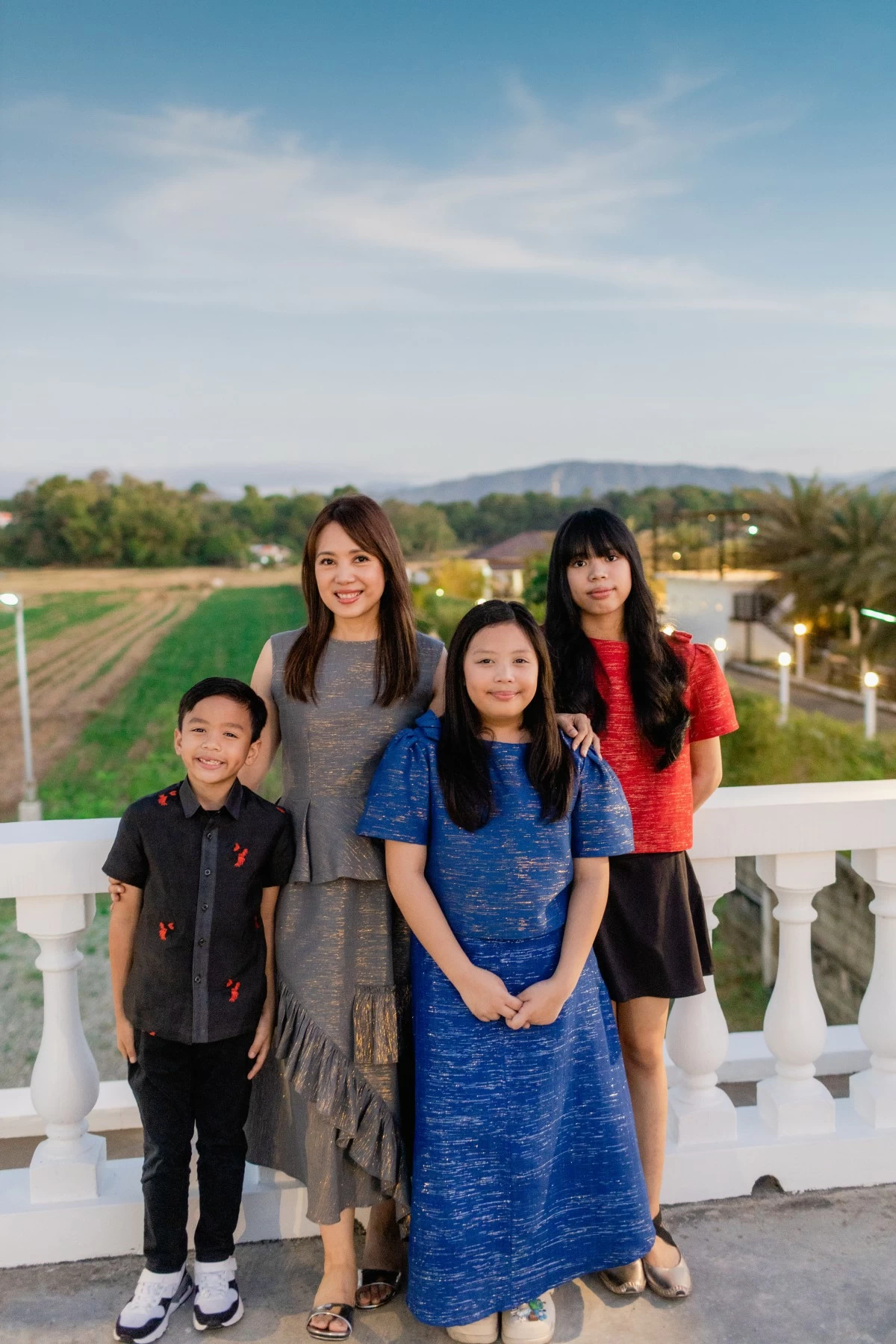
Niña Corpuz and her kids
Today, they’ve become quite adept at using technology—researching, watching tutorials, editing videos, creating digital art, and gaming.
To manage gadget use, we’ve set clear rules and limits. They are not allowed to use their devices beyond a certain time, and we rely on apps like ScreenTime, which automatically disable the gadgets. This has spared us a lot of unnecessary arguments and drama.
I admire Australia’s decision to ban social media for children under 16. Parents there are fortunate—there’s no need to negotiate or justify boundaries when it’s mandated by law. In the Philippines, however, parents have to be far more vigilant. The expectation for children to be online is pervasive, and many don’t want to feel left out.
Given this reality, we strive to make a conscious effort to offer meaningful alternatives. We encourage our children to stay active in sports and extracurricular activities. Stella participates in school theatrics, Emily is part of the varsity hardcourt cheerleading team, and Luke plays for the school’s elite football squad. These offline experiences teach discipline, build confidence, and help keep them grounded in the real world.—Niña Corpuz, broadcast journalist, founder of Nina (inabel handwoven clothes), mom to Stella 13, Emily 11, and Luke, 8

Kit Malvar Llamas and her family
I have two daughters, and I handled social media better with my second child because I knew more. When we know better and feel better, we do better.
What would I change? First, timing. Brain science matters. I would wait until the teen years. Nature and outdoor play should come first. Childhood needs space to form without constant input.
Second, the device itself. A phone in a pocket creates friction all day. It’s not only about apps, it’s about access. Phones trap attention.
Third, ownership. No personal smartphones before the age of thirteen, and never call it “theirs.” It is shared. Laptops and tablets work better. When it comes to phones, I would start with a secondhand unit, not a top-of-the-line model. I apply the opposite of James Clear’s rules: make it invisible, unattractive, hard to use, and unsatisfying.
Fourth, accounts stay linked to mine. Privacy grows with maturity, not age.
Fifth, my children monitor my usage, too.
Sixth, I stay curious and teachable. Quality time means entering their world.
Lastly, I lead by example. I walk my talk and only talk what I can walk.—Kit Malvar Llamas, conscious parenting coach and mom of two daughters, 19 and 15

Jenni Epperson
When social media first emerged, my daughter Aryanna was around 10 to 12 years old, and we were figuring it out in real time. It was a new territory, but I quickly noticed that she wasn’t just consuming content but she was creating it. That observation guided my approach.
I focused on nurturing her creativity while staying very present, often sitting beside her, setting clear boundaries, and grounding everything in values and character. I’m glad I did. Today, she’s a successful content creator and genuinely excellent at what she does.
My Gen Z son, Dylan, was born into a fully digital world, so I applied the same principles but leaned more heavily into balance. Sports became our built-in screen limiter. Looking back, I have no regrets. If anything, I hope he eventually uses digital platforms to support his life as an athlete. For now, football, friendships, and being young take priority—and that feels right.—Jenni Epperson, art director, stylist, Good Finds Club newsletter founder, and mom to Aryanna, 29, and Dylan, 16

Mocs Lopez Javier and her family
Looking back, I don’t regret being intentional about how we introduced technology to our children. They received their own mobile phones quite late, only in high school, and we followed social media age requirements without “cheating” their ages. That decision felt important to us.
What I would do differently is educate myself earlier about social media. Because my children were not yet on it, I didn’t read as much or do a deep dive. I assumed it wasn’t a problem if they weren’t using it. In hindsight, I wish I had learned more so I could better understand the platforms and prepare myself as a parent. Ideally, social media companies would also provide clear, accessible information for parents, and promote it as intentionally as they market to advertisers.
More than passing laws, and given that social media is already here, I believe schools and governments should invest in digital literacy. This is less about control and more about preparation. Social media does not exist in isolation. We were very mindful about building self-regulation skills such as managing emotions, setting boundaries, and delaying gratification, knowing these would carry over into digital life. We are still very much a work in progress.—Mocs Lopez Javier, head of Community Engagement and Activation of Mommy Mundo, curriculum head at Keys School Manila, Conscious Parenting coach, mom to Marco, 22, Mikolo, 21, Summer, 19, and Pablo, 7