







Epic curses and mysterious matters
Published Jan 10, 2026 07:00 am


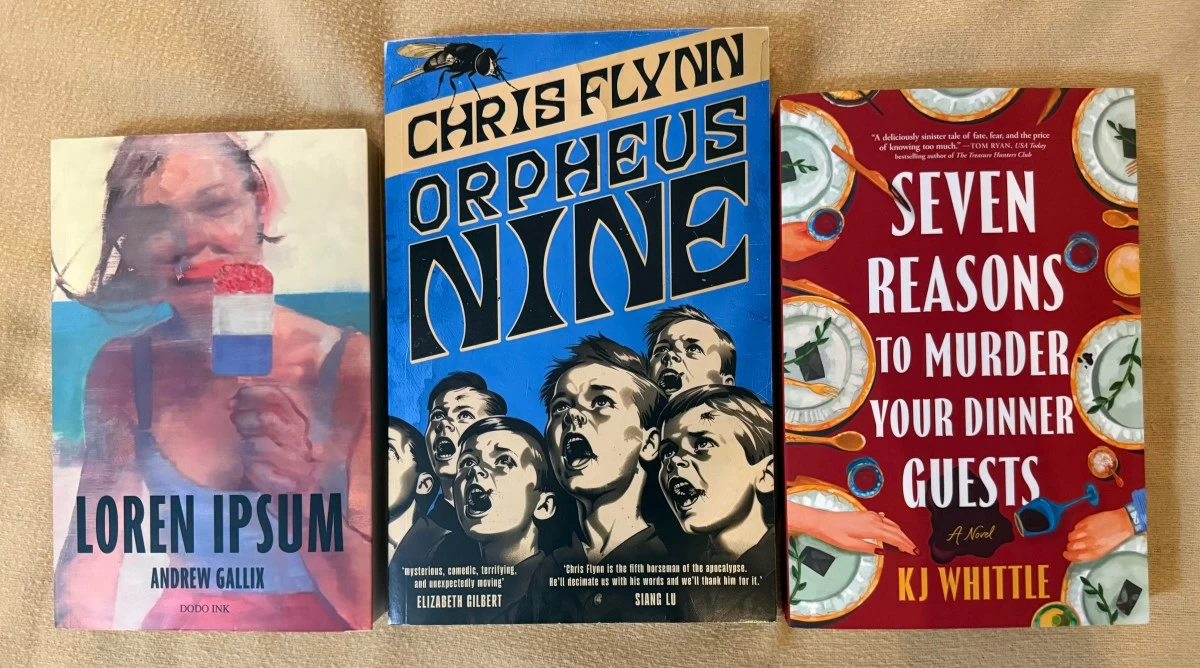
The three novels today take on the literary world, global pandemics, and prophetic ‘fatal dinners’. Enjoy!
"Loren Ipsum" by Andrew Gallix
An Anglo-French writer who teaches at the Sorbonne and edits the 3 AM magazine, Gallix gifts us this novel that’s playful, whimsical, and subversive in a literary manner. It’s satire and autobiography, it’s literary theory and crime fiction, and it’s a grand farce that also works as social commentary. And its specific target, the literary world and intelligentsia of Europe, with special emphasis on the French and English manifestations of that milieu of letters. The title refers to Loren Ipsum, an English journalist who moves to Paris to research the ‘underground’ counter-culture author Adam Wandle. There’s a nihilistic anti-literary terrorist group on the loose in France, and it would seem that Wandle is their guru, their ‘éminence grise.’ With writers being murdered, the French literary world, and those who visit, live in fear of this cabal of terrorists.
With the French Riviera and Paris as the primary locations, practically every page is filled with wordplay, puns, alliteration, double entendres, funny metaphors, and similes. It’s like being on a crash course in literary devices, or indulging in a game of ‘How many do you spot?’. Fluent in both languages, Gallix creates these literary ‘bon mots’ in both English and French. One chapter consists of short snippets of overheard conversation on a yacht, while one chapter is narrated by a pet cat. There are authors’ names that dropped like rain in a summer storm, and cagey remarks made about these living authors. It’s all done with a patina of humor and naughtiness, and then underneath, we discern how something more serious is also being said regarding this world of contemporary literature, and how it impacts the world at large - the grave responsibility it also has beyond entertainment.
"Orpheus Nine" by Chris Flynn
Here is a stirring supernatural thriller that takes the small Australian town of Gattan, population 7,448, as our Ground Zero for a tale that will make one recall the recent Covid-19 global pandemic. The opening scene is set on a football pitch where children are playing. It’s an age group match of nine-year-olds, with only one ten-year-old, who just celebrated his birthday. Without warning, at 11 am, all the children, except the 10-year-old, are gripped by extreme physical pain, spout some Latin, and expire. The next day, all children turning nine similarly pass away on their birthday, and this is happening globally. It’s called Orpheus Nine, and the parents are then called Orpheans. Naturally, no one can explain why this is happening, prevent it, or find a cure. It’s like a curse that has cast a shadow on the whole world, and cults rise up, trying to be the answer or consolation for the bereaved parents.
The narrative then centers on three old friends, all parents - but one has a child who just died, one has the 10-year-old survivor, and the third has a child edging closer to her ninth birthday. Through the multi-strand narrative, we begin to glean the human situation that has arisen, and how there are different responses to an ongoing crisis. From conspiracy theorists, to militant Orpheans, to your basic anxious citizens, what we see depicted in a world in chaos, and how even in a small town in the Australian Outback, tensions can run high with so much at stake. The frustration of fighting the inevitable is etched on the characters here, and you also have the opportunists - such as the father of the 10-year-old, and how he views what has happened as a signal for his son to be the last generation that will ‘inherit the Earth’. What cruel cosmic joke that will still happen turns this into a page-turner.
"Seven Reasons to Murder Your Dinner Guests" by KJ Whittle
Invited to a London dinner party in a secluded restaurant, seven total strangers find their own reasons for showing up. What they did not anticipate was that while being served the main course, a card was placed by their setting, and written on it was the plain declaration of the age at which they would die. That the age indicated means that a number won’t reach their next birthday causes outrage, and the party breaks up, with them wondering who set up the occasion and why. It’s when the 23-year-old social influencer Stella has a fatal accident at a train station that the six ‘survivors’ meet up to try and understand what’s going on. That one is a policeman who helps move things in a particular way, while the others include a computer geek, a matronly editor, a lingerie line owner, a dietitian doctor, and a bachelor/investment banker.
When a second death occurs, and it is as predicted by the cards, it can no longer be set aside as an accident or a mean prank. The dwindling group must now come to grips with the reality of what’s transpiring among them. The structure of the novel has the seven taking turns in leading the narrative, and we understand things from their respective POVs. It’s an effective tool to get their back stories, while demonstrating how different people will have varying responses to the same stimuli or situations. The novel also takes on a more serious, reflective tone in the second half of this mystery thriller - it explores mortality, and the stage is set for dark secrets, for manipulation, and for malice. Even as the numbers are reduced, we can guess, but we are never certain about who is pulling the strings and conducting this macabre symphony. And when the revelations do come, we see the foreshadowing that occurred, the hints that were strewn on the path.