







30-hour Traslacion ends in historic arrival
Published Jan 10, 2026 07:41 am


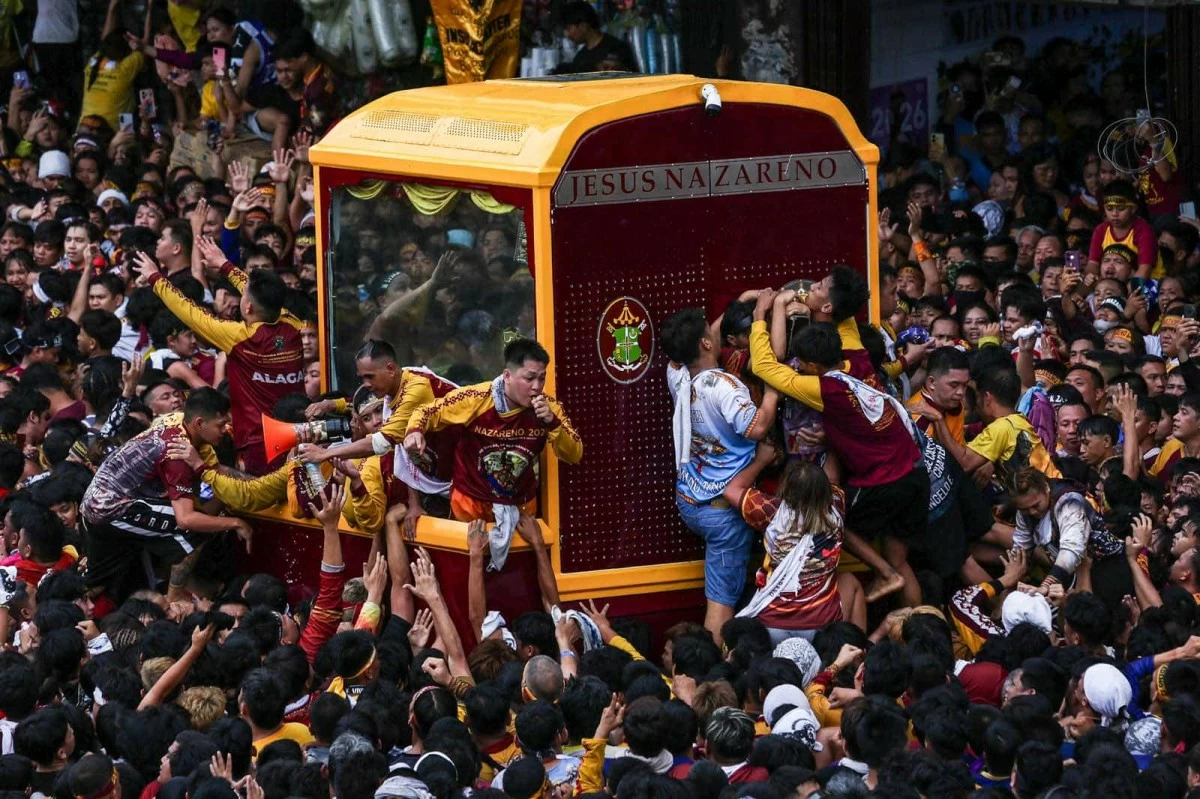
The longest Traslacion ever recorded in the country ended on Saturday, Jan. 10, as the Andas of Jesus Nazarene finally entered the Quiapo Church after an almost 31-hour journey.
An estimated 9.6 million devotees joined the procession this year, making it one of the largest in history. Upon arrival at Quiapo, around 1.4 million devotees were still gathered to welcome the Andas, demonstrating the enduring devotion of the Filipino faithful.
Thousands of devotees erupted in cheers and applause, shouting “Viva Nazareno!” as the centuries-old procession reached Plaza Miranda at 10:43 a.m., though the Andas struggled to enter the church and remained at the Quiapo Church arch for nearly an hour due to the massive crowd and the difficulty of pulling it through.
It finally entered the Quiapo Church at 10:50 a.m.
The procession lasted 30 hours, 50 minutes, and 1 second.
Historic pause at San Sebastian Basilica
For the first time in history, church authorities temporarily halted the Andas at San Sebastian Basilica following the traditional Dungaw at 4:35 a.m., allowing devotees to pay homage to the image in a quieter, solemn moment.
Despite the pause, the faithful continued pulling the Andas forward, highlighting their unwavering commitment and resilience.
Challenges and delays along the route
The procession faced multiple challenges: dense crowds, long delays, snapped ropes, and heat exhaustion slowed movement along narrow streets like Carlos Palanca and other congested intersections. Some devotees even reported hearing possible wheel issues, but thanks to the structural upgrades previously installed on the Andas -- including a four-wheel system, steering mechanism, and braking system -- handlers were able to stabilize the carriage and safely navigate tight corners, preventing more serious incidents.

Casualties and injuries
Authorities reported three fatalities this year: a photojournalist earlier in the procession and two additional devotees who were trampled in crowded areas. Over 1,700 injuries were recorded, with 29 patients under close monitoring in hospitals.
Most cases involved heat exhaustion, dizziness, and minor trauma, while medical teams from the Department of Health (DOH) and the Manila City Government remained on standby along the route.
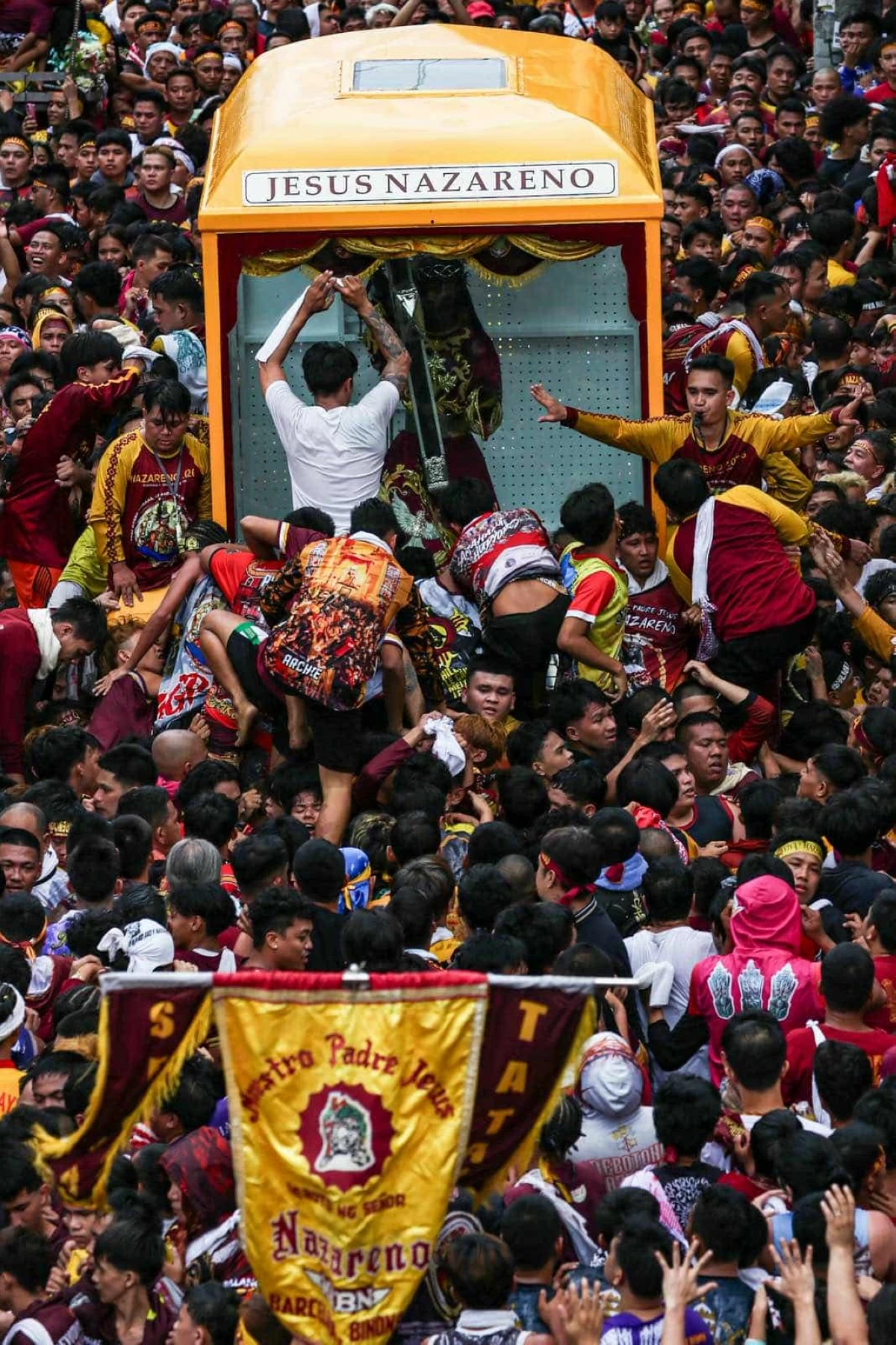
Devotion and resilience of the faithful
Despite exhaustion, hazards, and lengthy delays, the millions of devotees demonstrated remarkable faith and perseverance, ensuring the centuries-old tradition continued without interruption.
Volunteers and marshals worked tirelessly to maintain order, especially in designated lanes for senior citizens, pregnant women, and persons with disabilities.
The Andas completed its route through Hidalgo Street, Quezon Boulevard, Carlos Palanca Street, to Quezon Bridge, Villalobos Street, Plaza Miranda, and finally the Minor Basilica and National Shrine of Jesus Nazareno, where thousands waited to welcome it.
The upgrades on the Andas, initially installed for safety and maneuverability, proved critical in keeping the procession moving safely despite dense crowds and long hours.
Officials said post-event assessments would be conducted to further improve crowd control, emergency response, and public safety, ensuring the Traslacion remains faithful, orderly, and secure for generations to come.