






Manila Bulletin
 Philippines
National
Minor phreatomagmatic eruption at Taal Volcano sends 900-meter plume; Phivolcs maintains Alert Level 1
Philippines
National
Minor phreatomagmatic eruption at Taal Volcano sends 900-meter plume; Phivolcs maintains Alert Level 1
Philippines
National
Minor phreatomagmatic eruption at Taal Volcano sends 900-meter plume; Phivolcs maintains Alert Level 1
Minor phreatomagmatic eruption at Taal Volcano sends 900-meter plume; Phivolcs maintains Alert Level 1
Published Jan 9, 2026 09:05 pm


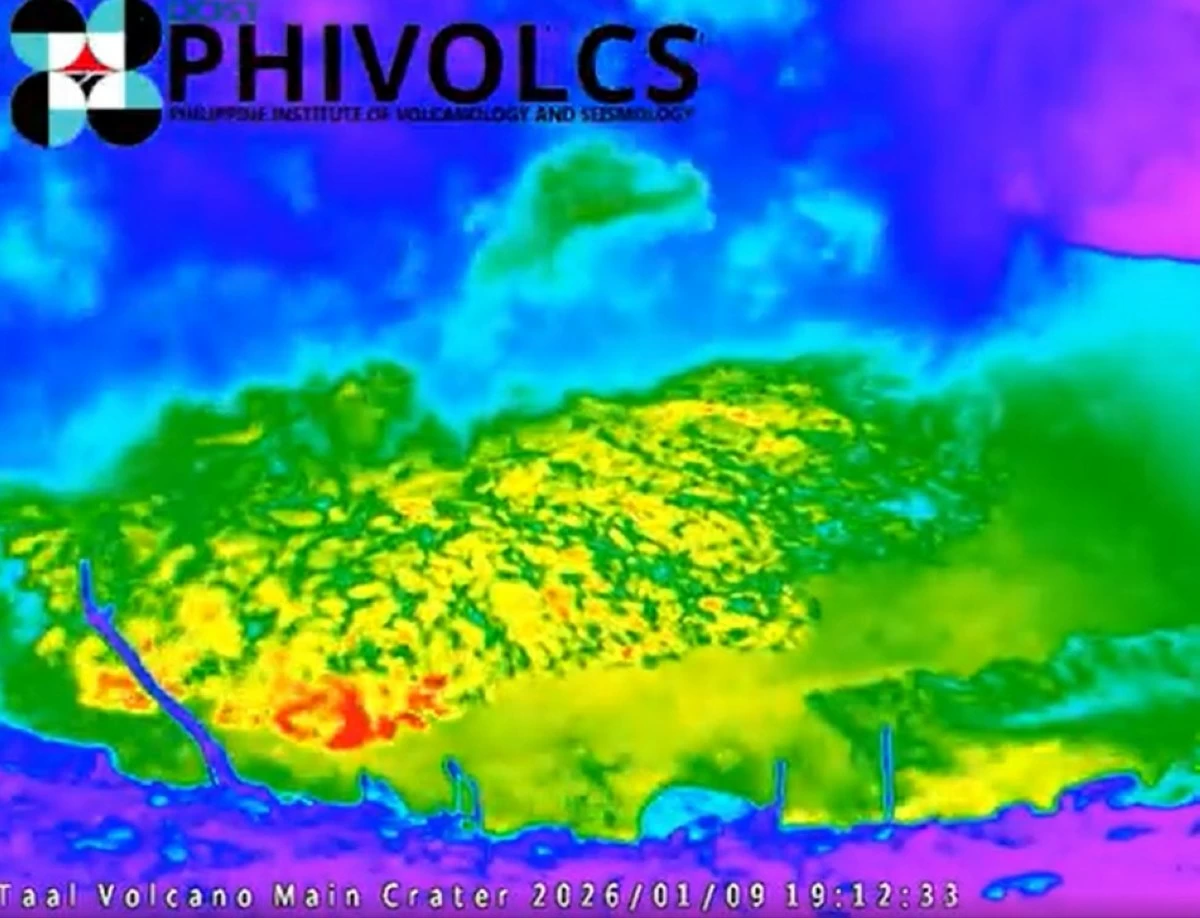
Thermal camera footage from the Daang Kastila Observation Station captures a minor phreatomagmatic eruption at Taal Volcano’s Main Crater on January 9, 2026, sending a 900-meter plume drifting southwest. (Phivolcs)
A minor phreatomagmatic eruption occurred at Taal Volcano’s Main Crater on Friday evening, January 9, generating a 900-meter-high plume that drifted southwest, the Philippine Institute of Volcanology and Seismology (Phivolcs) said.
Phivolcs reported that the event took place between 7:11 p.m. and 7:15 p.m., based on time-lapse thermal camera footage from the Daang Kastila Observation Station (VTDK) on the northern rim of the Main Crater.
The eruption was preceded by a precursory signal recorded nearly six minutes earlier by the Calauit Observation Station (VTCT) on the southeastern portion of Volcano Island. Such signals indicate short-term unrest that may lead to sudden steam-driven explosions.
Phreatomagmatic eruptions occur when magma interacts with water, producing ash-laden steam plumes that can pose hazards within the volcano’s immediate vicinity. Although the eruption was brief, Phivolcs said it continues to closely monitor volcanic activity.
Despite the event, Alert Level 1 remains in effect over Taal Volcano, indicating low-level unrest. Phivolcs noted that while no hazardous eruption is ongoing, sudden steam-driven or gas-driven explosions remain possible.
In its latest 24-hour monitoring report covering 12:00 a.m. on January 8 to 12:00 a.m. on January 9, Phivolcs recorded three volcanic earthquakes, all successfully located within the Taal Volcano region.
Phivolcs also reported average sulfur dioxide (SO₂) emissions of 150 tonnes per day as measured on January 8, indicating ongoing degassing beneath the volcano. Weak plume emissions drifting southwest were also observed, consistent with prevailing wind conditions.
Entry into Taal Volcano Island remains strictly prohibited, particularly within the Permanent Danger Zone (PDZ), including the Main Crater and Daang Kastila fissures.
Phivolcs urged local government units and residents in Batangas to remain vigilant and strictly adhere to safety advisories as monitoring of the volcano continues.