







Faith that looks beyond the image
Published Jan 9, 2026 12:01 am
|
Updated Jan 8, 2026 04:11 pm


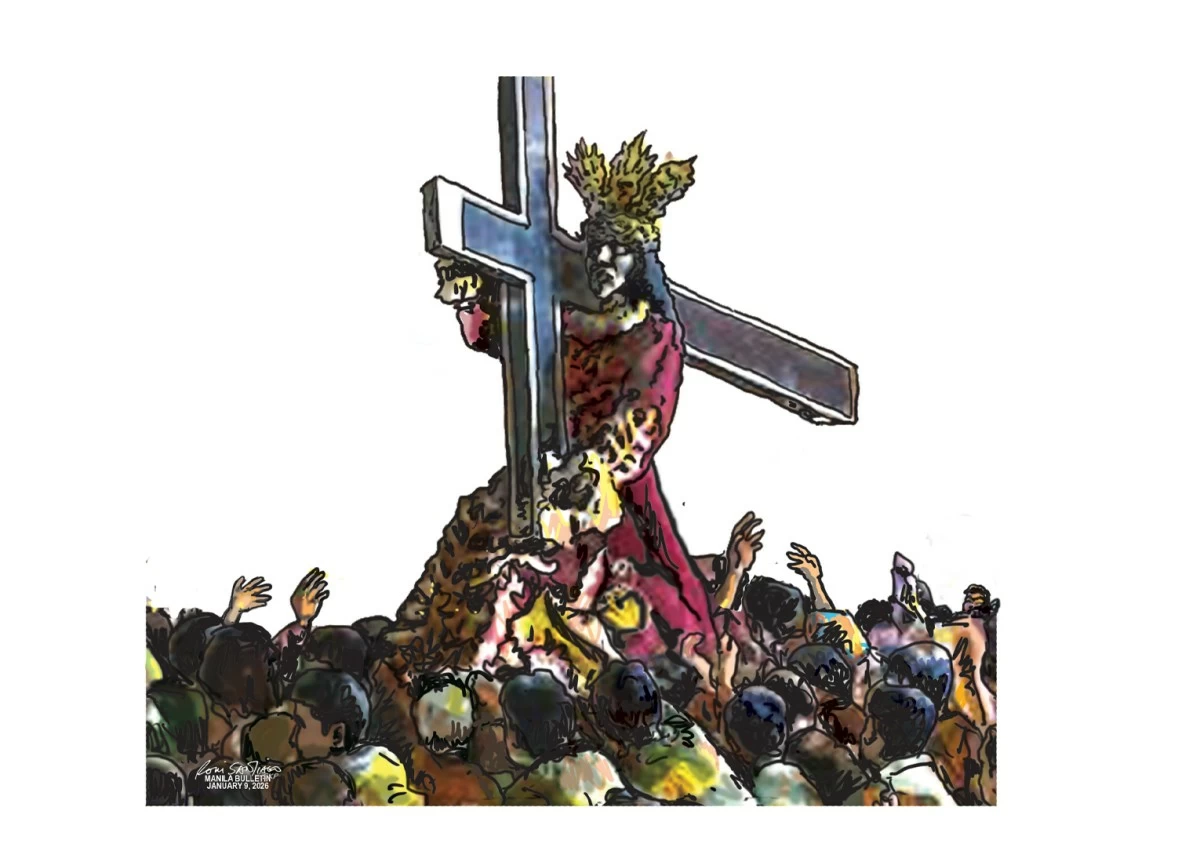
Every Jan. 9, hundreds of thousands, if not millions, of devotees brave fatigue, danger, and discomfort to join the Traslacion of the Black Nazarene. The sea of humanity that moves from Quirino Grandstand at Rizal Park to Quiapo Church in Manila is a powerful testament to Filipino faith—raw, enduring, and deeply personal. It is a faith shaped by suffering, hope, and the longing for healing. Yet amid the devotion, whom are the faithful truly following?
The Black Nazarene represents Jesus Christ carrying the cross—wounded yet obedient, burdened yet faithful. This image resonates a clear message because it mirrors the lives of many devotees who carry crosses of poverty, illness, and hardship. Their devotion is not shallow; it is born of trust that Jesus understands suffering because He Himself suffered. Many testify to healing—physical, emotional, and spiritual—that they attribute to their devotion. These experiences should never be dismissed. Healing, after all, is part of Christ’s ministry.
But devotion risks losing its core when the focus subtly shifts from who Jesus is to what we want Him to give. Christ did not come primarily to grant favors, cures, or material relief. He came because God so loved the world that He gave His only begotten Son—not to ease our temporary pain alone, but to save us from eternal separation from Him. Healing is a sign of God’s compassion, but salvation is the heart of His plan.
Jesus is not merely a miracle worker who responds to touch or proximity. He is the Son freely offered by God the Father, the living expression of divine love poured out for a broken humanity. The cross He carried is not simply an object of devotion; it is the altar on which God’s love was made manifest. To cling to the image while forgetting the meaning of the sacrifice is to stop halfway on the road to faith.
The Traslacion itself can be read as a spiritual journey. Millions walk, stumble, and rise again, drawn by faith. But faith does not end with reaching Quiapo. It matures when devotion leads to conversion—when belief in Jesus moves beyond ritual and becomes trust in God’s will, even when healing does not come as expected. True faith believes not only in God’s power, but in His love and wisdom.
God the Father did not send His Son to be reduced to a talisman or symbol of personal desire. He sent Him to redeem humanity, to restore what sin had broken, and to offer eternal life. This is the deeper miracle that must never be overshadowed. The greatest healing Christ offers is not always of the body, but of the soul—freedom from sin, fear, and despair.
As devotees lift their hands toward the Nazarene today, perhaps the most important gesture is not reaching out, but looking up—beyond the image, toward the God who gave His only Son out of love. Faith rooted in that love does not weaken devotion; it purifies it. It reminds us that we follow Jesus not only because He understands our suffering, but because through Him, God has already given us everything.
In remembering who Jesus truly is, the faithful should honor not only the Son who carried the cross, but God the Father whose love placed salvation within our reach.