







PNP: Security measures in place for Traslacion 2026
Published Jan 8, 2026 10:39 am


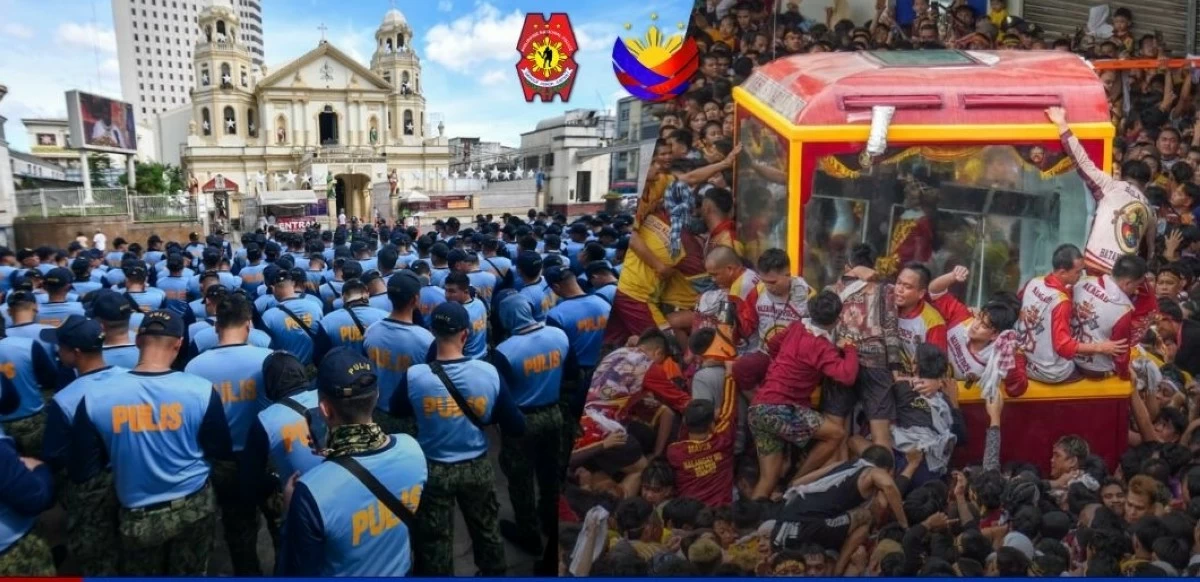
photo: PNP
Security measures are now in place in the City of Manila where millions of Black Nazarene devotees are expected to flock on Friday, Jan. 9, for the annual religious activity, the Philippine National Police (PNP) said.
More than 18,000 policemen will be tapped to secure the Traslacion and acting PNP chief Lt. Gen. Jose Melencio C. Nartatez, Jr. said the initial deployment was already made on Wednesday night for the Pahalik rites for Nazareno as devotees began arriving in large numbers.
“We in the Philippine National Police are ready for the Traslacion. The security measures are complete and will be adjusted real-time while coordination with other government agencies are continuously being done, including crowd management plans for the Pahalik,” said Nartatez.
“We have deployed a sufficient number of police personnel at the Quirino Grandstand and even in Quiapo to ensure public safety while allowing devotees to properly express their faith,” he added.
Police earlier urged devotees to strictly follow the security measures that include gun and liquor bans, and even the prohibition on the use of firecrackers.
For the “Pahalik”, plainclothes operatives and intelligence units were also positioned to counter pickpocketing, theft, scams, and other opportunistic crimes while police assistance desks and dedicated personnel were also assigned to help senior citizens, persons with disabilities, women, and children.
The traditional Pahalik for the Feast of Jesus Nazareno started at 7 p.m. on January 7 at the Quirino Grandstand in Manila, giving devotees the opportunity to touch and kiss the image of Jesus Nazareno.
Some roads were closed beginning including Independence Road, Katigbak Drive, and South Drive, while allowing limited passage for access to nearby hotels.
More road closures are set to start at 9 p.m. on Thursday, Jan. 8, in preparation for the Traslacion on Friday.
Police forces will be reinforced by personnel from the Philippine Coast Guard and the Armed Forces of the Philippines for security, and personnel from the Metropolitan Manila Development Authority (MMDA) for traffic management and medical emergency response.
Personnel from local government units will also be deployed based on the agreement during the coordination meetings that started as early as two months ago.
Signal jamming and no-fly zones will also be implemented especially near the area of the Traslacion routes.