ADVERTISEMENT

Faith as a path to a better life for Filipinos

Published Jan 8, 2026 12:02 am  |  Updated Jan 7, 2026 04:11 pm
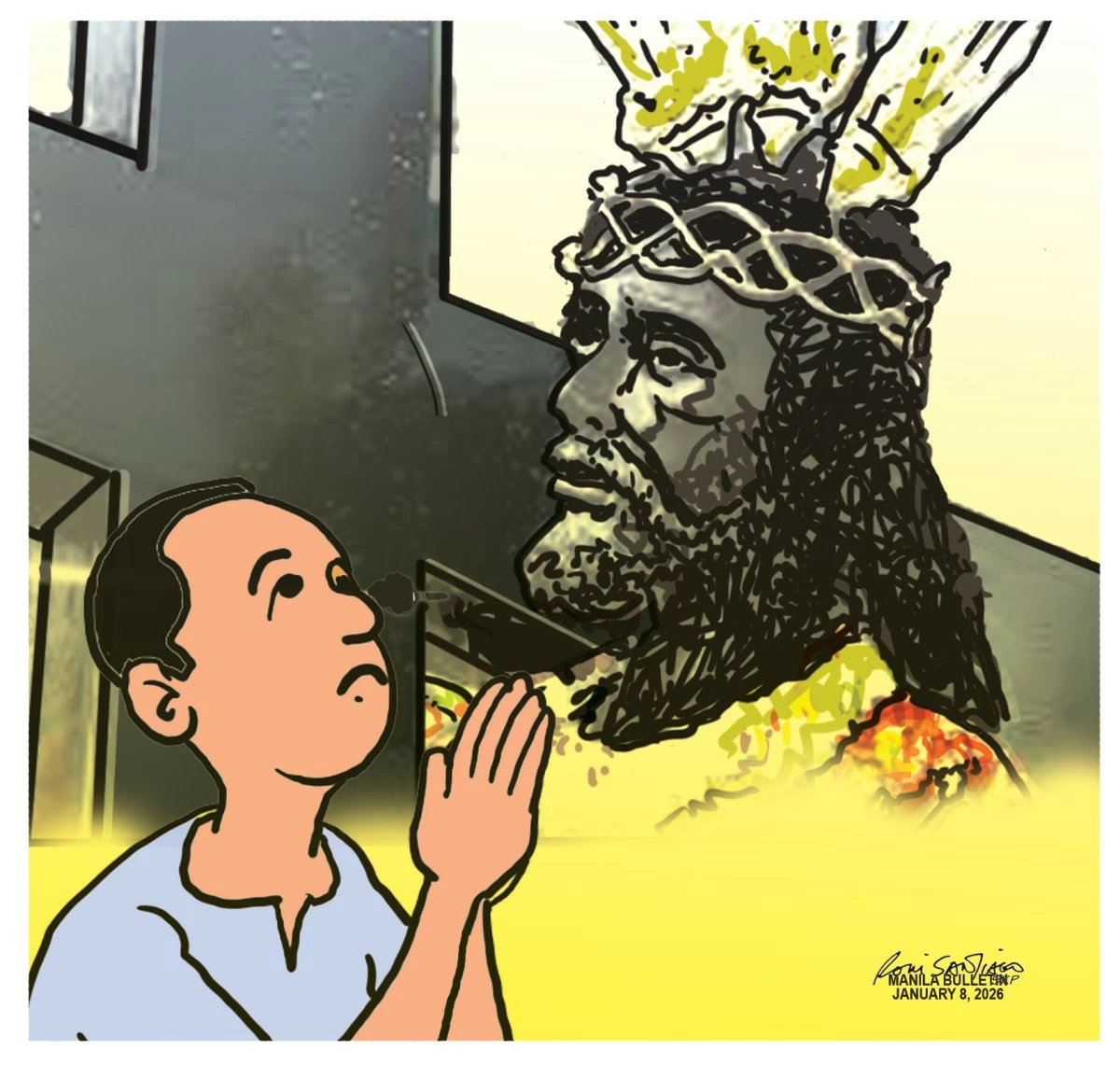
Each year, the Traslacion of the Black Nazarene gathers millions of Filipinos in a profound expression of faith, sacrifice, and hope. This year, as the nation continues to navigate economic uncertainty, social divisions, and lingering distrust in institutions, the theme of the Traslacion resonates deeply with the people’s enduring aspiration for a better quality of life—not only materially, but morally and spiritually.
At its core, the devotion to the Black Nazarene is anchored on three enduring virtues: faith, service, and humility. These virtues have long sustained ordinary Filipinos through adversity. Faith enables the faithful to endure hardship with hope, trusting that suffering is not the end of the story. It does not promise instant relief from poverty or injustice, but it nurtures resilience: the strength to rise after every fall, to persevere when options seem limited, and to believe that tomorrow can still be better than today.
Service transforms faith into action. For devotees, carrying the burdens of others—whether through volunteerism, honest labor, or quiet acts of kindness—becomes a concrete expression of belief. A society that values service over self-interest is better equipped to address inequality, hunger, and exclusion. In this sense, faith-inspired service is not passive piety; it is active citizenship grounded in compassion and responsibility.
Humility, perhaps the most challenging virtue, reminds both leaders and citizens that power is a trust, not a privilege. It calls on individuals to recognize their limits, to listen to others, and to place the common good above personal gain. In a country repeatedly wounded by the betrayal of public trust through corruption, humility demands vigilance from the citizenry. It calls on Filipinos to reject apathy, to hold officials accountable, to insist on transparency, and to refuse to normalize abuse of authority.
Faith does not excuse nor tolerate injustice; it confronts it. The faithful are reminded that devotion must go hand in hand with moral courage: speaking out against wrongdoing, voting responsibly, paying taxes honestly, and participating meaningfully in civic life. These are the quiet but powerful actions that give substance to prayers for a better future.
For many devotees, the journey toward deliverance from penury and poverty begins with inner renewal. People rooted in faith cultivate discipline, hope, and ethical conduct. These are values that shape choices in education, work, and family life. When multiplied across communities, these values become social capital, fostering trust, cooperation, and shared purpose. Peace and prosperity are not merely outcomes of economic policy; they are built on character, solidarity, and mutual respect.
The Traslacion’s message transcends religious boundaries. While deeply Catholic in origin, its core call—to persevere, to serve, to remain humble in the face of power and suffering—resonates across faiths and beliefs. It speaks to a shared Filipino longing for dignity, justice, and a life of meaning. In this shared aspiration, Filipinos find common cause, united not by uniformity of belief, but by a collective commitment to uplift one another.
In a nation searching for healing and renewal, the Traslacion 2026 reminds us that faith, when lived authentically, can be a powerful force for personal transformation and national progress. Beyond the feast of the Nazarene, let the values of faith, service and humility permeate all aspects of our daily lives and enable the fulfillment of our national aspirations.
ADVERTISEMENT
.most-popular .layout-ratio{ padding-bottom: 79.13%; } @media (min-width: 768px) and (max-width: 1024px) { .widget-title { font-size: 15px !important; } }

{{ articles_filter_1561_widget.title }}

.most-popular .layout-ratio{ padding-bottom: 79.13%; } @media (min-width: 768px) and (max-width: 1024px) { .widget-title { font-size: 15px !important; } }

{{ articles_filter_1562_widget.title }}

.most-popular .layout-ratio{ padding-bottom: 79.13%; } @media (min-width: 768px) and (max-width: 1024px) { .widget-title { font-size: 15px !important; } }

{{ articles_filter_1563_widget.title }}

{{ articles_filter_1564_widget.title }}

.mb-article-details { position: relative; } .mb-article-details .article-body-preview, .mb-article-details .article-body-summary{ font-size: 17px; line-height: 30px; font-family: "Libre Caslon Text", serif; color: #000; } .mb-article-details .article-body-preview iframe , .mb-article-details .article-body-summary iframe{ width: 100%; margin: auto; } .read-more-background { background: linear-gradient(180deg, color(display-p3 1.000 1.000 1.000 / 0) 13.75%, color(display-p3 1.000 1.000 1.000 / 0.8) 30.79%, color(display-p3 1.000 1.000 1.000) 72.5%); position: absolute; height: 200px; width: 100%; bottom: 0; display: flex; justify-content: center; align-items: center; padding: 0; } .read-more-background a{ color: #000; } .read-more-btn { padding: 17px 45px; font-family: Inter; font-weight: 700; font-size: 18px; line-height: 16px; text-align: center; vertical-align: middle; border: 1px solid black; background-color: white; } .hidden { display: none; }
function initializeAllSwipers() { // Get all hidden inputs with cms_article_id document.querySelectorAll('[id^="cms_article_id_"]').forEach(function (input) { const cmsArticleId = input.value; const articleSelector = '#article-' + cmsArticleId + ' .body_images'; const swiperElement = document.querySelector(articleSelector); if (swiperElement && !swiperElement.classList.contains('swiper-initialized')) { new Swiper(articleSelector, { loop: true, pagination: false, navigation: { nextEl: '#article-' + cmsArticleId + ' .swiper-button-next', prevEl: '#article-' + cmsArticleId + ' .swiper-button-prev', }, }); } }); } setTimeout(initializeAllSwipers, 3000); const intersectionObserver = new IntersectionObserver( (entries) => { entries.forEach((entry) => { if (entry.isIntersecting) { const newUrl = entry.target.getAttribute("data-url"); if (newUrl) { history.pushState(null, null, newUrl); let article = entry.target; // Extract metadata const author = article.querySelector('.author-section').textContent.replace('By', '').trim(); const section = article.querySelector('.section-info ').textContent.replace(' ', ' '); const title = article.querySelector('.article-title h1').textContent; // Parse URL for Chartbeat path format const parsedUrl = new URL(newUrl, window.location.origin); const cleanUrl = parsedUrl.host + parsedUrl.pathname; // Update Chartbeat configuration if (typeof window._sf_async_config !== 'undefined') { window._sf_async_config.path = cleanUrl; window._sf_async_config.sections = section; window._sf_async_config.authors = author; } // Track virtual page view with Chartbeat if (typeof pSUPERFLY !== 'undefined' && typeof pSUPERFLY.virtualPage === 'function') { try { pSUPERFLY.virtualPage({ path: cleanUrl, title: title, sections: section, authors: author }); } catch (error) { console.error('ping error', error); } } // Optional: Update document title if (title && title !== document.title) { document.title = title; } } } }); }, { threshold: 0.1 } ); function showArticleBody(button) { const article = button.closest("article"); const summary = article.querySelector(".article-body-summary"); const body = article.querySelector(".article-body-preview"); const readMoreSection = article.querySelector(".read-more-background"); // Hide summary and read-more section summary.style.display = "none"; readMoreSection.style.display = "none"; // Show the full article body body.classList.remove("hidden"); } document.addEventListener("DOMContentLoaded", () => { let loadCount = 0; // Track how many times articles are loaded const offset = [1, 2, 3, 4, 5, 6, 7, 8, 9, 10]; // Offset values const currentUrl = window.location.pathname.substring(1); let isLoading = false; // Prevent multiple calls if (!currentUrl) { console.log("Current URL is invalid."); return; } const sentinel = document.getElementById("load-more-sentinel"); if (!sentinel) { console.log("Sentinel element not found."); return; } function isSentinelVisible() { const rect = sentinel.getBoundingClientRect(); return ( rect.top < window.innerHeight && rect.bottom >= 0 ); } function onScroll() { if (isLoading) return; if (isSentinelVisible()) { if (loadCount >= offset.length) { console.log("Maximum load attempts reached."); window.removeEventListener("scroll", onScroll); return; } isLoading = true; const currentOffset = offset[loadCount]; window.loadMoreItems().then(() => { let article = document.querySelector('#widget_1690 > div:nth-last-of-type(2) article'); intersectionObserver.observe(article) loadCount++; }).catch(error => { console.error("Error loading more items:", error); }).finally(() => { isLoading = false; }); } } window.addEventListener("scroll", onScroll); });

Sign up by email to receive news.