






Manila Bulletin
 Business
Banking & Finance
BSP holds line as peso slides, says economics don't justify intervention
Business
Banking & Finance
BSP holds line as peso slides, says economics don't justify intervention
Business
Banking & Finance
BSP holds line as peso slides, says economics don't justify intervention
BSP holds line as peso slides, says economics don't justify intervention
DBS: Weaker peso 'not worrisome'
By Derco Rosal
Published Jan 8, 2026 03:19 pm


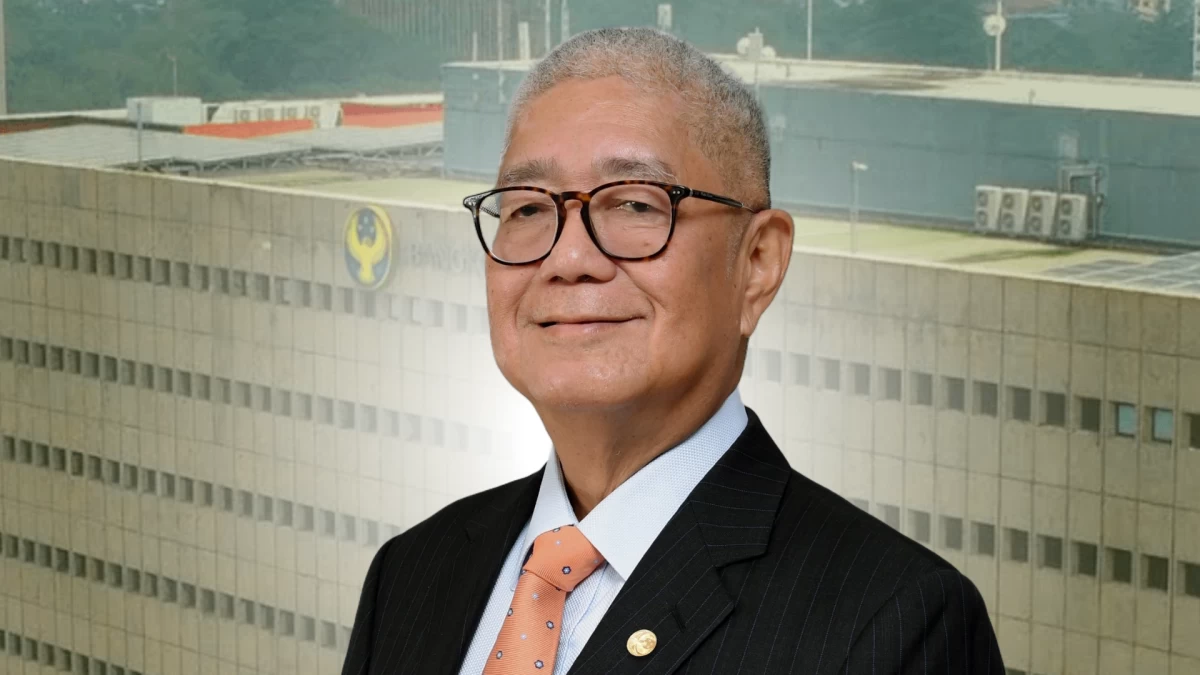
Chairman of the Monetary Board and BSP Governor Eli M. Remolona Jr.
Bangko Sentral ng Pilipinas (BSP) Governor Eli M. Remolona Jr. admitted there is intense pressure to defend the Philippine peso against its continued decline, but said the central bank has held its ground, as the economics of it do not justify intervention.
“There’s tremendous pressure to defend the peso, and we’ve resisted it,” Remolona told reporters on the sidelines of a Rotary Club event on Thursday, Jan. 8, noting that “the economics of it doesn’t warrant defending the peso.”
Remolona added that, in the past, he would have encouraged a weaker peso to boost manufacturing exports, but now any intervention is unnecessary, as the current economy benefits neither from a weak nor strong peso, given that it is dominated by services.
This came as conversations steered toward the peso plunging on Wednesday, Jan. 7, to a fresh all-time low of ₱59.355 versus the United States (US) dollar.
Meanwhile, Singapore-based DBS Bank Ltd. said a weaker peso should not be a concern, as it is expected to rebound and remain stable on the back of robust remittance inflows, services exports, and still-subdued inflation.
“We see more room for peso rates to decline relative to Asian peers,” and a weaker peso is “not worrisome,” DBS senior rates strategist Eugene Leow and rates strategist/economist Samuel Tse wrote in a Jan. 7 commentary.
The Singaporean bank noted that the peso has underperformed across the region, but it does not expect the BSP to carry out aggressive intervention.
Leow and Tse said their expectation aligns with the BSP’s position that the peso should be determined by the market. The BSP maintains that it will only intervene in the foreign exchange (forex) market if the peso follows a losing path that fuels inflation.
“While the weaker peso partially offsets tariff effects, medium-term fundamentals still point to forex resilience, supported by remittance inflows, robust services exports, still-moderate inflation, and ongoing reform momentum,” the commentary read.
DBS also sounded bullish on the peso and Thai baht, as they are seen performing better than other currencies in the region amid the BSP’s easing bias.
In particular, DBS anticipates the central bank will deliver a cumulative 50 basis points (bps) of cuts in the first semester of 2026, bringing the current benchmark rate of 4.5 percent down to four percent.
“A soft growth patch and a clear shift toward dovish communication at BSP meetings reinforce expectations for front-loaded policy support,” the economists said, noting that easing to the neutral rate of four percent will cushion growth from worsening.
Growth is forecast by the BSP to recover to 5.4 percent this year, from its 4.6-percent forecast for 2025. Economic managers also reduced the gross domestic product (GDP) growth goal to five to six percent in 2026, from a previously stronger six to seven percent.
On prices, inflation posted an unexpected uptick to 1.8 percent in December 2025, bringing full-year inflation to 1.7 percent—still below the government target band of two to four percent. Against this backdrop, Remolona said another rate cut is possible, with the easing cycle nearing its end.
DBS noted that the peso faced pressure due to mounting expectations of further BSP easing and narrowing interest rate differentials between the US Federal Reserve and the BSP.
MUFG Bank Ltd. has also trimmed its peso outlook, citing a weaker currency in 2025 and rising risks from recent rice import policy changes, although planned government spending is expected to provide modest support.
For the Japanese lender, the US dollar-peso pair is expected to gradually move lower to the ₱58 level in the first half of the year but increase to ₱59.5:$1 by the end of 2026.