ADVERTISEMENT

US seizes 2 sanctioned oil tankers linked to Venezuela in the North Atlantic and the Caribbean

Published Jan 7, 2026 11:37 pm
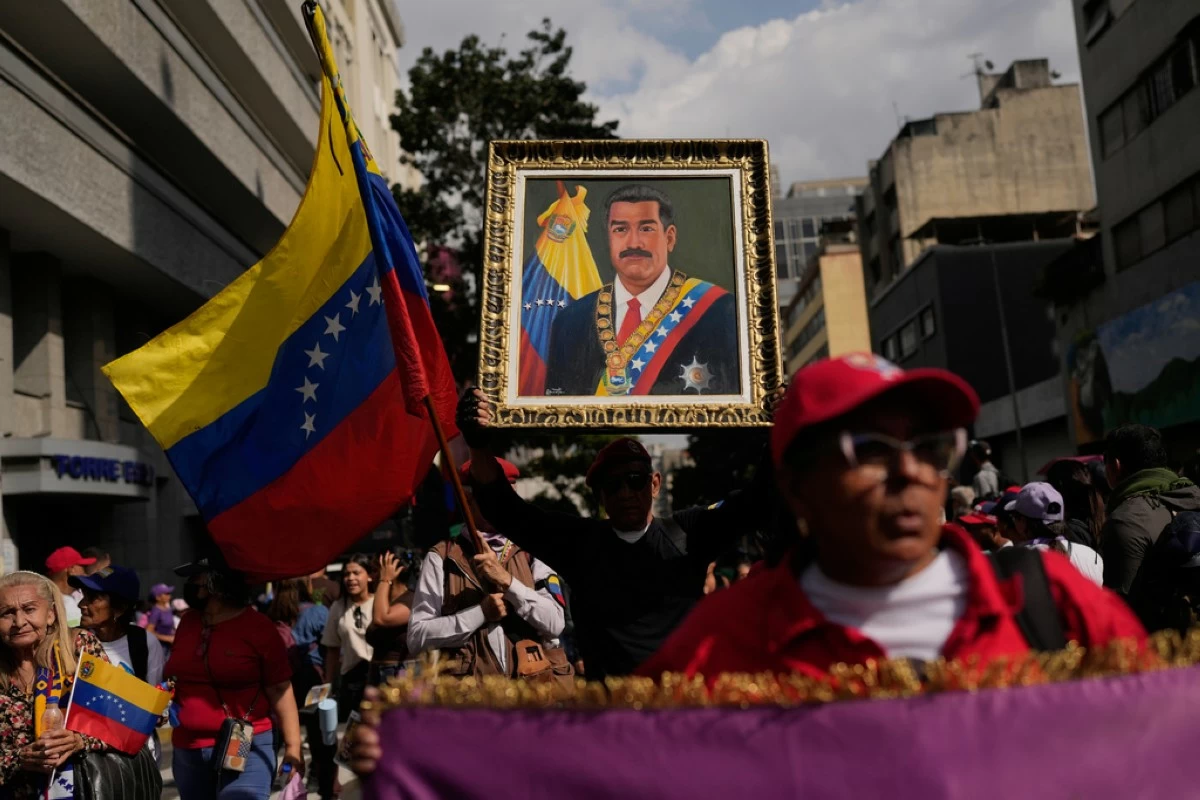
A government supporter holds an image of President Nicolas Maduro during a women's march to demand his return in Caracas, Venezuela, Tuesday, Jan. 6, 2026, three days after U.S. forces captured him and his wife. (AP Photo/Matias Delacroix)
WASHINGTON  — The U.S. has seized two sanctioned oil tankers linked to Venezuela in back-to-back actions in the North Atlantic and the Caribbean, officials said Wednesday.
U.S. European Command announced the seizure of the merchant vessel Bella 1 for “violations of U.S. sanctions” in a social medial post. The U.S. had been pursuing the tanker since last month after it tried to evade a U.S. blockade on sanctioned oil vessels around Venezuela.
Then, Secretary of Homeland Security Kristi Noem revealed that U.S. forces also took control of the tanker Sophia in the Caribbean. Noem said in a social media post both ships were “either last docked in Venezuela or en route to it.”
The U.S. military seized the Bella 1 and subsequently handed over control of it to law enforcement officials, said a U.S. official, who spoke to The Associated Press on Wednesday on the condition of anonymity to discuss sensitive military operations.
The ship was sanctioned by the U.S. in 2024 for allegedly smuggling cargo for a company linked to Lebanese militant group Hezbollah, which is backed by Iran. The U.S. Coast Guard attempted to board it in the Caribbean in December as it headed for Venezuela. The ship refused boarding and headed across the Atlantic.
During this time, the Bella 1 was renamed Marinera and flagged to Russia, shipping databases show. The U.S. official also confirmed that the ship's crew had painted a Russian flag on the side of the hull.
Earlier Wednesday, open-source maritime tracking sites showed its position as between Scotland and Iceland, traveling north. The U.S. official also confirmed the ship was in the North Atlantic.
U.S. military planes have flown over the vessel, and on Tuesday a Royal Air Force surveillance plane was shown on flight-tracking sites flying over the same area.
Russia’s Foreign Ministry said before the seizure that it was “following with concern the anomalous situation that has developed around the Russian oil tanker Marinera.”
The ministry’s statement, which was carried by the official Tass news agency, added that “for several days now, a U.S. Coast Guard ship has been following the Marinera, even though our vessel is approximately 4,000 km from the American coast.”
In a post to social media, U.S. European Command confirmed that the U.S. Coast Guard cutter Munro tracked the ship ahead of its seizure “pursuant to a warrant issued by a U.S. federal court.”
The military command went on to say that the seizure supported President Donald Trump’s proclamation on targeting sanctioned vessels that “threaten the security and stability of the Western Hemisphere.” The tanker’s seizure comes just days after U.S. military forces conducted a surprise nighttime raid on Venezuela’s capital of Caracas and captured then-President Nicolás Maduro and his wife.
In the wake of this raid, officials in Trump's Republican administration have said that they intended to continue to seize sanctioned vessels connected to the country.
“We are enforcing American laws with regards to oil sanctions,” Secretary of State Marco Rubio said on NBC on Sunday. “We go to court. We get a warrant. We seize those boats with oil. And that will continue."

Related Tags

World news
ADVERTISEMENT
.most-popular .layout-ratio{ padding-bottom: 79.13%; } @media (min-width: 768px) and (max-width: 1024px) { .widget-title { font-size: 15px !important; } }

{{ articles_filter_1561_widget.title }}

.most-popular .layout-ratio{ padding-bottom: 79.13%; } @media (min-width: 768px) and (max-width: 1024px) { .widget-title { font-size: 15px !important; } }

{{ articles_filter_1562_widget.title }}

.most-popular .layout-ratio{ padding-bottom: 79.13%; } @media (min-width: 768px) and (max-width: 1024px) { .widget-title { font-size: 15px !important; } }

{{ articles_filter_1563_widget.title }}

{{ articles_filter_1564_widget.title }}

.mb-article-details { position: relative; } .mb-article-details .article-body-preview, .mb-article-details .article-body-summary{ font-size: 17px; line-height: 30px; font-family: "Libre Caslon Text", serif; color: #000; } .mb-article-details .article-body-preview iframe , .mb-article-details .article-body-summary iframe{ width: 100%; margin: auto; } .read-more-background { background: linear-gradient(180deg, color(display-p3 1.000 1.000 1.000 / 0) 13.75%, color(display-p3 1.000 1.000 1.000 / 0.8) 30.79%, color(display-p3 1.000 1.000 1.000) 72.5%); position: absolute; height: 200px; width: 100%; bottom: 0; display: flex; justify-content: center; align-items: center; padding: 0; } .read-more-background a{ color: #000; } .read-more-btn { padding: 17px 45px; font-family: Inter; font-weight: 700; font-size: 18px; line-height: 16px; text-align: center; vertical-align: middle; border: 1px solid black; background-color: white; } .hidden { display: none; }
function initializeAllSwipers() { // Get all hidden inputs with cms_article_id document.querySelectorAll('[id^="cms_article_id_"]').forEach(function (input) { const cmsArticleId = input.value; const articleSelector = '#article-' + cmsArticleId + ' .body_images'; const swiperElement = document.querySelector(articleSelector); if (swiperElement && !swiperElement.classList.contains('swiper-initialized')) { new Swiper(articleSelector, { loop: true, pagination: false, navigation: { nextEl: '#article-' + cmsArticleId + ' .swiper-button-next', prevEl: '#article-' + cmsArticleId + ' .swiper-button-prev', }, }); } }); } setTimeout(initializeAllSwipers, 3000); const intersectionObserver = new IntersectionObserver( (entries) => { entries.forEach((entry) => { if (entry.isIntersecting) { const newUrl = entry.target.getAttribute("data-url"); if (newUrl) { history.pushState(null, null, newUrl); let article = entry.target; // Extract metadata const author = article.querySelector('.author-section').textContent.replace('By', '').trim(); const section = article.querySelector('.section-info ').textContent.replace(' ', ' '); const title = article.querySelector('.article-title h1').textContent; // Parse URL for Chartbeat path format const parsedUrl = new URL(newUrl, window.location.origin); const cleanUrl = parsedUrl.host + parsedUrl.pathname; // Update Chartbeat configuration if (typeof window._sf_async_config !== 'undefined') { window._sf_async_config.path = cleanUrl; window._sf_async_config.sections = section; window._sf_async_config.authors = author; } // Track virtual page view with Chartbeat if (typeof pSUPERFLY !== 'undefined' && typeof pSUPERFLY.virtualPage === 'function') { try { pSUPERFLY.virtualPage({ path: cleanUrl, title: title, sections: section, authors: author }); } catch (error) { console.error('ping error', error); } } // Optional: Update document title if (title && title !== document.title) { document.title = title; } } } }); }, { threshold: 0.1 } ); function showArticleBody(button) { const article = button.closest("article"); const summary = article.querySelector(".article-body-summary"); const body = article.querySelector(".article-body-preview"); const readMoreSection = article.querySelector(".read-more-background"); // Hide summary and read-more section summary.style.display = "none"; readMoreSection.style.display = "none"; // Show the full article body body.classList.remove("hidden"); } document.addEventListener("DOMContentLoaded", () => { let loadCount = 0; // Track how many times articles are loaded const offset = [1, 2, 3, 4, 5, 6, 7, 8, 9, 10]; // Offset values const currentUrl = window.location.pathname.substring(1); let isLoading = false; // Prevent multiple calls if (!currentUrl) { console.log("Current URL is invalid."); return; } const sentinel = document.getElementById("load-more-sentinel"); if (!sentinel) { console.log("Sentinel element not found."); return; } function isSentinelVisible() { const rect = sentinel.getBoundingClientRect(); return ( rect.top < window.innerHeight && rect.bottom >= 0 ); } function onScroll() { if (isLoading) return; if (isSentinelVisible()) { if (loadCount >= offset.length) { console.log("Maximum load attempts reached."); window.removeEventListener("scroll", onScroll); return; } isLoading = true; const currentOffset = offset[loadCount]; window.loadMoreItems().then(() => { let article = document.querySelector('#widget_1690 > div:nth-last-of-type(2) article'); intersectionObserver.observe(article) loadCount++; }).catch(error => { console.error("Error loading more items:", error); }).finally(() => { isLoading = false; }); } } window.addEventListener("scroll", onScroll); });

Sign up by email to receive news.