






Manila Bulletin
 Business
Trade & Industry
Auto parts makers question Marcos veto of CARS, RACE budget
Business
Trade & Industry
Auto parts makers question Marcos veto of CARS, RACE budget
Business
Trade & Industry
Auto parts makers question Marcos veto of CARS, RACE budget
Auto parts makers question Marcos veto of CARS, RACE budget
PPMA: Scrapping auto programs threatens investments, jobs, and industry revival as Philippines falls behind regional competitors
Published Jan 7, 2026 02:26 pm


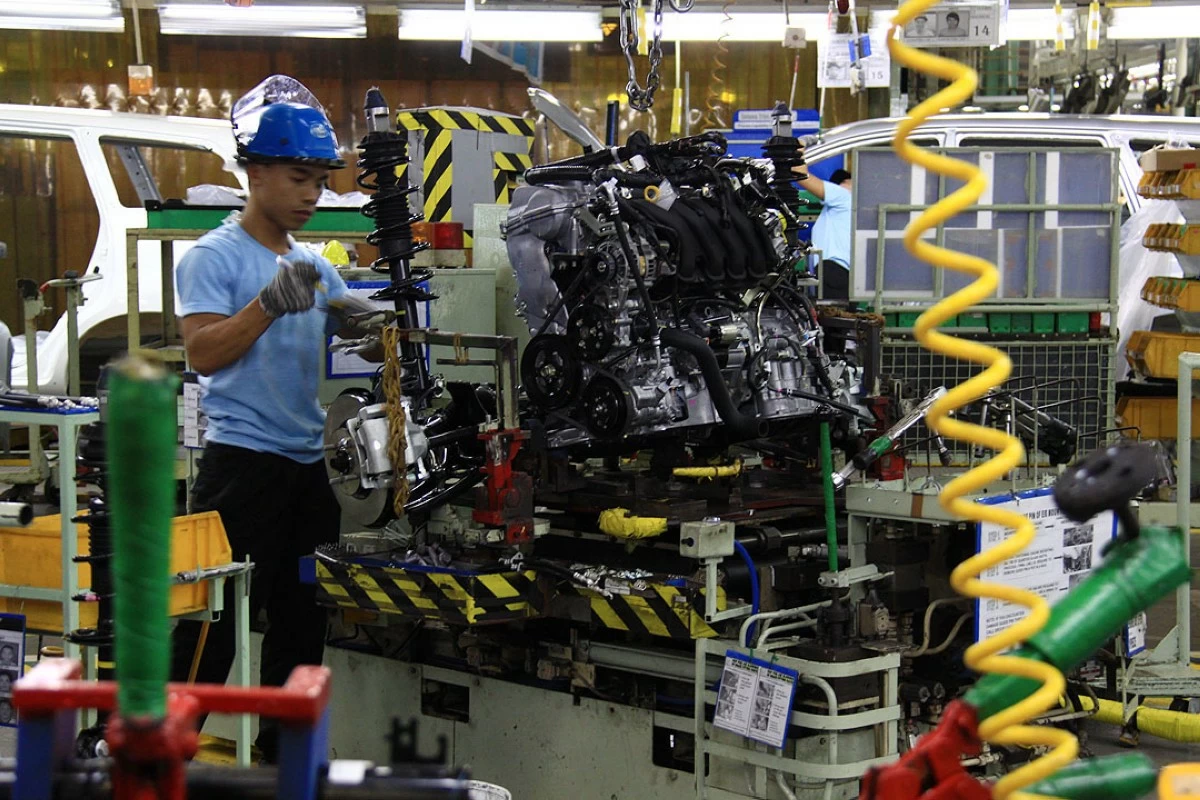
(PPMA photo)
Local automotive parts manufacturers questioned the Marcos Jr. administration’s move to scrap funding for two government programs aimed at attracting new investments in the automotive industry, warning that it could trigger a sharp decline in an already struggling sector.
In a statement, the Philippine Parts Makers Association (PPMA) opposed President Ferdinand “Bongbong” Marcos Jr.’s decision to veto the proposed budget for the Comprehensive Automotive Resurgence Strategy (CARS) and the Revitalizing the Automotive Industry for Competitiveness Enhancement (RACE) programs.
PPMA President Ferdi Raquelsantos said both programs are essentially a lifeline for the auto parts industry, which has already fallen behind neighboring countries.
“Without sustained and predictable government support, local manufacturers will continue to lose ground, investments will slow, and skilled jobs will disappear,” said Raquelsantos.
Upon signing the ₱6.793-trillion national budget for the year on Jan. 5, Marcos announced that he slashed around ₱92.5 billion in unprogrammed appropriations (UAs) from the spending plan.
Among the UA line items that were removed were the proposed ₱4.32-billion budget for CARS and ₱250 million for RACE.
“The CARS and RACE programs were designed to rebuild vehicle assembly volumes, strengthen local parts manufacturing, and allow the Philippines to regain competitiveness within the Association of Southeast Asian Nations (ASEAN) automotive landscape,” Raquelsantos said.
PPMA noted that in Southeast Asia, the automotive industry consistently ranks among the top manufacturing industries in terms of output, employment, and exports.
Neighboring countries such as Thailand, Indonesia, and Vietnam have successfully steered their respective industries to become major contributors to the economy, primarily through government support in the form of long-term industrial policies.
“By contrast, the Philippines has steadily fallen behind its ASEAN neighbors. Local vehicle production remains limited, and many parts makers now depend on exports or non-automotive industries to stay afloat,” said Raquelsantos.
He noted that the country once had a thriving automotive manufacturing industry in the 1990s, when the government introduced policies such as the Car Development Program to reinforce local production.
Raquelsantos said the CARS and RACE programs are a major step in reviving the sector to its former glory, warning that “it will be extremely difficult to recover” otherwise.
PPMA is calling on legislators for a constructive dialogue to explain the industry’s side on how these programs work and why they matter.
From the industry group’s perspective, attracting more investments into automotive manufacturing would have a multiplier effect on the economy, since it also supports industries such as steel, plastics, electronics, rubber, logistics, and tooling.
“Without decisive action, the Philippines risks being permanently left behind in one of the region’s most strategic and value-generating manufacturing industries,” it said.
The Board of Investments (BOI) has said that it is now working with other agencies, such as the Department of Budget and Management (DBM), to ensure that the government’s obligations under the RACE program are fulfilled.
Trade Undersecretary and BOI Managing Head Ceferino Rodolfo said the ₱4.32 billion under the program was meant to cover the government’s remaining arrearages to participants in the CARS program.
Toyota Motor Philippines Corp. (TMPC) and Mitsubishi Motors Philippines Corp. (MMPC) are the two participants in the program, enrolling the Vios and Mirage models, respectively, for government incentives.
Under CARS, the government would provide fiscal support to participating companies that produce at least 200,000 units of their enrolled model within six years.
The RACE program, which has not yet been launched, focuses on three models of four-wheeled internal combustion engine vehicles, but with a lower production requirement.