ADVERTISEMENT

Weak ash emission observed at Kanlaon Volcano; Alert Level 2 remains — Phivolcs

Published Jan 6, 2026 10:10 am  |  Updated Jan 6, 2026 01:38 pm
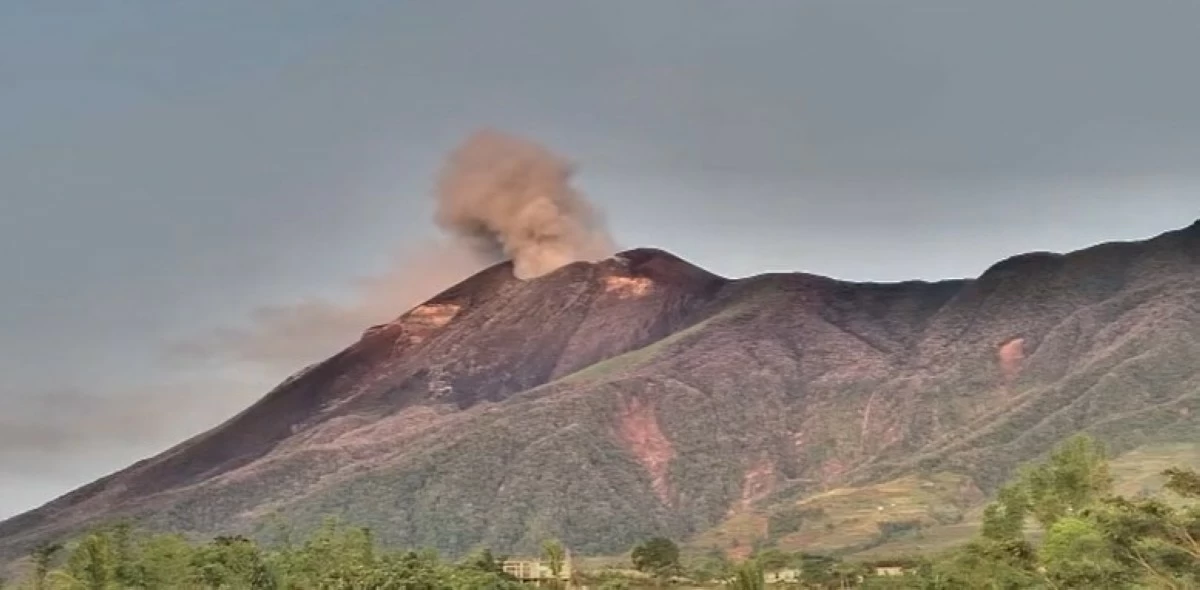
Time-lapse footage from Phivolcs IP cameras shows grayish ash plumes rising from the summit crater of Kanlaon Volcano on January 6, 2026, as the volcano remains under Alert Level 2 due to increased unrest. (Phivolcs)
The Philippine Institute of Volcanology and Seismology (Phivolcs) confirmed on Tuesday, January 6, a weak ash emission at Kanlaon Volcano after grayish plumes were observed rising from its summit crater early in the morning.
In an advisory, Phivolcs said time-lapse footage from IP cameras at the Kanlaon Volcano Observatory–Canlaon City (KVO-CC) stations showed ash emission that began at 5:55 a.m. The plumes rose to as high as 350 meters above the crater before drifting southwest. 
Phivolcs said in an update that the emission event "ceased" at 9:25 a.m.

Despite the activity, Phivolcs said Alert Level 2 (Increased Unrest) remains in effect over Kanlaon Volcano, which straddles the provinces of Negros Occidental and Negros Oriental.
24-hour monitoring data
Based on Phivolcs’ 24-hour observation summary from midnight January 5 to midnight January 6, Kanlaon recorded one volcanic earthquake, indicating continued unrest beneath the volcano.
Sulfur dioxide (SO₂) emissions were measured at 1,484 tonnes per day on January 5, suggesting ongoing degassing. Observers also noted a 75-meter-tall plume characterized as a weak emission drifting east-southeast.
Ground deformation data further showed that the volcanic edifice remains inflated, a sign that magmatic or hydrothermal processes may still be occurring beneath the surface.
Phivolcs reiterated that entry into the 4-kilometer Permanent Danger Zone (PDZ) is strictly prohibited due to the possibility of sudden hazardous events.
The agency also warned aircraft operators against flying close to the volcano, citing risks from ash and steam emissions.
Residents and local government units were reminded to remain vigilant for possible hazards, including sudden steam-driven or phreatic eruptions, ashfall, and signs of precursory magmatic activity.
Authorities continue to closely monitor Kanlaon Volcano and advise the public to rely only on official bulletins for updates on its condition. 

Related Tags

Kanlaon Volcano ash emission Phivolcs Alert Level 2 Kanlaon Volcano January 6 Kanlaon volcanic activity Negros volcano ash plume
ADVERTISEMENT
.most-popular .layout-ratio{ padding-bottom: 79.13%; } @media (min-width: 768px) and (max-width: 1024px) { .widget-title { font-size: 15px !important; } }

{{ articles_filter_1561_widget.title }}

.most-popular .layout-ratio{ padding-bottom: 79.13%; } @media (min-width: 768px) and (max-width: 1024px) { .widget-title { font-size: 15px !important; } }

{{ articles_filter_1562_widget.title }}

.most-popular .layout-ratio{ padding-bottom: 79.13%; } @media (min-width: 768px) and (max-width: 1024px) { .widget-title { font-size: 15px !important; } }

{{ articles_filter_1563_widget.title }}

{{ articles_filter_1564_widget.title }}

.mb-article-details { position: relative; } .mb-article-details .article-body-preview, .mb-article-details .article-body-summary{ font-size: 17px; line-height: 30px; font-family: "Libre Caslon Text", serif; color: #000; } .mb-article-details .article-body-preview iframe , .mb-article-details .article-body-summary iframe{ width: 100%; margin: auto; } .read-more-background { background: linear-gradient(180deg, color(display-p3 1.000 1.000 1.000 / 0) 13.75%, color(display-p3 1.000 1.000 1.000 / 0.8) 30.79%, color(display-p3 1.000 1.000 1.000) 72.5%); position: absolute; height: 200px; width: 100%; bottom: 0; display: flex; justify-content: center; align-items: center; padding: 0; } .read-more-background a{ color: #000; } .read-more-btn { padding: 17px 45px; font-family: Inter; font-weight: 700; font-size: 18px; line-height: 16px; text-align: center; vertical-align: middle; border: 1px solid black; background-color: white; } .hidden { display: none; }
function initializeAllSwipers() { // Get all hidden inputs with cms_article_id document.querySelectorAll('[id^="cms_article_id_"]').forEach(function (input) { const cmsArticleId = input.value; const articleSelector = '#article-' + cmsArticleId + ' .body_images'; const swiperElement = document.querySelector(articleSelector); if (swiperElement && !swiperElement.classList.contains('swiper-initialized')) { new Swiper(articleSelector, { loop: true, pagination: false, navigation: { nextEl: '#article-' + cmsArticleId + ' .swiper-button-next', prevEl: '#article-' + cmsArticleId + ' .swiper-button-prev', }, }); } }); } setTimeout(initializeAllSwipers, 3000); const intersectionObserver = new IntersectionObserver( (entries) => { entries.forEach((entry) => { if (entry.isIntersecting) { const newUrl = entry.target.getAttribute("data-url"); if (newUrl) { history.pushState(null, null, newUrl); let article = entry.target; // Extract metadata const author = article.querySelector('.author-section').textContent.replace('By', '').trim(); const section = article.querySelector('.section-info ').textContent.replace(' ', ' '); const title = article.querySelector('.article-title h1').textContent; // Parse URL for Chartbeat path format const parsedUrl = new URL(newUrl, window.location.origin); const cleanUrl = parsedUrl.host + parsedUrl.pathname; // Update Chartbeat configuration if (typeof window._sf_async_config !== 'undefined') { window._sf_async_config.path = cleanUrl; window._sf_async_config.sections = section; window._sf_async_config.authors = author; } // Track virtual page view with Chartbeat if (typeof pSUPERFLY !== 'undefined' && typeof pSUPERFLY.virtualPage === 'function') { try { pSUPERFLY.virtualPage({ path: cleanUrl, title: title, sections: section, authors: author }); } catch (error) { console.error('ping error', error); } } // Optional: Update document title if (title && title !== document.title) { document.title = title; } } } }); }, { threshold: 0.1 } ); function showArticleBody(button) { const article = button.closest("article"); const summary = article.querySelector(".article-body-summary"); const body = article.querySelector(".article-body-preview"); const readMoreSection = article.querySelector(".read-more-background"); // Hide summary and read-more section summary.style.display = "none"; readMoreSection.style.display = "none"; // Show the full article body body.classList.remove("hidden"); } document.addEventListener("DOMContentLoaded", () => { let loadCount = 0; // Track how many times articles are loaded const offset = [1, 2, 3, 4, 5, 6, 7, 8, 9, 10]; // Offset values const currentUrl = window.location.pathname.substring(1); let isLoading = false; // Prevent multiple calls if (!currentUrl) { console.log("Current URL is invalid."); return; } const sentinel = document.getElementById("load-more-sentinel"); if (!sentinel) { console.log("Sentinel element not found."); return; } function isSentinelVisible() { const rect = sentinel.getBoundingClientRect(); return ( rect.top < window.innerHeight && rect.bottom >= 0 ); } function onScroll() { if (isLoading) return; if (isSentinelVisible()) { if (loadCount >= offset.length) { console.log("Maximum load attempts reached."); window.removeEventListener("scroll", onScroll); return; } isLoading = true; const currentOffset = offset[loadCount]; window.loadMoreItems().then(() => { let article = document.querySelector('#widget_1690 > div:nth-last-of-type(2) article'); intersectionObserver.observe(article) loadCount++; }).catch(error => { console.error("Error loading more items:", error); }).finally(() => { isLoading = false; }); } } window.addEventListener("scroll", onScroll); });

Sign up by email to receive news.