






Manila Bulletin
 Philippines
National
Education officials address K to 12 concerns, vow reforms to improve employability and flexibility
Philippines
National
Education officials address K to 12 concerns, vow reforms to improve employability and flexibility
Philippines
National
Education officials address K to 12 concerns, vow reforms to improve employability and flexibility
Education officials address K to 12 concerns, vow reforms to improve employability and flexibility
Published Jan 6, 2026 04:05 pm


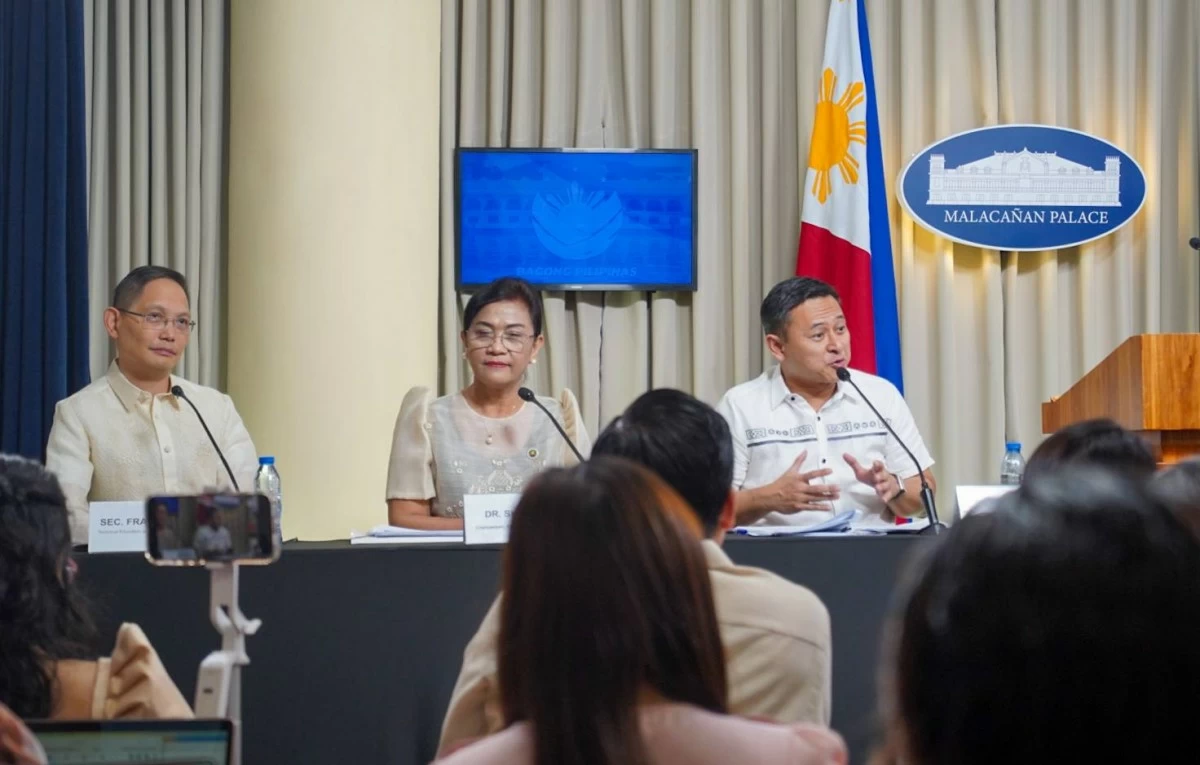
Education officials from DepEd, CHED, and TESDA discuss ongoing K to 12 reforms aimed at improving senior high school graduate employability and creating more flexible learning pathways during a Malacañang press briefing on January 6, 2026. (DepEd / Facebook)
Top education officials on Tuesday, January 6, said key reforms are underway to address long-standing concerns surrounding the K to 12 Program, particularly on graduate employability, curriculum relevance, and alignment across basic, technical, and higher education.
In a Malacañang press briefing, Department of Education (DepEd) Secretary Sonny Angara, Commission on Higher Education (CHED) Chairperson Shirley Agrupis, and Technical Education and Skills Development Authority (TESDA) Secretary Jose Francisco “Kiko” Benitez addressed concerns on the K to 12 Program after President Ferdinand Marcos Jr. earlier expressed frustration over the program’s undelivered promises, especially its goal of making senior high school (SHS) graduates job-ready.
DepEd: Streamlined curriculum, stronger industry linkage
Angara said the K to 12 curriculum has been significantly streamlined in response to criticism that it was overly congested.
“Iyong curriculum inayos natin dahil iyong criticism masyadong cluttered—33 subjects. Ginawa na lang natin five required subjects, tapos iyong rest parang electives na noong bata (We revised the curriculum because the criticism was that it was too cluttered with 33 subjects. We reduced it to just five required subjects, and the rest became electives for students),” he explained.
Angara also underscored the need to address emerging demands in the age of artificial intelligence (AI).
“So, kasi in the age of AI, kailangan may flexibility tayo. Puwede siyang mag-vocational sa skills, puwede rin siyang mag-academic subjects, puwede niyang haluin iyon (Because in the age of AI, we need flexibility. A student can take vocational skills, academic subjects, or even combine the two),” he added.
Angara also announced a major upgrade in industry immersion, increasing work immersion hours from a maximum of 300 to 640 hours—nearly equivalent to one semester.
This, he said, will directly address concerns that SHS graduates are not job-ready.
CHED: Bridging programs to fix course-track mismatch
Agrupis said addressing K to 12 issues is a priority agenda following the first-ever joint Management Committee (ManCom) meeting among CHED, DepEd, and TESDA.
She pointed out that one major challenge lies in the readiness of students entering higher education, particularly when their SHS track does not match their chosen college course.
“Ang challenge namin dito sa K to 12 is iyong readiness ng estudyante na pupunta sa pinili niyang kurso (Our challenge in K to 12 is the readiness of students to pursue the course they have chosen),” Agrupis said.
She cited cases where students from the Accountancy, Business, and Management (ABM) track enroll in engineering programs, resulting in course-track mismatches.
“So, ang immediate na ginagawa namin is may bridging program (What we immediately do is provide a bridging program),” she added.
To address this, CHED is implementing bridging programs and discussing standardized evaluation and cut-off scores for incoming freshmen.
These measures aim to harmonize assessments between higher education institutions and TESDA, ensuring students are properly guided based on their competencies.
TESDA: Focus on employability and skills certification
Benitez said TESDA’s primary concern is ensuring that senior high school graduates are employable upon completion of the K to 12 program.
“From our side, the major issue with the K to 12, for TESDA at least, is whether or not those who graduate from senior high school are employable,” Benitez said.
“So, if the issue is whether or not senior high school students moving forward will be employable, masasabi naman po ng TESDA at least that we can certify that—as many of them who are willing to take the assessment will be employable,” he added.
To address this, Benitez said TESDA rolled out free national competency assessments for SHS students starting in 2025, backed by funding from the President and Congress.
“Nearly 190,000 senior high school students have already been assessed and certified with National Certificates (NC) II and III, aligned with their chosen SHS tracks,” Benitez said, adding that funding for the free assessments will continue in 2026.
According to TESDA, graduates who pass the assessment can be certified as job-ready, helping fulfill the original promise of the K to 12 program.
Seamless pathways across education sectors
Benitez added that TESDA and CHED are strengthening the recognition of prior learning and aligning curricula to ensure students can shift between technical-vocational training and higher education without being locked into a single pathway.
This, he said, supports the goal of creating seamless pathways, with multiple entry and exit points within the formal education system.
“We are grateful to DepEd for making the senior high school curriculum much, much more flexible, which also allows for this seamless pathway,” Benitez said.
Education leaders agreed that these reforms—coupled with increased funding and closer inter-agency coordination—are key to ensuring that the K to 12 program finally delivers on its promise of producing flexible, skilled, and employable Filipino graduates.