






Manila Bulletin
 Philippines
National
Cleanest? Imee Marcos calls 2026 national budget the 'sneakiest'
Philippines
National
Cleanest? Imee Marcos calls 2026 national budget the 'sneakiest'
Philippines
National
Cleanest? Imee Marcos calls 2026 national budget the 'sneakiest'
Cleanest? Imee Marcos calls 2026 national budget the 'sneakiest'
By Dhel Nazario
Published Jan 6, 2026 12:27 pm
|
Updated Jan 6, 2026 01:47 pm


Senator Imee Marcos said on Tuesday, Jan. 26, that calling the 2026 national budget the cleanest is prone to challenge and that, in her view, it is “certainly the sneakiest.”
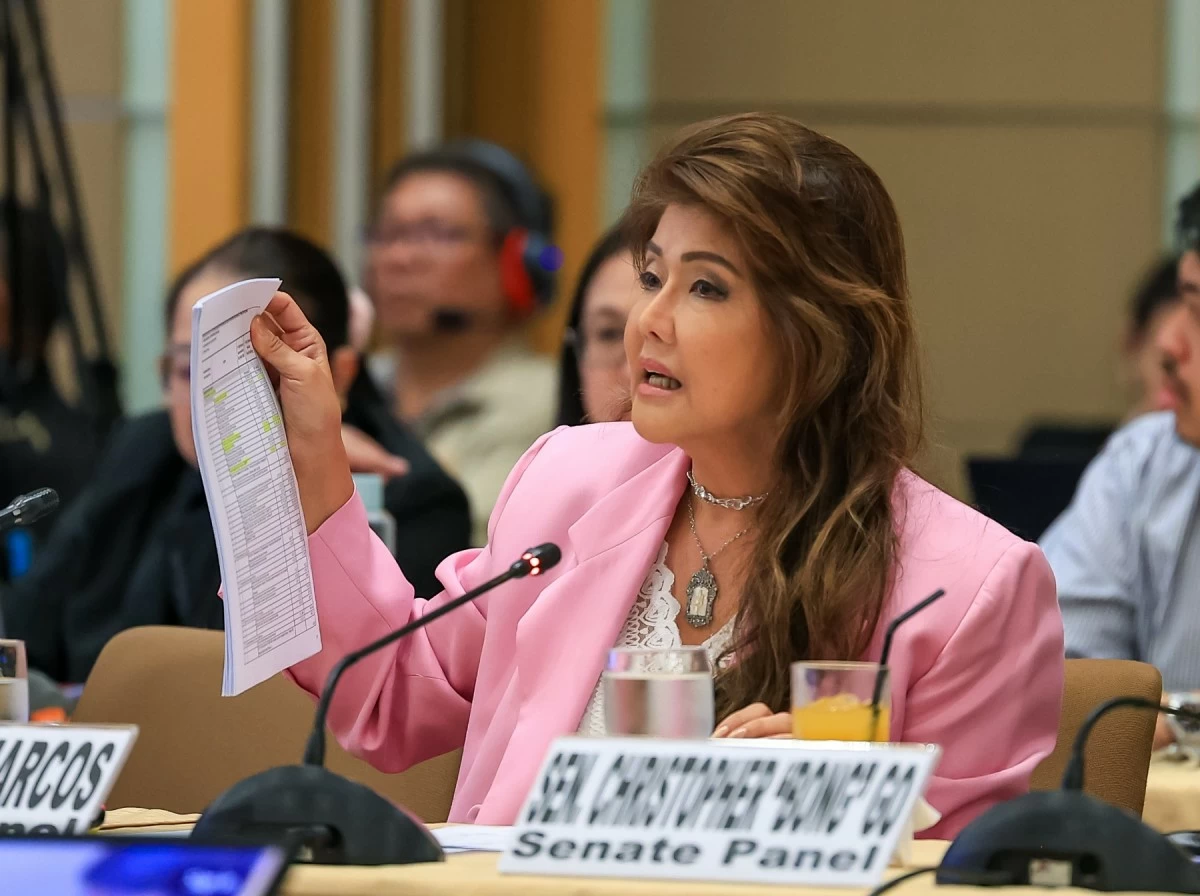
Senator Imee Marcos (Senate PRIB photo)
In a television interview on ANC, Marcos explained why she refused to sign the budget measure, describing it as a “giniling” or ground-up pork barrel that merely disguises questionable allocations through fragmentation and redistribution.
“Kumbaga, yung pork tinadtad-tadtad, pinarte-parte at binaha-bahagi, pero kahit giniling pa yan, ang pork baboy pa rin (“It’s like the pork was chopped up, divided, and portioned out—but even if it’s ground up, pork is still pork),” she said, adding that the budget remains “very fatty.”
It was Senate President Vicente "Tito" Sotto III who said that the 2026 budget is by far the "cleanest" ever.
"Ay naku, marami akong comment, ayoko makipag-disagree pero (I have a lot of comments, but I don't want to disagree with anyone but), the reality is the claim that it's the cleanest is prone to challenge. It's certainly the sneakiest," she said.
Marcos pointed to the removal or sidelining of major foreign-assisted infrastructure projects as an early indicator of misplaced priorities. She cited the Department of Transportation (DOTr), noting that the Metro Manila Subway project and the North–South Commuter Railway no longer appear under the agency’s funding lineup.
She also raised concerns over stalled or uncertain projects under the Department of Public Works and Highways (DPWH), including Metro Manila pumping stations meant to address chronic flooding in areas such as Malabon, Caloocan, and Navotas. Marcos noted that even the Senate complex is affected by flooding during heavy rains, underscoring the urgency of such projects. She also mentioned the long-discussed Cavite-to-Bataan bridge as among the major undertakings facing uncertainty.
According to Marcos, the country continues to shoulder commitment fees for these large-scale projects despite limited progress, calling the situation embarrassing for the Philippines.
She argued that while funds for these major infrastructure initiatives were set aside, they were effectively replaced by what she described as “porky” items, including significantly expanded allocations for Farm-to-Market Roads (FMRs). An advocate for agriculture, Marcos said the more than doubling of FMR funds raised questions about their true purpose.
Marcos also flagged the sharp increase in social assistance programs, including Assistance to Individuals in Crisis Situations (AICS) and the Tulong Panghanapbuhay sa Ating Disadvantaged/Displaced Workers (TUPAD). While she emphasized that she is not against ayuda and acknowledged its necessity during disasters and crises, she questioned why these programs had ballooned to such an extent.
She also expressed particular concern over health-related assistance traditionally linked to the Department of Health. Drawing from her experience as a former governor, Marcos said local hospitals remain underfunded and struggling. She questioned why medical assistance continues to be distributed per district through political figures rather than being directly allocated to local hospitals.
“Ang Pilipino ba, kailangan lumuhod sa politiko para magamot, para makapasok sa ospital, para makalabas ng ospital? (Do Filipinos have to kneel before politicians just to get treated, to be admitted to a hospital, or to be discharged from one?)” she asked, saying she did not believe such a system was appropriate.
She also reacted to President Marcos's move to veto nearly P92.5 billion worth of unprogrammed appropriations in the P6.8-trillion 2026 national budget, which he signed on Monday.
The presidential sister said she did not yet have the full details but understood that the vetoes covered only unprogrammed items.
“In truth and in fact, the unprogrammed funds are not a part of the P6.8 trillion budget,” she said, noting that these allocations are contingent on the availability of additional revenues.
As such, she argued that the veto did not strike down any specific line items, programs, or projects already funded under the regular budget, since only unprogrammed appropriations were affected.