ADVERTISEMENT

2026 national budget tests government's will to reform

Published Jan 6, 2026 12:05 am  |  Updated Jan 5, 2026 06:07 pm
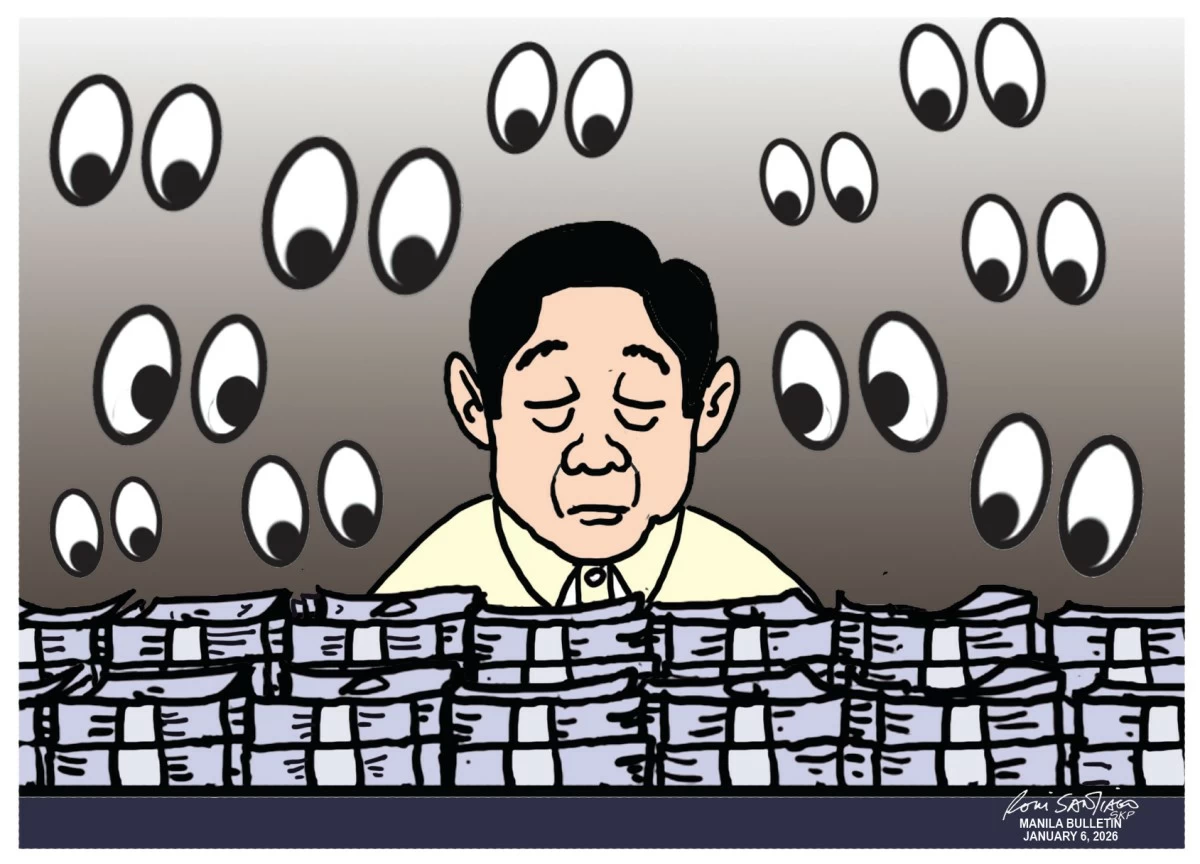
With the enactment of the 2026 national budget that provides a record-high ₱6.793 trillion appropriation, the government must now demonstrate its capacity to deliver genuine reforms by ensuring that public money will be spent with discipline and integrity.
The passage of the General Appropriations Act was a litmus test on whether Congress has regained public credibility and respect after a long season of being tarred for allowing the adoption of a grossly-flawed 2025 national budget. Intense public scrutiny will be focused on the executive branch’s fidelity to good governance principles in implementing its provisions.
Implementation of the national budget provides a litmus test of the State’s capacity to govern effectively. Substantial resources have been allocated to education, health care, infrastructure, agriculture, climate resilience, and social protection— priority sectors that directly affect the daily lives of Filipinos. Moreover, execution must reflect sound policy choices.
The discovery of massive amounts squandered away in ghost projects has eroded public confidence in the executive branch, as much as it has sullied the reputation of the legislature.
Moreover, delayed projects, underspending, last-minute disbursements, and recurring audit findings have undermined public confidence year after year. Reform, therefore, must begin with the recognition that the problem is not in the absence of funds, but in lack of consistent accountability.
Encouragingly, the 2026 budget process showed signs of progress. Legislative deliberations were more transparent. Agency justifications were more detailed, and public scrutiny more active. These improvements should not be treated as procedural gains alone. These must be institutionalized throughout the budget cycle from procurement and project selection to monitoring and evaluation.
The challenge now is for the executive branch to demonstrate sustainability of reform through concrete results. Line agencies must abandon a compliance-driven mindset and embrace performance-based governance. Spending targets should be matched with clear deliverables, timelines, and impact indicators. Speed matters, but precision matters more. A peso spent poorly is as damaging as a stolen or wasted peso.
Congress must assert its supervisory role beyond budget approval, demanding regular performance updates and corrective action when targets are missed. The Commission on Audit’s findings should be treated not as routine paperwork, but as reform tools that are acted upon decisively and transparently. Silence or inaction in the face of deficiency findings could only perpetuate inefficiency.
The Office of the President’s position that a reenacted budget was not an acceptable option reflected a higher sense of accountability. Governance cannot afford paralysis. Sustained momentum in implementing reforms is key to institutional stability and predictability. This is particularly crucial as the country navigates economic uncertainty, climate risks, and rising public expectations.
Ultimately, the 2026 national budget will be judged not by its magnitude or total amount, but by whether it changes lives in measurable ways. Filipinos expect functioning schools and hospitals, completed infrastructure, resilient communities, and assistance that reaches those most in need. They also expect honesty and full transparency. There must be clear accountability when programs fall short and swift correction when systems fail.
Meaningful budget reform involves disciplined execution, institutional memory, and the political will to fix what has long been broken. The 2026 national budget offers the government an opportunity to demonstrate its commitment to transparency as a governing principle — one that delivers results, restores trust, and justifies the people’s faith in democratic institutions.
ADVERTISEMENT
.most-popular .layout-ratio{ padding-bottom: 79.13%; } @media (min-width: 768px) and (max-width: 1024px) { .widget-title { font-size: 15px !important; } }

{{ articles_filter_1561_widget.title }}

.most-popular .layout-ratio{ padding-bottom: 79.13%; } @media (min-width: 768px) and (max-width: 1024px) { .widget-title { font-size: 15px !important; } }

{{ articles_filter_1562_widget.title }}

.most-popular .layout-ratio{ padding-bottom: 79.13%; } @media (min-width: 768px) and (max-width: 1024px) { .widget-title { font-size: 15px !important; } }

{{ articles_filter_1563_widget.title }}

{{ articles_filter_1564_widget.title }}

.mb-article-details { position: relative; } .mb-article-details .article-body-preview, .mb-article-details .article-body-summary{ font-size: 17px; line-height: 30px; font-family: "Libre Caslon Text", serif; color: #000; } .mb-article-details .article-body-preview iframe , .mb-article-details .article-body-summary iframe{ width: 100%; margin: auto; } .read-more-background { background: linear-gradient(180deg, color(display-p3 1.000 1.000 1.000 / 0) 13.75%, color(display-p3 1.000 1.000 1.000 / 0.8) 30.79%, color(display-p3 1.000 1.000 1.000) 72.5%); position: absolute; height: 200px; width: 100%; bottom: 0; display: flex; justify-content: center; align-items: center; padding: 0; } .read-more-background a{ color: #000; } .read-more-btn { padding: 17px 45px; font-family: Inter; font-weight: 700; font-size: 18px; line-height: 16px; text-align: center; vertical-align: middle; border: 1px solid black; background-color: white; } .hidden { display: none; }
function initializeAllSwipers() { // Get all hidden inputs with cms_article_id document.querySelectorAll('[id^="cms_article_id_"]').forEach(function (input) { const cmsArticleId = input.value; const articleSelector = '#article-' + cmsArticleId + ' .body_images'; const swiperElement = document.querySelector(articleSelector); if (swiperElement && !swiperElement.classList.contains('swiper-initialized')) { new Swiper(articleSelector, { loop: true, pagination: false, navigation: { nextEl: '#article-' + cmsArticleId + ' .swiper-button-next', prevEl: '#article-' + cmsArticleId + ' .swiper-button-prev', }, }); } }); } setTimeout(initializeAllSwipers, 3000); const intersectionObserver = new IntersectionObserver( (entries) => { entries.forEach((entry) => { if (entry.isIntersecting) { const newUrl = entry.target.getAttribute("data-url"); if (newUrl) { history.pushState(null, null, newUrl); let article = entry.target; // Extract metadata const author = article.querySelector('.author-section').textContent.replace('By', '').trim(); const section = article.querySelector('.section-info ').textContent.replace(' ', ' '); const title = article.querySelector('.article-title h1').textContent; // Parse URL for Chartbeat path format const parsedUrl = new URL(newUrl, window.location.origin); const cleanUrl = parsedUrl.host + parsedUrl.pathname; // Update Chartbeat configuration if (typeof window._sf_async_config !== 'undefined') { window._sf_async_config.path = cleanUrl; window._sf_async_config.sections = section; window._sf_async_config.authors = author; } // Track virtual page view with Chartbeat if (typeof pSUPERFLY !== 'undefined' && typeof pSUPERFLY.virtualPage === 'function') { try { pSUPERFLY.virtualPage({ path: cleanUrl, title: title, sections: section, authors: author }); } catch (error) { console.error('ping error', error); } } // Optional: Update document title if (title && title !== document.title) { document.title = title; } } } }); }, { threshold: 0.1 } ); function showArticleBody(button) { const article = button.closest("article"); const summary = article.querySelector(".article-body-summary"); const body = article.querySelector(".article-body-preview"); const readMoreSection = article.querySelector(".read-more-background"); // Hide summary and read-more section summary.style.display = "none"; readMoreSection.style.display = "none"; // Show the full article body body.classList.remove("hidden"); } document.addEventListener("DOMContentLoaded", () => { let loadCount = 0; // Track how many times articles are loaded const offset = [1, 2, 3, 4, 5, 6, 7, 8, 9, 10]; // Offset values const currentUrl = window.location.pathname.substring(1); let isLoading = false; // Prevent multiple calls if (!currentUrl) { console.log("Current URL is invalid."); return; } const sentinel = document.getElementById("load-more-sentinel"); if (!sentinel) { console.log("Sentinel element not found."); return; } function isSentinelVisible() { const rect = sentinel.getBoundingClientRect(); return ( rect.top < window.innerHeight && rect.bottom >= 0 ); } function onScroll() { if (isLoading) return; if (isSentinelVisible()) { if (loadCount >= offset.length) { console.log("Maximum load attempts reached."); window.removeEventListener("scroll", onScroll); return; } isLoading = true; const currentOffset = offset[loadCount]; window.loadMoreItems().then(() => { let article = document.querySelector('#widget_1690 > div:nth-last-of-type(2) article'); intersectionObserver.observe(article) loadCount++; }).catch(error => { console.error("Error loading more items:", error); }).finally(() => { isLoading = false; }); } } window.addEventListener("scroll", onScroll); });

Sign up by email to receive news.