






Manila Bulletin
 Business
The Economy
World Bank: Philippines among top global marine plastic polluters
Business
The Economy
World Bank: Philippines among top global marine plastic polluters
Business
The Economy
World Bank: Philippines among top global marine plastic polluters
World Bank: Philippines among top global marine plastic polluters
Published Jan 5, 2026 12:01 am
|
Updated Jan 3, 2026 03:29 pm


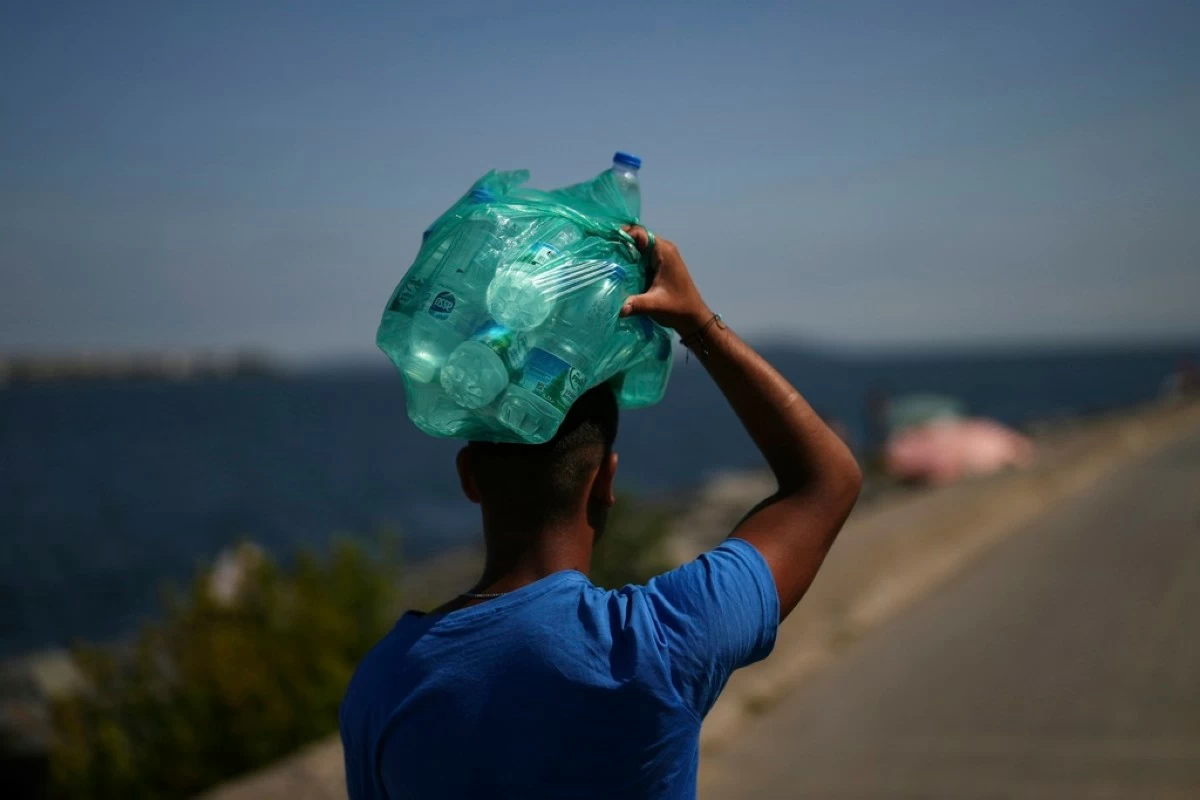
A street vendor carries plastic bottles of water on his head during a summer day in Istanbul, Thursday, July 10, 2025. (AP Photo/Francisco Seco, File)
The Philippines remains one of the world’s leading contributors to marine plastic pollution, with nearly nine percent of its mismanaged plastic waste ending up in the ocean each year, the World Bank (WB) warned.
In a report released on Dec. 26 titled “Tackling a National Crisis: How the World Bank is Paving the Way for a More Sustainable Plastic Waste Management in the Philippines,” the WB said the country leaks more than 0.3 million metric tons of plastic into the sea annually—equivalent to 8.8 percent of its improperly handled plastic waste.
The report said the Philippines, along with Indonesia and Malaysia, ranks among the top contributors to ocean plastic pollution in the East Asia and Pacific region, reinforcing the area’s status as one of the world’s largest sources of marine plastic waste.
“The plastic crisis in the country has already led to high pollution levels and detrimental effects on public health, tourism, and natural resources,” the report said.
According to the WB, the Philippines has long struggled to establish a circular and sustainable solid waste management system (SWM) due to persistent gaps in infrastructure, governance, policy implementation, and technical capacity.
Despite strong political will and ongoing efforts by the WB to combat plastic pollution, the report noted that the country still requires greater technical expertise, strategic guidance, and sustained funding to achieve meaningful progress.
The report explained that the Philippines generates a significant volume of mismanaged plastic waste, driven by rapid urbanization, rising consumerism, and inadequate SWM infrastructure.
It added that the country has become a major consumer of single-use plastics (SUP), generating around 1.7 million tonnes of post-consumer plastic waste annually. This includes nearly 164 million plastic sachets, 48 million shopping bags, and 45 million thin-film bags used each day, most of which end up in landfills, open dumpsites, or waterways, eventually reaching rivers and the ocean.
Despite more than two decades of policy development and a clearly articulated national vision, the report said government efforts to implement circular economy solutions remain limited. It emphasized the need to identify priority areas, strengthen partnerships, and secure appropriate financing mechanisms to move from policy to action.
The WB underscored that improving waste collection, sorting, and recycling systems will require coordinated efforts among national and local governments, industry stakeholders, and communities. Without strong leadership and strategic investment, the report warned, the country’s plastic circularity goals may remain out of reach
“By working with key partners and national institutions, these efforts marked an inflection point in the Philippines’ path toward a circular plastic economy,” the report said.
To address the growing plastic waste problem, the WB recommended establishing recycling standards, introducing producer take-back schemes, and promoting alternatives to SUP. It also called for improved recycling infrastructure and more efficient waste collection systems, particularly in the country’s most polluted areas.
The WB also proposed a roadmap to improve plastic waste management (PWM), targeting reduced leakage by 2028, expanded recycling by 2034, and circular product design by 2040, reflecting a vision shaped by government, communities, and waste stakeholders.
“By mapping actions across immediate, medium, and long-term timeframes, and by involving local experts, the roadmap became both a technical guide and a capacity-building tool,” the report said.
The WB also plans to bring in an experienced international partner to support capacity building for extended producer responsibility (EPR) in the Philippines, identifying South Korea for its regional proximity and successful EPR policies. While the two countries differ economically, the report said the Philippines could adopt lessons from South Korea’s EPR model with adequate guidance, funding, and capacity development.
The report concluded that addressing plastic pollution in the Philippines requires more than isolated initiatives. It stressed that success will depend on integrating data, policy, financing, and local expertise into a cohesive national strategy capable of overcoming political and economic challenges and building a more sustainable future.