






 Philippines
National
How will DepEd use its P1.015-trillion budget to fast-track education reforms in 2026?
Philippines
National
How will DepEd use its P1.015-trillion budget to fast-track education reforms in 2026?
How will DepEd use its P1.015-trillion budget to fast-track education reforms in 2026?
DepEd outlines sweeping reforms in infrastructure, staffing, and digital education following the approval of the P6.793-trillion national budget


At A Glance
- DepEd will use its P1.015-trillion 2026 budget to reduce the classroom backlog by building and repairing thousands of school facilities through expanded partnerships.
- It will also strengthen digital education by funding textbooks, computers, and internet connectivity to improve access to learning nationwide.
- In addition, the budget will support hiring more teachers, school leaders, and counselors while expanding feeding and training programs to boost learner welfare and education quality.
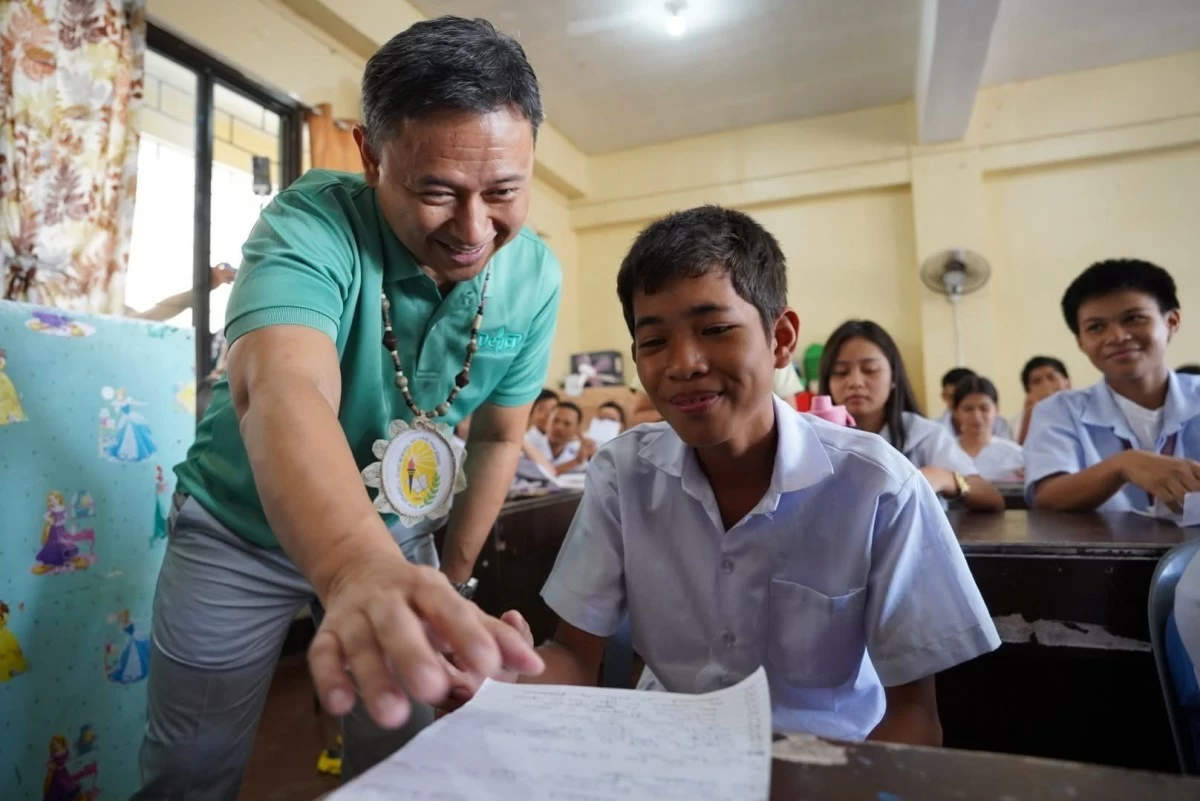
The Department of Education (DepEd) on Monday, January 5, said it is set to roll out major reforms in 2026 after President Marcos signed the P6.793-trillion national budget, granting the agency a historic P1.015-trillion allocation—the largest education budget in recent years and the first to meet the UNESCO benchmark for education spending.

DepEd Secretary Sonny Angara said the unprecedented funding will allow the department to accelerate long-delayed reforms aimed at improving learning outcomes, expanding school infrastructure, strengthening digital education, and providing greater support to teachers and learners nationwide.
“Ngayong 2026, nakatuon ang DepEd sa pagsisiguro na mas lalo pa nating mapapaunlad ang kalidad ng edukasyon sa ating bansa sa pamamagitan ng sapat at maayos na mga pasilidad, mas malawak na access sa digital tools, at tuloy-tuloy na suporta para sa ating mga guro (This 2026, the Department of Education is focused on ensuring that we further improve the quality of education in our country through adequate and well-maintained facilities, broader access to digital tools, and continuous support for our teachers),” Angara said.
P85.3B to address classroom backlog
Under Angara’s Five-Point Reform Agenda, DepEd said it will intensify efforts to resolve the country’s long-standing classroom shortage, estimated at 165,000 rooms.
The 2026 budget allocates P85.3 billion for school infrastructure, including P65 billion for the construction of 24,964 new classrooms and P7.7 billion for the repair and rehabilitation of existing school buildings.
To ensure faster and more transparent implementation, DepEd said it will expand partnerships with local government units and the private sector through public-private partnerships (PPPs).
Textbooks, computers, and internet connectivity
The department also secured P19.5 billion for the production of textbooks and other learning materials. In 2025, DepEd successfully procured 105 textbook titles within one year—a 289-percent increase compared with previous procurement timelines.
To bridge the digital divide, DepEd was granted P10.6 billion for the DepEd Computerization Program (DCP), which aims to provide public schools nationwide with computers, digital devices, and reliable internet connectivity.
More teachers, principals, and counselors
To reduce teachers’ administrative workload and improve student support services, DepEd earmarked P42.4 billion for new plantilla positions, including 32,916 teaching items, 6,000 Principal I posts, and 10,000 School Counselor Associate positions.
The allocation includes P29 billion for the lump sum needed to fill teaching positions, P2.2 billion for 11,268 Administrative Officer II posts, and P1 billion for 5,000 Project Development Officer I positions.
In addition, P4.6 billion was allocated for teacher training programs to equip educators with updated, relevant, and effective teaching strategies.
P25.6B for learner nutrition
DepEd also received P25.6 billion for the Expanded School-Based Feeding Program, which is expected to benefit 4.6 million learners in public schools nationwide.
The program will cover all Kindergarten and Grade 1 learners, severely wasted and wasted learners in Grades 2 to 6, and nutritionally at-risk pregnant adolescents. Eligible learners will receive meals for up to 200 feeding days, while pregnant adolescents will be covered for 45 feeding days.
Angara expressed optimism that the record budget will translate into tangible improvements in classrooms across the country.
“We are looking at a very promising 2026 for the education sector,” Angara said.
“Nagpapasalamat tayo sa ating mahal na Pangulo, President Bongbong Marcos, sa kaniyang patuloy na suporta sa ating mga mag-aaral at mga guro—dahil dito, mas magiging epektibo at mas mararamdaman ang mga reporma natin ngayong taon (We thank our beloved President, President Bongbong Marcos, for his continued support for our students and teachers—because of this, our reforms this year will be more effective and more strongly felt),” he added.